


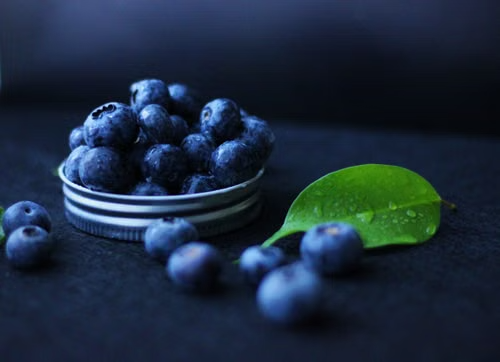
A handful of blueberries does not look particularly complicated. It is fruit, not medicine. Yet inside the dark blue skin are fiber, vitamin C, vitamin K, manganese, and plant compounds that researchers have studied for their possible effects on blood vessels, metabolism, the gut, and the brain.
Anthocyanins attract much of that attention. These natural pigments give blueberries their blue-purple color. Human research has produced encouraging results in several areas, especially vascular function, but the evidence is not equally strong for every health claim. A blueberry can be a useful part of a healthy diet without needing to become a “superfood” or a treatment for disease.
A quick look at what blueberries actually offer
One bowl of fresh blueberries includes about 84 calories and 3.6 grams of fiber, according to information given by the American Heart Association. Blueberries also provide vitamin C, vitamin K, manganese, and polyphenols. Fiber supports our normal digestive function. Vitamin C has well-known roles in the body.
Anthocyanins and other polyphenols have become a major focus of blueberry research. Calling these compounds “antioxidants” is not wrong, but it leaves out much of the story. Scientists now examine how blueberry polyphenols and their metabolites relate to vascular function, cell signals, inflammation, metabolism, and gut microbes.
Blueberries and Blood Vessel Health
A double-blind randomized trial published in 2023 included 61 healthy adults between 65 and 80 years old. Participants received either 26 grams of freeze-dried wild blueberry powder or a placebo each day for 12 weeks. The blueberry powder supplied 302 mg of anthocyanins and was equivalent to about 178 grams of fresh wild blueberries.
Not every blueberry trial has produced the same cardiovascular results. A 2022 randomized crossover study in healthy young adults, for example, did not find significant differences in blood pressure, cholesterol, triglycerides, glucose, or several other cardiovascular measures between fresh blueberry, blueberry powder, and control treatments.
Fiber deserves attention without health claim
Whole blueberries provide fiber along with water and plant compounds. Fiber supports bowel function and interacts with microorganisms in the digestive tract. That makes whole fruit quite different from a purified blueberry extract that contains selected compounds but not the complete structure of the fruit.
A 2025 randomized controlled trial studied adults over age 60 who had overweight or obesity. Participants received blueberry powder equivalent to 1.5 cups of blueberries each day or a placebo, alongside weekly supervised exercise. After 12 weeks, researchers did not find significant overall differences in gut microbial composition or diversity between the groups.
Blueberries and Brain Health Need a Closer Look
Blueberries often appear on lists of foods said to improve memory. Human research gives that idea some support, but not enough to turn it into a guarantee.
Blueberries and Brain Health Research
| Research Area | What the Study Found | What It Means |
|---|---|---|
| Memory and recall | A 2023 trial studied healthy adults aged 65 to 80. After 12 weeks of wild blueberry powder, participants showed improvement in immediate recall. | Blueberries may support certain aspects of memory, but one study cannot prove a broad brain-health benefit. |
| Mental performance | The same 2023 trial found better accuracy on a task-switch test. | Researchers found an effect on a specific cognitive task. This does not mean blueberries improve every type of mental performance. |
| Cerebral blood flow | Researchers found no significant change in cerebral blood flow in the 2023 trial. | Cognitive test results and blood-flow measures do not always change together. |
| Gut microbiota | The 2023 study found no significant change in gut microbiota composition. | Blueberry intake did not produce a clear overall microbiome change in this trial. |
| Dementia and cognitive decline | Current studies do not establish that blueberries prevent dementia or stop cognitive decline. | Blueberries can be part of a healthy diet, but they should not be presented as a treatment or preventive measure for dementia. |
Natural sugar is still part of whole fruit
Blueberries taste sweet because they contain naturally occurring sugars. That sometimes creates confusion for people who try to reduce sugar in their diets. Blueberries bring their natural sugars together with fiber, water, vitamins, minerals, and polyphenols. Their physical structure also remains largely intact when the berries are eaten whole.
People with diabetes may still need to consider portion size, carbohydrate intake, medication, and individual glucose response. Blueberries should not be presented as a treatment for diabetes or as a food that automatically lowers blood glucose. That leaves a much simpler message: whole blueberries can fit into many balanced eating patterns, including diets where total carbohydrate intake matters.
Wild berries pack their color into a smaller fruit
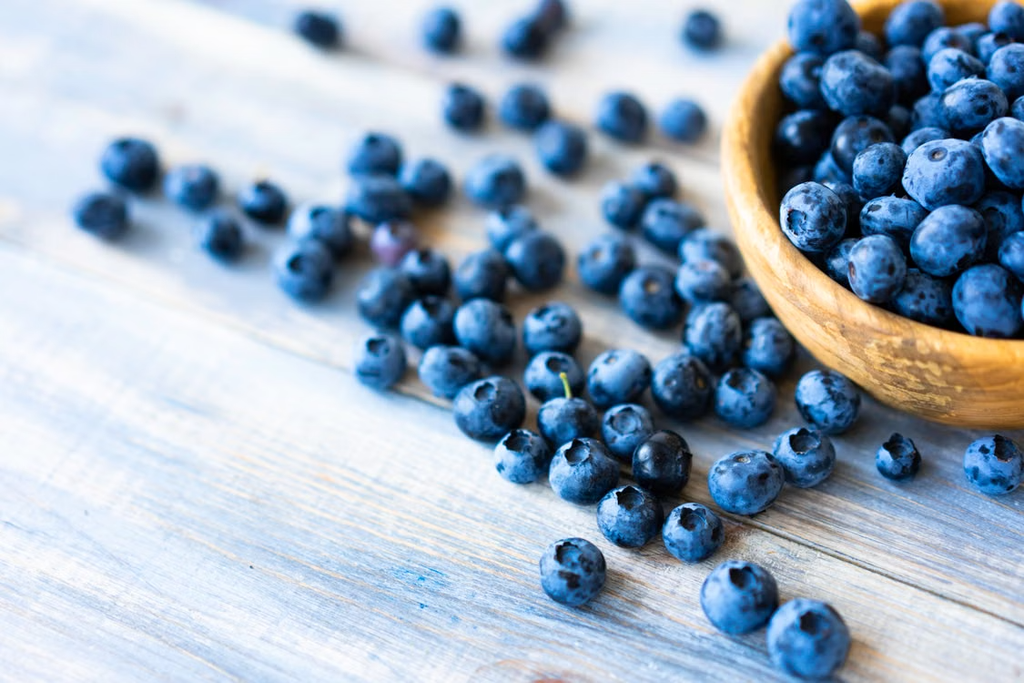
Wild blueberries tend to be smaller. Their greater skin-to-fruit ratio can result in a higher concentration of anthocyanins in a given amount. The American Heart Association has also noted that wild blueberries can pack more anthocyanins into a smaller space than cultivated varieties.
That difference is interesting to researchers because anthocyanins are central to many blueberry studies. Cost and availability matter. Taste matters too. A person who regularly eats cultivated blueberries may get far more practical value from them than someone who buys wild berries occasionally because they appear nutritionally superior on paper.
Blueberries Offer More Than Vitamin C
Vitamin C contributes to normal collagen production and other essential processes in the body. Blueberries supply it, although several other fruits and vegetables contain larger amounts. Foods do not need to contain the highest amount of a particular vitamin to deserve a place in the diet. Blueberries combine vitamin C with vitamin K, manganese, fiber, anthocyanins, and other plant compounds.
Not Every Blueberry Product Is the Same
Nutrition studies create another source of confusion. Researchers do not always give participants bowls of fresh berries.
Studies may use:
• Fresh blueberries
• Frozen blueberries
• dried blueberry powder
• Wild blueberry powder
• Blueberry drinks
• Anthocyanin extracts
• Purified compounds
The 2023 vascular trial, for example, used freeze-dried wild blueberry powder with a measured anthocyanin content. The 2026 brain-health trial also used freeze-dried powder rather than asking participants simply to add an unspecified amount of berries to their normal diets.
How Much Blueberry Is Enough
Research papers often use precise amounts. That is necessary because scientists need to know exactly what participants consumed. People sometimes turn those research doses into dietary rules. That is where the interpretation can go wrong. No established daily blueberry dose has been proven to prevent dementia, heart disease, diabetes, or another chronic condition.
One study might use a fresh-fruit equivalent. Another might use freeze-dried powder. A third may isolate anthocyanins. Participants can also differ greatly in age and health. Blueberries can instead count toward a varied intake of fruit. That approach also leaves room for strawberries, raspberries, blackberries, oranges, apples, and other fruits with different nutrient profiles.
Simple Ways to Enjoy Blueberries
Convenience may be one of the fruit’s most underrated advantages.
No special recipe is necessary. Blueberries can add sweetness and texture to foods that people already eat.
• Add berries to plain yogurt.
• Mix frozen blueberries into oatmeal.
• Put them on whole-grain cereal.
• Combine them with strawberries or raspberries.
• Add them to a salad with nuts or seeds.
• Blend frozen berries into a smoothie without extra syrup.
• Keep a bag in the freezer when fresh berries are expensive.
Preparation can change the nutritional picture. A bowl of plain oatmeal topped with blueberries is different from a large blueberry pastry. Added sugar, refined flour, saturated fat, and portion size still count even when fruit is present.
Blueberries Have Value Without the Hype
Human trials have found favorable vascular effects in certain groups. Other cardiovascular studies have produced neutral results. Cognitive studies have reported selected improvements, yet newer research has not shown significant changes in important neurodegeneration biomarkers. Gut research has also produced a mixture of interesting signals and largely neutral overall microbiome results.
Blueberries remain valuable even when every proposed health effect does not survive a clinical trial. They provide fiber and useful micronutrients, bring anthocyanins into the diet, require little preparation, and can replace foods with much more added sugar.