



A diet with lots of fiber can help you digest food better. If you suddenly eat a lot more fiber it can have the opposite effect. For example a big serving of beans or bran cereal can make you feel gassy, crampy or bloated if you are not used to eating fiber. The amount of fiber and how fast you increase it both matter.
Foods like beans, lentils, fruits, vegetables, whole grains, nuts and seeds are sources of fiber. They help make stool hold water add bulk and support bowel movements. Most adults need to eat about 22 to 34 grams of fiber every day. The FDA says 28 grams is the Daily Value for fiber on food labels.
This guide has a list of foods with fiber serving sizes and how much fiber is, in each food. It also has a three-day meal plan and a printable PDF and it explains how to eat more fiber without feeling uncomfortable and when a high-fiber diet may not be a good idea.
Printable PDF guide is available at the end of this article. Scroll down to view and download it for easy meal planning.
The Daily Target For Fiber Is a Range, Not a Strict Rule
Fiber needs for people depend on how old they’re if they are a man or a woman how many calories they eat, their health and what they normally eat. Most adults need to eat between 22 and 34 grams of fiber each day.
There is another way to figure out how much fiber people need. The common target for fiber is 14 grams of fiber for every 1,000 calories that people eat. So someone who eats 2,000 calories each day would need to eat to 28 grams of fiber per day. You can also find this number on the Nutrition Facts labels in the US.
The percentages on the Daily Value can help people decide if a packaged food has a lot of fiber:
- A food with 5% Daily Value or less of fiber is low in fiber.
- A food with 20% Daily Value or more of fiber is high in fiber.
For example a product that has 6 grams of fiber gives people about 21% of the 28-gram Daily Value for fiber. This product qualifies as a high-fiber choice for people who eat it. Always check how much food is in one serving. A cereal box may say it has 8 grams of fiber. That only applies to the amount of cereal that is listed on the box. If people only eat half of the serving they will only get, about half of the fiber.
The amount of fiber people eat now matters. If people jump from eating 10 grams of fiber to 30 grams in one day it may cause them discomfort. If people increase the amount of fiber they eat slowly it gives their digestive system time to adjust to the fiber.
Everyday High-Fiber Foods and Serving Sizes
You can get plenty of fiber from regular foods. Fruit, vegetables, beans, whole grains, nuts, and seeds all count. The chart below shows common portions and their estimated fiber amounts.
| Food | Usual portion | Approximate fiber |
|---|---|---|
| High-fiber unsweetened cereal | 1/2 cup | 14.0 g |
| Cooked navy beans | 1/2 cup | 9.6 g |
| Cooked artichoke | 1 cup | 9.6 g |
| Guava | 1 cup | 8.9 g |
| Cooked green peas | 1 cup | 8.8 g |
| Raspberries | 1 cup | 8.0 g |
| Cooked lentils | 1/2 cup | 7.8 g |
| Cooked black beans | 1/2 cup | 7.5 g |
| Cooked Brussels sprouts | 1 cup | 6.4 g |
| Cooked chickpeas | 1/2 cup | 6.3 g |
| Cooked sweet potato | 1 cup | 6.3 g |
| Shredded wheat cereal | 1 cup | 6.2 g |
| Raw jicama | 1 cup | 5.9 g |
| Popcorn | 3 cups | 5.8 g |
| Pear | 1 medium | 5.5 g |
| Cooked broccoli | 1 cup | 5.2 g |
| Whole pumpkin seeds | 1 ounce | 5.2 g |
| Avocado | 1 cup | 5.0 g |
| Apple with skin | 1 medium | 4.8 g |
| Chia seeds | 1 tablespoon | 4.1 g |
| Cooked green beans | 1 cup | 4.0 g |
| Cooked corn | 1 cup | 4.0 g |
| Baked potato with skin | 1 medium | 3.9 g |
| Orange | 1 medium | 3.7 g |
| Blueberries | 1 cup | 3.6 g |
| Raw carrots | 1 cup | 3.6 g |
| Almonds | 1 ounce | 3.5 g |
| Banana | 1 medium | 3.2 g |
| Strawberries | 1 cup | 3.0 g |
| Flax seeds | 1 tablespoon | 2.8 g |
| Whole-wheat roti or chapati | 1 ounce | 2.8 g |
| Whole-wheat tortilla | 1 ounce | 2.8 g |
The fiber amounts come from USDA food data. They offer a useful guide, but the exact amount may differ.
Food size, brand, and recipe can change the final number. A large pear may have more fiber than a small one. A homemade roti may also weigh more than the portion shown in the chart. Use the table to compare foods and plan your meals. You do not need to eat the exact portion listed. Choose an amount that fits your diet and feels comfortable.
White beans also appear in traditional meals like fabes con almejas, a Spanish bean and clam dish that shows how beans can add fiber and substance to a meal.
A Simple Way to Build a Fiber-Rich Day
You do not need to choose the highest-fiber food at every meal. A balanced day can reach the target through several moderate sources.
A practical pattern may include:
- Fruit at breakfast
- Beans or lentils at lunch
- A whole grain with one meal
- Vegetables at lunch and dinner
- Nuts, seeds, or popcorn as a snack
This method spreads fiber across the day. It often feels more comfortable than eating a large amount at once. One serving of lentils, one apple, cooked broccoli, and a baked potato can provide more than 20 grams of fiber. A whole-grain breakfast or a small portion of nuts may bring the total near the daily target.
Consistency matters more than a perfect daily total. One day may provide 25 grams. Another may provide 31 grams. A varied weekly diet can still support healthy digestion.
Three Days of Meals With About 30 Grams of Fiber
The meal ideas below use common foods and they provide close to 28 to 32 grams per day without a fiber powder. Actual amounts can change with brands, recipes, and portion sizes.
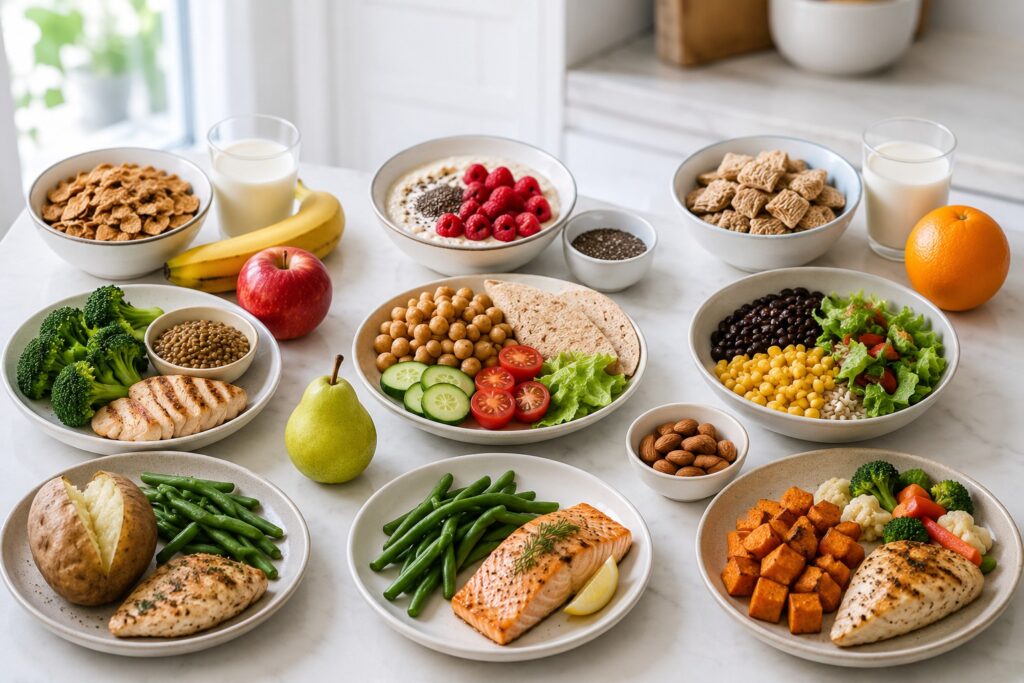
Day One
Breakfast
- 3/4 cup bran flakes
- One medium banana
- Milk or plain yogurt
Approximate fiber: 8.7 grams
Lunch
- Soup or grain bowl with 1/2 cup cooked lentils
- 1 cup cooked broccoli
- Chicken, fish, tofu, or another protein
Approximate fiber: 13 grams
Snack
- One medium apple with the skin
Approximate fiber: 4.8 grams
Dinner
- One medium baked potato with the skin
- Cooked vegetables
- A lean protein source
Approximate fiber from the potato: 3.9 grams
Estimated total: 30.4 grams
Day Two
Breakfast
- Plain yogurt or oatmeal
- 1 tablespoon chia seeds
- 1 cup raspberries
Approximate fiber: 12.1 grams
Lunch
- One whole-wheat roti
- 1/2 cup chickpeas
- Cucumber, tomato, lettuce, or cooked vegetables
Approximate fiber from the roti and chickpeas: 9.1 grams
Snack
- One medium pear
Approximate fiber: 5.5 grams
Dinner
- 1 cup cooked green beans
- Fish, chicken, tofu, or another protein
Approximate fiber from the green beans: 4 grams
Estimated total: 30.7 grams
Day Three
Breakfast
- 1 cup shredded wheat cereal
- One medium orange
- Milk or a suitable alternative
Approximate fiber: 9.9 grams
Lunch
- 1/2 cup black beans
- 1 cup cooked corn
- Salad, rice, or a whole-grain wrap
Approximate fiber from the beans and corn: 11.5 grams
Snack
- 1 ounce almonds
Approximate fiber: 3.5 grams
Dinner
- 1 cup cooked sweet potato
- Vegetables
- A protein source
Approximate fiber from the sweet potato: 6.3 grams
Estimated total: 31.2 grams
These menus are examples, not fixed diet plans. You can replace one food with another that has a similar fiber amount. A pear can replace an apple. Black beans can replace chickpeas. Whole-wheat bread can replace roti. The best option is one that fits your usual meals and does not cause discomfort.
Fiber Helps Stool Hold Water and Add Bulk
Fiber can support bowel movements in more than one way. Part of it helps stool hold water. This can make hard stool softer and easier to pass. Another part adds bulk, which may help the bowel move waste through the digestive tract. Not all fiber breaks down in the small intestine. Part of it reaches the colon, where gut bacteria process it. This creates compounds that support normal colon activity. The same process can also create gas.
Gas after a high-fiber meal does not always mean the food is bad for you. The portion may have been too large. Your usual diet may also contain very little fiber, so the gut may need time to adapt.
Common signs of a rapid increase include:
- Stomach pressure
- Gas
- Cramps
- Bloating
- Loose stool
- A sudden change in bowel frequency
Fiber is only one part of digestive health. Fluid intake, physical activity, regular meals, sleep, medicines, and bathroom habits can also affect bowel movements. A high-fiber diet may not correct constipation caused by a bowel blockage, pelvic floor disorder, medicine, nerve problem, or another health condition.
Soluble Fiber and Insoluble Fiber Act Differently
The word “fiber” covers several types of plant material. Soluble and insoluble fiber are the two main groups.
Soluble fiber mixes with fluid and forms a soft gel. Oats, lentils, beans, peas, apples, citrus fruit, chia seeds, and flax seeds contain this type.
It can help stool hold water. Many people find it gentler than coarse bran, especially if they have constipation-predominant IBS.
Insoluble fiber does not form the same type of gel. It adds bulk and may help waste pass through the bowel.
Common sources include:
- Wheat bran
- Whole grains
- Vegetable skins
- Leafy vegetables
- Raw vegetables
Most plant foods contain a mix of both types. One food may simply provide more of one type than the other. Tolerance differs from person to person. Wheat bran may help one person but cause severe gas in another. Oats may feel easier on a sensitive stomach. Beans may work well in small amounts but cause pain in a large portion. A mixed diet often works better than dependence on one cereal, seed, or fiber powder.
Raise Fiber Slowly and Let Your Gut Catch Up
A fast increase often causes the problems people blame on fiber. Someone who rarely eats fruit, vegetables, whole grains, or beans should not add large portions of all four on the same day. Start with one change. You could replace white bread with whole-wheat bread. Add one piece of fruit. Mix 1/4 cup of beans into soup. Keep that change for a few days before adding another major source.
A steady plan may look like this:
- Add about 2 to 3 grams of fiber per day.
- Keep the new amount steady for several days.
- Note any gas, pain, or stool changes.
- Add more only after your stomach feels comfortable.
Fluids also matter. Fiber draws in water and can help stool stay soft. Too little fluid may make hard stool worse in certain people. Spread fiber across meals. A small amount at breakfast, lunch, and dinner may feel easier than 25 grams in one meal.
Cooked vegetables may feel gentler than raw vegetables. Heat softens their structure. A bowl of cooked carrots or green beans may cause less discomfort than a large raw salad. Canned beans can save time, but start with a small portion. Rinse them well. Increase the amount only if you tolerate them.
A food and symptom note can help if discomfort continues. Record the food, portion, time, and symptoms. This can show whether the issue comes from the total fiber amount or one specific food.
If you like bean-based meals, you may also enjoy our guide to best tacu tacu near you, a rice and bean dish that can fit into a fiber-rich meal plan.
IBS Can Change Which Fiber Foods Feel Comfortable
A high-fiber food can be healthy and still cause IBS symptoms.
Apples, pears, beans, lentils, wheat, onions, and garlic contain fermentable carbohydrates called FODMAPs. These carbohydrates can draw water into the bowel and create gas in the colon. A person with IBS may tolerate lentils but react to apples. Another person may handle fruit well but feel pain after wheat or beans.
This does not mean everyone with IBS should remove all high-fiber foods. A strict diet can reduce variety and make it harder to meet nutrient needs. Portion size often makes a difference. A small serving of chickpeas may feel fine, but a full bowl may cause symptoms.
Soluble fiber may feel more comfortable than a large amount of coarse insoluble fiber. Oats, chia seeds, and small portions of certain fruit can suit some people better than wheat bran. A registered dietitian can help identify triggers without removing more foods than necessary.
Small Food Swaps Can Help With Constipation
A complete diet change is not always needed. A few simple swaps can raise fiber intake across the day.
| Lower-fiber choice | Higher-fiber option |
|---|---|
| White toast | Whole-wheat toast |
| Fruit juice | Whole fruit |
| White rice | Brown rice, barley, bulgur, or beans |
| Chips | Popcorn, almonds, or fruit |
| Sugary cereal | Bran or shredded wheat cereal |
| Peeled potato | Baked potato with skin |
| Plain pasta | Whole-wheat or lentil pasta |
| Meat-only sandwich | Whole-grain sandwich with vegetables |
Whole fruit usually contains more fiber than juice. Juice removes much of the plant structure and may not keep you full for as long. Edible skins can add fiber to apples, pears, and potatoes. Wash them well and leave the skin on if it is safe to eat and does not cause discomfort.
NIDDK lists beans, lentils, berries, whole grains, apples with skin, pears, oranges, carrots, broccoli, peas, collard greens, and nuts as useful fiber sources for people with constipation. Fiber works best when low intake is part of the problem. Constipation can also come from medicines, illness, low activity, dehydration, or a bowel disorder.
Medical advice is important if constipation comes with:
- Severe abdominal pain
- Vomiting
- Blood in the stool
- Fever
- Unexplained weight loss
- A swollen abdomen
- A sudden inability to pass stool or gas
Extra fiber may be unsafe if a bowel blockage is present.
High Fiber Is Not the Right Choice in Every Case
Fiber is often linked with better digestion, but it is not suitable for every condition. People with gastroparesis may need a low-fiber diet. Fiber can slow stomach emptying and may worsen nausea, fullness, or discomfort.
Doctors may also limit fiber in people with intestinal pseudo-obstruction. A temporary low-fiber diet may be needed after certain stomach or bowel operations. People with a bowel stricture, intestinal narrowing, or obstruction may need longer limits under medical care.
Ask a doctor or registered dietitian before a major increase if you have:
- A known or suspected bowel blockage
- Gastroparesis
- A bowel stricture
- Recent stomach or intestinal surgery
- Frequent vomiting
- Severe stomach swelling
- Persistent abdominal pain
- Unexplained weight loss
- A prescribed low-fiber diet
- IBS symptoms that become worse after fiber-rich meals
Severe, new, or persistent symptoms need a medical review. Fiber should not replace a proper diagnosis.
Check the Whole Nutrition Label
A product can contain a large amount of fiber and still be high in sugar, sodium, or calories. Do not judge a cereal, snack bar, or drink from the fiber number alone. Check:
- The serving size
- Added sugar
- Sodium
- Total calories
- Ingredient list
- Fiber in the portion you actually eat
A cereal with added isolated fiber may help you reach your daily target. That does not make every other ingredient healthy. Whole foods often provide more than fiber. Beans, fruit, vegetables, grains, nuts, and seeds also contain vitamins, minerals, and plant compounds.
A varied diet also gives you different types of fiber. This is usually more useful than dependence on one fortified cereal or powder. The best plan is not the one with the highest number. It is the one that supports regular bowel movements without constant pain, gas, or pressure.
A balanced diet can also support skin and hair over time, as covered in our organic beauty and diet guide
Make the Printable PDF Part of Your Routine
The PDF can work as a grocery guide, meal planner, or quick kitchen reference. Save it on your phone or print a copy. Use it to compare foods you already eat. You do not need to buy every item at the top of the list.
A simple daily checklist could include:
- One serving of beans, peas, or lentils
- Two whole fruits
- Two or more vegetable servings
- One whole-grain food
- A small portion of nuts or seeds
This pattern can help many adults move closer to their daily fiber target. Portion needs still differ. A person with lower calorie needs may require smaller amounts. A person with a digestive condition may need a custom plan.
The PDF should support grocery and meal choices. It should not act as a rigid diet or a treatment plan.
Common Questions About High-Fiber Foods
Most adults need about 22 to 34 grams of fiber per day. The exact amount can change with age, sex, calorie needs, and health. The FDA uses 28 grams as the Daily Value on US food labels.
Beans, lentils, peas, berries, pears, apples with skin, whole grains, nuts, and seeds are good high-fiber foods. Navy beans, lentils, raspberries, chickpeas, broccoli, chia seeds, and whole-grain cereals can add fiber fast.
High-fiber foods may help constipation when low fiber is part of the problem. Fiber can add bulk to stool and help it hold water, which may make stool easier to pass. Fluid intake also matters.
Fiber can cause gas when the gut bacteria break down part of it in the colon. A sudden increase can lead to gas, cramps, pressure, or stomach discomfort. A slow increase often feels better.
A slow increase works best for most people. NIDDK suggests adding fiber little by little. People with IBS may do better with an increase of about 2 to 3 grams per day to help reduce gas and bloat.
Use the PDF as a quick food chart during grocery trips or meal plans. Choose a few fiber-rich foods from different groups each day, such as fruit, beans, vegetables, whole grains, nuts, or seeds. The PDF should guide food choices, not replace medical advice.