
Your eyes do more than help you see. They also give doctors a clear look at the small blood vessels inside your body. These vessels connect to your heart and your whole circulatory system. That is why an Eye Exam can sometimes reveal signs of heart trouble before you notice any symptoms.
To be clear, an eye exam cannot diagnose a heart attack. It will not tell you the exact day your heart is at risk. What it can do is show early warning signs. Those signs often point to problems like high blood pressure, high cholesterol, or diabetes. All three raise your risk for heart disease.
How Are Your Eyes Connected to Heart Health?
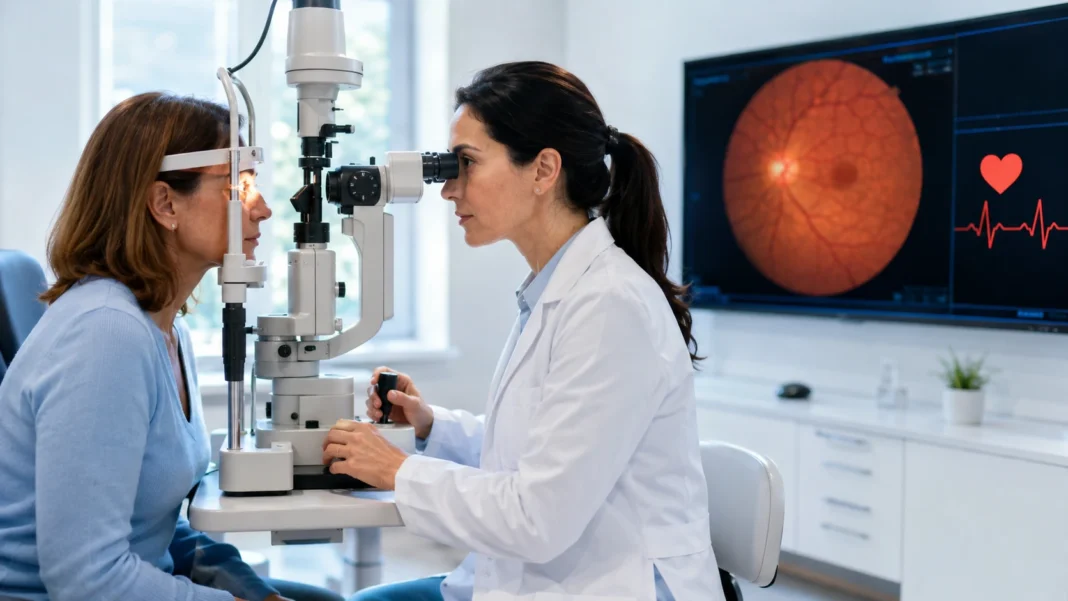
The retina sits at the back of your eye. It is packed with tiny blood vessels that doctors can see without surgery or scans. This is rare. Most blood vessels in your body sit deep under skin and muscle. The retina is different. An eye doctor can look right at it during a normal visit.
These small vessels share the same basic structure as the arteries and veins that feed your heart. When something changes in the retina, it often means something similar is happening in blood vessels elsewhere in your body. Doctors call this a shared vascular system. If the retina shows stress, the heart may be under stress too.
Can Eye Exams Detect Heart Disease?
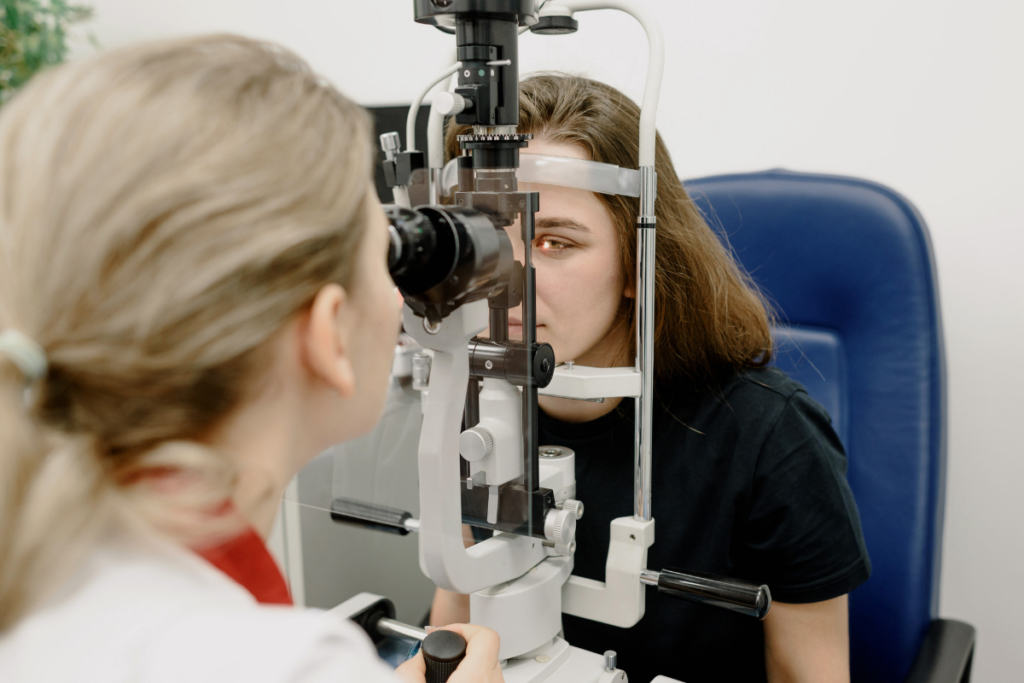
Eye exams can reveal signs that suggest heart disease might be present. They cannot confirm a diagnosis on their own. Think of it as an early flag, not a final answer.
An eye doctor looks for changes in the blood vessels, bleeding in the retina, or swelling around the optic nerve. These findings do not prove you have heart disease. They tell your doctor that further testing may be a good idea. From there, your eye doctor may refer you to your primary care physician or a cardiologist for more testing.
Signs of Cardiovascular Disease That May Show Up in an Eye Exam
High Blood Pressure
High blood pressure can damage the small vessels in your retina over time. This is called hypertensive retinopathy. Doctors may see narrowed arteries, small areas of bleeding, or swelling around the optic nerve. These changes often show up years before a person feels any symptoms.
High Cholesterol
Cholesterol can build up and break loose from artery walls. Small pieces sometimes travel to the retina and get stuck in a blood vessel. Eye doctors call these Hollenhorst plaques. Cholesterol can also show up as small yellow deposits on the eyelids, known as xanthelasma.
Diabetes
Diabetes damages blood vessels throughout the body, including the eyes. This condition is called diabetic retinopathy. It can cause blood vessels to leak, swell, or form small bulges called microaneurysms. Left untreated, it can affect your vision. Diabetes also raises the risk of heart disease, so these two conditions often go hand in hand.
Atherosclerosis
Atherosclerosis is the buildup of plaque inside artery walls. It narrows the space blood can flow through. When this happens in the eyes, doctors may notice slower blood flow or changes in how the retina looks. This same plaque buildup happens in the arteries that feed your heart.
Can Eye Exams Help Prevent a Heart Attack?
An eye exam by itself will not prevent a heart attack. What it can do is help catch problems early, while there is still time to act. Early action gives you a real chance to lower your risk before things get worse.
If your eye doctor spots signs of high blood pressure, high cholesterol, or diabetes, they will usually recommend you see your regular doctor. From there, you and your doctor can build a plan to manage these conditions. Programs focused on heart health, like those built to help patients prevent heart attack risk through early screening and lifestyle changes, work well alongside the information your eye doctor uncovers.
Can Retinal Imaging Predict Future Heart Disease?
Retinal imaging uses cameras and scanning tools to take detailed pictures of the back of your eye. Two common tools are fundus photography and optical coherence tomography, known as OCT. These tools let doctors see fine details in the retina that are hard to spot with the naked eye.
Researchers are studying whether these images can predict heart disease before other symptoms appear. Some early studies show promise. Still, this research is ongoing. Retinal imaging is not yet a stand alone tool for predicting heart attacks. It works best as one part of a bigger health picture.
Artificial Intelligence and the Future of Heart Disease Detection
Scientists are training computer programs to study thousands of retinal images. These programs look for patterns that may point to future heart problems. Some studies suggest AI tools could one day help predict heart disease risk using nothing more than a retina photo.
This technology is still new. It is not ready to replace a full checkup with a doctor. For now, think of AI retinal analysis as a tool that may support your care in the future, not a replacement for the tests you get today.
Who Should Have Regular Eye Exams?
Regular eye exams matter most for people who are:
- Over the age of 40
- Living with diabetes
- Managing high blood pressure or high cholesterol
- Have a family history of heart disease
- Current or former smokers
- Older adults with other health concerns
If you fall into one or more of these groups, ask your eye doctor how often you should be checked.
What Happens During a Comprehensive Eye Exam?
A full eye exam covers more than just a vision test. Your doctor will likely check your eye pressure, take images of your retina, and look closely at your optic nerve. In many cases, they will dilate your pupils to get a wider view of the blood vessels inside your eye. This full picture helps doctors catch small changes early.
When Should You See a Doctor Right Away?
Some symptoms need urgent care, not a routine appointment. Call a doctor or go to the emergency room if you notice sudden vision loss, flashes of light, chest pain, or signs of a stroke such as slurred speech or weakness on one side of the body. These symptoms should never wait for a scheduled visit.
Frequently Asked Questions
What are the symptoms of cardiac signs in the eyes?
Common signs include narrowed blood vessels, small areas of bleeding, swelling near the optic nerve, or yellow deposits near the eyelids.
What do eyes look like with heart failure?
Heart failure can cause swelling in the blood vessels of the retina and changes in blood flow that an eye doctor can detect during an exam.
What diseases can be detected in an eye exam?
Eye exams can reveal early signs of diabetes, high blood pressure, high cholesterol, and in some cases early markers linked to heart disease.
What are the signs of a heart problem?
Common warning signs include chest pain, shortness of breath, fatigue, and swelling in the legs. Some of these link to changes doctors can also spot in the eyes.
Can an eye exam detect heart disease?
An eye exam cannot diagnose heart disease on its own. It can reveal signs that suggest a person should see a doctor for further testing.
A Simple Step Toward Better Health
Your eyes offer a small window into the health of your whole body. A routine eye exam will not replace a visit to your doctor, but it can catch warning signs early. Pairing regular eye care with routine checkups gives you a fuller picture of your health and more time to act on it.