


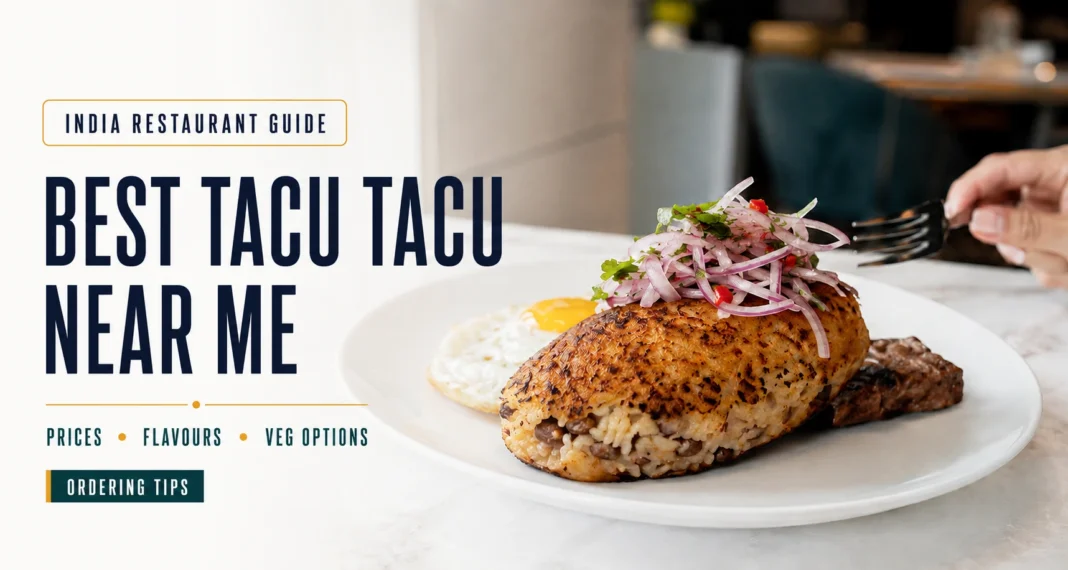
An old Lower Parel menu gives one of the clearest records of tacu tacu in India. Luca listed Tacu Tacu Con Apanado at ₹620. LIMA BKC also served a vegetarian form of the dish in 2016. Neither example, however, proves that a diner can walk into the same place and order it today.
That is the unusual position of tacu tacu in India. The dish has reached Indian restaurants, but it rarely stays on a permanent menu. It may return during a Peruvian food festival, a chef takeover, or a short seasonal promotion. Tacu tacu itself is easy to understand. Cooked rice and beans are seasoned, pressed together, and browned in a pan. The outside turns crisp. The beans keep the middle soft. Restaurants may serve it plain or add egg, vegetables, meat, seafood, plantain, or lomo saltado.
This best tacu tacu near me guide focuses on the Indian dining experience. It separates active restaurants from old listings, explains realistic prices in rupees, decodes Spanish menu names, and covers vegetarian, Jain, halal, allergy, delivery, and storage concerns.
India has tasted tacu tacu, but it remains hard to find
Mumbai has had the most visible connection with the dish. LIMA BKC served a vegetarian preparation that Indian food coverage described as crunchy and flavourful. Luca in Lower Parel later listed a breaded-meat version at ₹620. Both examples are useful as part of India’s Latin American food history. They should not be treated as confirmed current recommendations. Restaurant pages often remain online long after an outlet closes or replaces its menu.
INKA By Bastian is a current Peruvian-Asian restaurant in Lower Parel. Its official menu contains ceviche, anticucho, Peruvian chillies, salsa criolla, and other flavours linked to Peru. The menu checked on June 24, 2026, did not include tacu tacu as a regular item. That absence says more about availability than a long list of old restaurant names could. Even a modern Peruvian-influenced restaurant may not serve the dish every day.
Bengaluru, Delhi NCR, and Goa have Latin American restaurants, international hotels, food festivals, and chef-led events. Tacu tacu may appear at such events, but the listing often lasts for only a few days. A permanent, verified nationwide list does not exist at present.
Tacu tacu is not the only traditional bean dish that can be difficult to find outside its home region. Our guide to the best fabes con almejas near me explains how another regional bean dish should taste and what to check before ordering it.
The base is simple, but the texture is not
Traditional tacu tacu starts with cooked rice and beans, often left from an earlier meal. The cook adds onion, garlic, chilli, herbs, and spices. The mixture is pressed into an oval, a thick round, or a folded mound before it reaches a hot pan. Canary beans are a common Peruvian choice. They may also appear under the names mayocoba or Peruano beans. Lentils, lima beans, and other beans are used in regional and household recipes.
The ideal result has two separate textures. A thin, golden crust forms on the outside. The centre stays moist because part of the bean mixture has been mashed. It should not feel like a dry rice cutlet. It should not fall apart like loose rice and rajma either. The beans act as the binder, but the cook should not turn the entire mixture into a smooth paste. A pale surface usually means the pan did not create enough crust. A blackened surface may taste bitter. Too much oil on the plate can mean the pan was not hot enough, so the mixture absorbed fat before it browned.
It feels familiar to an Indian diner, but it tastes different
Rice and beans are hardly unusual in India. Rajma chawal, dal chawal, khichdi, and several regional meals place cereals and pulses together. Tacu tacu uses that familiar combination in a very different form. The rice and beans are not served separately. They become one thick, pan-fried portion. Lime, Peruvian chilli, garlic, onion, and salsa criolla create the main flavour.
Garam masala does not define the traditional dish. Neither does a rich tomato gravy. Strong turmeric, curry powder, or too much coriander powder can make a home version taste more like an Indian rice cutlet. Cumin may appear, but it should stay in the background. The beans, toasted rice, chilli, and lime need space to come through.
A useful Indian comparison would be the contrast found in a well-cooked cheela or adai: browned outside, softer within. The ingredients and taste are not the same, but the textural idea is easier to understand through that comparison.
Expect gentle chilli rather than curry-level heat
Ají amarillo gives many Peruvian dishes their distinct colour and flavour. It is a yellow-orange chilli with fruity notes and moderate heat.
A traditional plate should taste savoury and earthy and it can have a mild chilli warmth, but it does not need the heat of a sharp Indian pickle or a very spicy curry.
Ají panca may also appear. It adds a deeper, less aggressive chilli flavour. Garlic, onion, oregano, cumin, pepper, and herbs vary from one recipe to another.
Salsa criolla usually sits beside or above the tacu tacu. Red onion, lime juice, herbs, and salt give it a fresh, acidic edge. That acidity cuts through the oil and balances rich toppings.
Indian kitchens may replace imported Peruvian chillies with local chillies or a house-made sauce. The result can still be enjoyable. It should be described as an adaptation if the replacement changes the main flavour.
A good one should taste complete before the topping arrives
Heavy seafood sauce, cream, melted cheese, or stir-fried meat can make any plate look generous. None of those toppings can repair a poor rice-and-bean base. The crust should have an even brown colour. Burnt patches point to uneven heat. A soft, pale surface means the mixture never formed the toasted layer that gives the dish its character.
The centre should hold together when cut. It can feel creamy without becoming wet or gluey. A dry centre often comes from too little mashed bean, too much rice, or excess time in the pan. Oil should add colour and crispness rather than collect around the edges. A greasy portion soon feels heavy, especially after the addition of egg, meat, or sauce.
Fresh preparation makes a major difference. A well-browned tacu tacu loses its crust if it waits under sauce. Steam inside a covered container produces the same problem. The best test is a bite taken from the edge and centre together. That bite should contain toasted rice, creamy beans, mild chilli, garlic, and enough salt to taste good without another sauce.
Old pages can send diners to the wrong place
A menu uploaded in 2017 may still appear in search results. Restaurant directories do not always remove dishes after an outlet closes or changes direction. A current check needs more than one source. The restaurant’s own website or social page should come first. Zomato and Swiggy can help, but the correct branch and date matter.
A sensible availability check covers five details:
- The dish appears on a recent menu.
- The selected outlet is still active.
- The restaurant serves it on the planned day.
- The listed price covers the full plate rather than a side.
- The kitchen can meet any vegetarian or allergy request.
A telephone call is worthwhile when the restaurant is far away. It can also reveal an unlisted special. Some kitchens prepare tacu tacu as a substitute for plain rice even when it does not appear as a separate main course.
Indian prices need a wide range
Tacu tacu has no standard national price. Imported ingredients, specialist chefs, restaurant location, protein, and presentation can change the bill sharply. A basic portion uses rice, beans, seasoning, and oil. That should cost less than one topped with tenderloin, lamb, prawns, octopus, or several sauces.
These figures work as planning estimates rather than confirmed menu rates:
| Style of order | Likely price in India |
|---|---|
| Plain side or small portion | ₹350 to ₹650 |
| Full vegetarian plate | ₹500 to ₹900 |
| Egg or paneer adaptation | ₹600 to ₹1,000 |
| Chicken or fish version | ₹700 to ₹1,200 |
| Lamb, tenderloin, or lomo saltado | ₹900 to ₹1,600 |
| Seafood or fine-dining version | ₹1,100 to ₹2,000 or more |
Luca’s former ₹620 listing gives a real Indian example, but it should not set expectations for every restaurant. A modern fine-dining plate can cost much more. Restaurant context also matters. INKA By Bastian lists an average meal cost of roughly ₹5,000 to ₹6,000 for two without alcohol. A speciality dish at such a venue cannot be compared directly with a side at a casual café.
Taxes and service charges may sit outside the printed rate. Delivery platforms may add packaging, handling, or distance fees. Premium seafood can also push the price above the usual range.
The Spanish words after the name are worth reading
“Tacu tacu” describes the rice-and-bean base. The remaining words explain the topping, filling, or style.
Solo leaves the base uncovered
Tacu tacu solo means a plain portion. It may appear under sides instead of main courses. This version exposes the cook’s technique. There is no cream or meat sauce to hide weak seasoning. It also pairs easily with grilled vegetables, chicken, fish, salad, or salsa criolla.
Montado usually includes steak and egg
Tacu tacu montado is a fuller meal. Steak and fried egg are common, and some restaurants also add plantain. A soft yolk brings richness. It also runs across the surface and weakens the crust once broken.
A lo pobre is much larger than the name suggests
A lo pobre often combines meat, fried egg, and sweet plantain. Rice and beans already make a dense base, so this plate can be very filling. An Indian kitchen may replace beef with lamb, chicken, or another protein. That change should appear clearly on the menu.
Lomo saltado brings a savoury stir-fry sauce
Tacu tacu con lomo saltado usually comes with beef or tenderloin, tomato, onion, chilli, and soy-based stir-fry sauce. The sauce reflects Chinese influence within Peruvian cuisine. It can carry plenty of salt and may contain wheat through standard soy sauce. Serving the lomo beside the tacu tacu preserves more crust. Direct contact creates a softer, sauce-soaked plate.
Mariscos points to seafood, not one fixed recipe
Tacu tacu con mariscos may contain prawns, fish, squid, octopus, or a mixture. The seafood may sit on top, appear inside, or come in a separate sauce. Some kitchens use a creamy preparation. Others rely on chilli, stock, tomato, or lime. “Mariscos” alone does not identify every seafood ingredient.
Relleno hides the main filling
Relleno means filled or stuffed. Chicken, meat, seafood, or vegetables sit inside the rice-and-bean cake. The plate may appear smaller than a topped version. Its centre can still hold a generous amount of protein.
Apanado means breaded and fried
Tacu tacu con apanado comes with a breaded topping, often meat or fish. Luca’s former Mumbai listing used this name. Breading adds wheat and extra oil. It also creates another crisp element beside the softer centre.
Vegetarian status cannot be guessed from the base
Rice and beans sound vegetarian. The kitchen method may tell a different story. Traditional recipes can use bacon, pork fat, lard, or meat stock in the beans. Fried egg, butter, cheese, cream, and mayonnaise may appear in toppings or sauces. A green vegetarian symbol helps, but it may not answer every question about stock or shared equipment. FSSAI menu-labelling rules require covered food businesses to show vegetarian or non-vegetarian identification and relevant allergen details. Direct confirmation is still useful when the recipe is unfamiliar.
A clear vegetarian request should cover the bean mixture as well as the topping. The kitchen needs to confirm:
- No bacon, lard, or meat stock in the beans
- No hidden egg in the mixture or sauce
- No fish or seafood stock
- No meat sauce on the cooking surface
Paneer is an Indian adaptation rather than a traditional topping. Grilled mushroom, avocado, vegetables, and salsa criolla remain closer to the usual character of the dish.
Vegan diners have a few extra ingredients to rule out
A plain-looking portion may contain butter or animal fat. Cream can enter a sauce, and mayonnaise may appear in a garnish. A vegan version should use vegetable stock and oil. It should contain no egg, dairy, lard, bacon, meat stock, or seafood stock.
Shared pans do not make food non-vegan for every diner, but some people prefer strict separation. That request needs to be made before preparation begins. Restaurants may have no way to change a premixed batch. A freshly prepared plain version offers the best chance of adjustment.
A Jain version needs its own batch
Standard tacu tacu commonly includes onion and garlic. Salsa criolla depends heavily on raw onion, so removing only the garnish does not solve the issue. A Jain version must begin with a separate rice-and-bean mixture. Onion, garlic, and restricted root ingredients should not enter the base or sauce.
Rice, beans, permitted vegetables, lime, mild chilli, cumin, coriander, and tomato can create a workable custom plate. It would be a local adaptation rather than a traditional preparation. Advance notice gives the kitchen time to plan. A request made after the normal mixture has been prepared may not be possible.
Halal suitability depends on more than the visible meat
Tacu tacu solo can avoid many meat concerns, but the beans may still contain animal fat or stock. Lomo saltado traditionally uses beef. Indian restaurants may offer tenderloin, chicken, or lamb instead. The type of meat does not confirm halal sourcing.
Pisco or another alcoholic ingredient can appear in some sauces. Heat can reduce alcohol, but it may not remove every trace. The recipe needs a direct check when this matters to the diner. Separate utensils and pans may also be relevant. A kitchen that cooks pork and other meat on the same surface may not meet every diner’s requirements.
Gluten can enter through sauce and breading
Plain rice and beans do not naturally contain gluten. The restaurant version may still include wheat. Standard soy sauce often contains wheat. This affects many lomo saltado preparations. Apanado meat or fish uses breading, and thickened sauces may contain flour.
Shared fryers, pans, and utensils create another source of cross-contact.
| Part of the plate | Possible allergen |
|---|---|
| Fried egg | Egg |
| Lomo saltado sauce | Soy and wheat |
| Apanado meat or fish | Wheat |
| Seafood topping | Fish or shellfish |
| Cream sauce | Milk |
| Modern sauce or garnish | Sesame or nuts |
| Shared fryer or pan | Allergen cross-contact |
A gluten-free note beside the rice-and-bean base does not confirm that the entire plate is safe. Diners with coeliac disease or serious allergies need details about the sauce, stock, breading, and equipment.
It can be balanced, but it is not automatically light
Rice supplies carbohydrates. Beans add plant protein, fibre, iron, and B vitamins. Indian dietary guidance also places pulses among useful sources of protein, carbohydrates, iron, and B-complex vitamins. The cooking method adds oil. The portion and topping then decide how heavy the final meal becomes.
Plain tacu tacu with vegetables and salsa criolla is very different from a large plate with fried egg, tenderloin, plantain, cream sauce, and fries. Soy sauce, stock, and prepared sauces can raise sodium. Fried toppings and excess oil add more energy without improving the basic rice-and-bean balance.
A lighter order could include a moderate portion with grilled vegetables, mushrooms, chicken, or fish. Sauce served separately gives more control over salt and richness. It should not be promoted as a weight-loss dish without a recipe and serving size. A large portion contains rice, legumes, oil, and possibly several toppings.
Indian pantry ingredients can produce a close version
Canary beans and ají amarillo are not easy to find in every Indian city. A home cook does not need to abandon the idea because of two imported ingredients.
Several local substitutes work well:
| Peruvian ingredient | Indian substitute |
|---|---|
| Canary or mayocoba beans | Lobia, white beans, chitra rajma, or whole masoor |
| Peruvian white rice | Sona masoori or medium-grain white rice |
| Ají amarillo | Yellow capsicum plus mild green or yellow chilli |
| Salsa criolla | Red onion, lime, coriander, chilli, and salt |
| Ripe plantain | Nendran banana or another firm plantain |
| Olive oil | Neutral cooking oil or a small amount of olive oil |
Lobia gives a mild taste and creamy texture. Chitra rajma works well but produces a deeper bean flavour. Whole masoor creates a softer, more earthy version. Sona masoori binds more easily than long-grain basmati. Basmati can still work, but its separate grains may cause the cake to break. A yellow capsicum cannot fully copy ají amarillo. Combined with a mild chilli, it supplies some fruitiness, colour, and heat without overwhelming the beans.
A home batch starts with yesterday’s rice
Use one cup of cooked rice and one cup of thick cooked beans. Cold leftovers work well, provided they were stored safely. Drain the beans if they contain excess liquid. Mash about half and leave the rest partly whole. This creates a creamy binder without removing all texture.
Add finely chopped onion, garlic, mild chilli, a small amount of cumin, black pepper, and salt. Mix in the rice. The final mixture should hold when pressed but should not resemble smooth dough. Heat a broad pan with a thin layer of oil. Shape the mixture into one thick oval or two smaller cakes. Leave the first side alone until it develops a firm brown crust. Turn it carefully and brown the second side. Serve it with lime, red onion, coriander, and mild chilli.
Fried egg, grilled mushroom, paneer, chicken, fish, or plantain can turn it into a larger meal. Paneer changes the tradition, but it suits an Indian vegetarian table. Strong garam masala, turmeric, and curry powder should be used with restraint or omitted. They can pull the dish away from its Peruvian flavour.
Delivery and crispness rarely get along
Fresh tacu tacu leaves the pan with a dry, toasted surface. A sealed container traps steam and sends that moisture back onto the crust. A seafood or lomo sauce makes the problem worse. Twenty or thirty minutes under sauce can remove most of the crisp texture.
Separate packing helps. The restaurant can place the base in one container and the sauce in another. Salsa criolla, egg, and plantain can also travel separately. Pickup usually produces a better result than a long delivery route. The dish spends less time in steam and reaches the table sooner.
A microwave heats the centre but keeps the outside soft. A lightly oiled pan over medium heat works better. Each side needs direct contact with the pan until some crust returns.
Indian weather leaves little room for careless storage
Tacu tacu may contain cooked rice, beans, egg, meat, or seafood. None of these should sit inside a warm car or on a table for hours. FSSAI guidance advises that prepared food should stay cold below 5°C or hot above 60°C. Cooked food also needs thorough reheating before it is eaten again.
A shallow container helps leftovers cool faster. The food should enter the refrigerator promptly rather than remain in its warm delivery box. Indian summer heat raises the risk. A parked vehicle can become hot within a short time, even when the food still smells normal. A pan can restore the crust later. The middle must become fully hot as well. Surface colour alone does not confirm safe reheating.
Nutrition claims about unfamiliar foods can differ from one source to another. Our guide to checking online nutrition advice explains how to separate useful diet information from unsupported health claims.
Order the plain version once before loading it up
Tacu tacu solo with salsa criolla on the side is the most revealing first order. It shows whether the kitchen understands the rice-to-bean balance, browning, moisture, and seasoning. A fried egg or grilled protein can follow when a larger meal is needed. Lomo saltado adds a strong savoury sauce. Seafood gives the plate more richness and usually raises the price.
The first bite should include both the edge and centre. The crust should crack lightly. The inside should feel soft but not wet. Lime and onion should brighten the beans rather than cover them. A topping can improve a good tacu tacu. It should never be required to make the base worth eating.
Our Information Review Process
Our team collected and reviewed the information in this guide using reliable sources, current menus, official guidance, and available restaurant details. Prices, menus, and availability may change over time. If you notice outdated or incorrect information, please tell us. Our editorial team will review your report and update the article when reliable evidence confirms the change.