


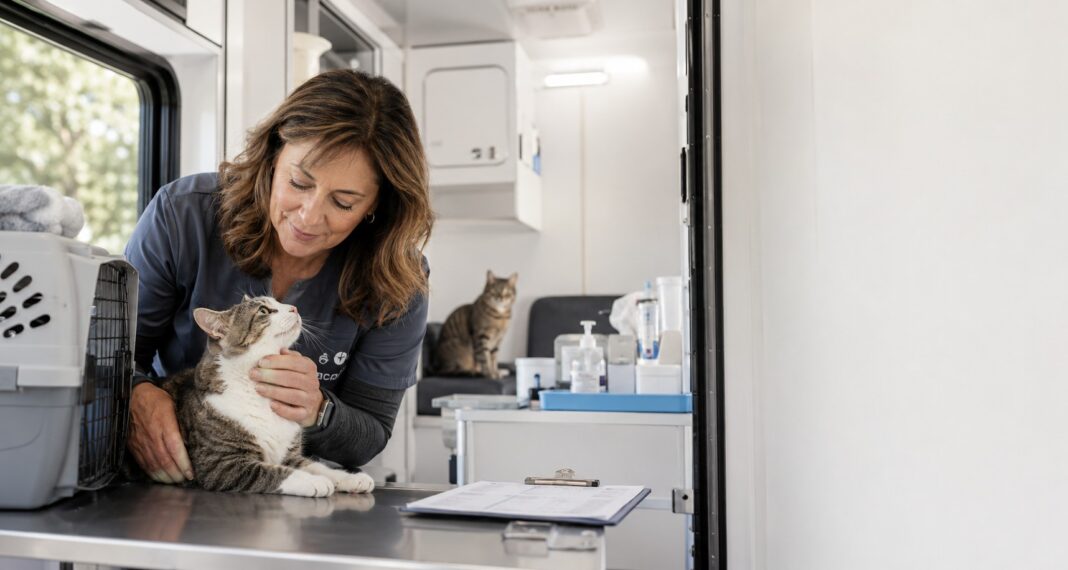
Ten cats entered a mobile veterinary unit in Connecticut on March 1, 1997. Each received surgery and vaccinations. It was a modest first day, but the idea behind it was far from ordinary. The clinic did not wait for cat owners to find an affordable veterinary hospital. It traveled to them. Donna Sicuranza Marconi helped turn that idea into a long-term animal welfare program. Alongside veterinarian Dr. John A. Caltabiano, she helped develop the Mobile Feline Spay/Neuter Clinic operated by Tait’s Every Animal Matters, commonly known as TEAM.
The Westbrook, Connecticut, nonprofit now reports that its veterinarians have sterilized and vaccinated more than 225,000 domestic and feral cats since the mobile clinic began. Sicuranza serves as TEAM’s executive director. Most reliable information about her concerns her professional work rather than her personal life. Her exact age, date of birth, education, parents, and early family background do not appear in confirmed public sources.
The public facts about Donna Sicuranza Marconi
| Detail | Confirmed information |
|---|---|
| Full name | Donna Sicuranza Marconi |
| Commonly known as | Donna Sicuranza |
| Profession | Nonprofit executive and animal welfare advocate |
| Current role | Executive Director |
| Organization | Tait’s Every Animal Matters |
| Short name of organization | TEAM |
| Main field | Feline health and population control |
| Work connected to | Connecticut, United States |
| Organization base | Westbrook, Connecticut |
| Best known for | Helping establish and lead a mobile feline spay, neuter, and vaccination clinic |
| Time associated with TEAM | Since at least the 1990s |
Her story makes more sense when it starts with the problem
Connecticut had no shortage of cats in need during the 1990s. Animal shelters dealt with unwanted kittens and feral colonies continued to grow. Some owners could not afford surgery at a private veterinary hospital. Others lacked easy transport to a clinic. The problem did not come from one cause. Cost, distance, limited access, and unplanned litters all contributed to it.
TEAM chose to focus on prevention and Its leaders understood that shelters could not solve feline overpopulation through adoption alone. More kittens would continue to arrive unless owners and colony caretakers had access to affordable spay and neuter services.
The organization built its program around that basic fact. Preventing a litter could reduce future pressure on shelters, rescue groups, animal-control workers, and community volunteers. Sicuranza’s career became closely tied to that approach.
TEAM grew from an earlier animal rescue effort
The organization’s full legal history began before the mobile unit appeared. Veterinarian Dr. John a Caltabiano had tried to establish an animal adoption referral service. The project had a useful purpose, but limited funds made it difficult to maintain.
A later gift from the estate of Vernon A. Tait gave the nonprofit a stronger financial base. Tait was a Connecticut businessman with an interest in animal welfare. The organization became the Vernon A. Tait All-Animal Adoption, Preservation and Rescue Fund. The shorter name, Tait’s Every Animal Matters, created the acronym TEAM.
That name eventually became much more familiar to Connecticut cat owners than the full legal title. The Tait bequest gave the organization a chance to pursue a focused project. Instead of attempting to cover every part of animal rescue, TEAM placed its attention on feline population control and basic preventive care. That narrower mission proved important later.
Donna Sicuranza came from communications rather than medicine
Sicuranza was not a veterinarian and a Connecticut Magazine report published in 2013 stated that she had previously worked in journalism and public relations. Those fields may seem separate from animal medicine, but the skills had practical value inside a nonprofit. A mobile clinic needs veterinarians and technicians. It also needs someone to explain the service, coordinate with towns, communicate with donors, manage public questions, support fundraising, and help owners understand appointment rules.
Clear communication can decide whether a community program reaches the people it was created to serve. Sicuranza could help connect the medical side of TEAM with the public. Her role later expanded into executive leadership, where administration and outreach became part of the same job. TEAM does not publish a complete account of her daily schedule. It would be inaccurate to assign every operational task to her personally. Public records do establish her long involvement in the clinic’s creation, development, representation, and continued direction.
How the Mobile Clinic Took Shape
TEAM began work on its mobile cat clinic in 1996. Dr. John A. Caltabiano and Donna Sicuranza helped turn the idea into a real plan. The goal was clear. TEAM wanted to take basic cat care to communities across Connecticut. The project still required careful preparation. The vehicle needed space for medical checks, anesthesia, surgery tools, staff, and safe recovery areas. It also had to carry all equipment between towns without risk.
A mobile clinic that performed cat surgery was uncommon in Connecticut at the time. TEAM chose to move ahead despite the practical challenges.
The clinic served its first patients on March 1, 1997. Staff treated ten cats that day. Each cat received surgery and vaccines. Public demand soon exceeded early expectations. TEAM treated about 5,000 cats during the first six months. The total rose to almost 8,000 before the clinic completed its first year.
The first vehicle could no longer support the number of appointments. TEAM soon added a larger unit to meet the demand. The fast growth showed that many people already needed affordable cat care. Some owners could not pay the full cost at a private veterinary hospital. Others had no easy access to a suitable clinic. Feral cat caretakers faced extra pressure because they often cared for entire colonies rather than one pet.
Early Concerns About the Mobile Clinic
TEAM’s low-cost mobile clinic did not receive full support at first. Some local veterinarians feared that the service could take patients away from private clinics. Others had doubts about surgery inside a mobile unit. TEAM addressed those concerns through a clear service limit. The clinic did not offer complete veterinary care. It focused on spay and neuter surgery, vaccines, and a few related treatments.
Donna Sicuranza explained this approach in a 2021 interview. She said cat owners should still visit a regular veterinary hospital for routine care, illness, injuries, and long-term treatment. The mobile clinic served people who had limited access to basic preventive care. It gave them a lower-cost option without replacing private veterinary practices.
This narrow focus became one of TEAM’s strengths. Staff could use the same process at each clinic stop and help more cats across Connecticut. Cats with serious health problems still needed care at a full-service hospital. This clear line helped TEAM stay focused on its main purpose.
Donna Sicuranza’s Role at TEAM
Donna Sicuranza Marconi serves as TEAM’s executive director, but her role goes beyond administration. She helped plan the mobile clinic, explained its purpose in media interviews, and represented TEAM in discussions about animal population control.
She has also helped the nonprofit manage staff, vehicles, supplies, clinic locations, appointments, donations, and public trust. Her long-term role has supported TEAM through staff changes, new mobile units, revised fees, and major service milestones.
Affordable Care at the Center of TEAM’s Work
Spay and neuter care often costs more than the surgery alone. Pet owners may also face fees for an examination, anesthesia, vaccines, medication, tests, and follow-up care. Travel can add another challenge, especially for families who do not live near an affordable veterinary clinic. TEAM mobile clinic helps reduce these barriers. It visits scheduled locations across Connecticut, which gives cat owners access to care closer to home. Owners must book an appointment and bring their cats to the selected clinic stop.
The service package may include a basic medical exam, spay or neuter surgery, core vaccines, a nail trim, and ear mite treatment when needed. TEAM may also offer some kitten services and parasite care. Fees, eligibility rules, and available treatments can change, so owners should check the latest details with TEAM before an appointment.
The program has kept the same purpose for decades. It provides essential feline care at a lower cost and helps owners who may not have access to standard veterinary services. Donna Sicuranza Marconi’s long-term role has helped TEAM protect that mission and keep the mobile clinic active across Connecticut.
TEAM’s Mobile Clinic Across Connecticut
TEAM operates from Westbrook, but its mobile clinic serves many parts of Connecticut. Past stops have included East Haven, Enfield, Farmington, Middletown, Naugatuck, Newington, Old Saybrook, Torrington, Vernon, Wallingford, and Waterford.
Clinic routes depend on host locations and available dates, so the schedule may change. Cat owners must book an appointment before a visit. The program serves Connecticut residents, and both pet cats and feral cats may qualify under TEAM’s current rules. A local news report from April 2021 covered TEAM’s visits to Vernon and Newington. About 29 owners attended one clinic session, and the mobile unit often treated close to 30 cats per stop at that time.
Each session requires careful coordination. Staff verify records, prepare cats for surgery, monitor them after treatment, and return each animal to the correct owner or caretaker. Donna Sicuranza Marconi has credited TEAM’s long record to its skilled veterinary staff, loyal donors, and support from local communities.
The Wider Impact of 225,000 Treatments
TEAM reports that its veterinary staff has spayed, neutered, and vaccinated more than 225,000 cats since 1997. This figure shows the scale of the program, but it does not reflect every result. Each surgery can prevent future litters. One female cat may have several litters, and her offspring may later reproduce. Early sterilization helps stop this cycle before the number of cats grows further.
The wider effect can reach shelters, rescue groups, and local animal-control teams. Fewer unwanted litters may reduce shelter intake, limit the growth of feral colonies, and ease pressure on community volunteers. The procedure may also support the health and safety of each cat. It can lower the risk of some reproductive diseases and reduce behavior linked to mating, roaming, fights, and territorial disputes.
TEAM has kept the same goal since its early years. The clinic aims to reach cats before they reproduce and make preventive care more accessible across Connecticut.
Care for Feral and Community Cats
Feral and community cats need a different type of care from household pets. Many avoid close contact with people and cannot adjust to life inside a home. Their caretakers may also have limited details about their age or medical history. TEAM uses the trap, neuter, and return method for eligible cats. A caretaker places the cat in a humane trap and takes it to the clinic for surgery. After a safe recovery period, the cat returns to its original colony or familiar area.
This process prevents new litters without removing the cat from the place it knows. Staff may add a small ear tip or notch after surgery. The mark shows that the cat has already received treatment and helps prevent another unnecessary capture. TEAM has also offered partial rebates for some feral cat procedures. Its rules require a humane trap and the return of the cat to its original location. This work shows that the organization supports both owned cats and outdoor colonies that depend on local caretakers.
Donna Sicuranza’s Role in State Animal Policy
Donna Sicuranza’s work with TEAM extends beyond mobile clinic services. She has also represented the organization in state discussions about animal welfare and population control. Connecticut Department of Agriculture records show that she attended an Animal Population Control Program Working Group meeting in Hartford on June 27, 2019. The group discussed cat licenses, rabies records, municipal shelters, animal imports, veterinary access, and financial support for care programs.
Her attendance does not show that she approved every proposal. It confirms that TEAM took part in wider talks with veterinarians, shelters, state agencies, town officials, and animal rescue groups. This role gave the organization a voice in decisions that could affect cats and their caretakers across Connecticut.
TEAM After Dr. John Caltabiano Death
Dr. John A Caltabiano died in November 2009. He was one of TEAM’s founders and played a major role in the medical side of its mobile clinic. His obituary identified Donna Sicuranza as his longtime partner and described his commitment to humane animal care.
His death created a major change for the organization. A Connecticut Department of Agriculture publication later stated that Sicuranza planned to continue his work. Under her leadership, TEAM kept its mobile clinic active and maintained its veterinary services across Connecticut.
The nonprofit later added newer clinic units and reached several major milestones. TEAM completed more than 200,000 procedures by 2019 and later reported care for over 225,000 cats. Vehicles, costs, staff roles, and medical practices changed over the years, but the main purpose remained the same. TEAM continued to offer affordable spay, neuter, and vaccine services to cats across the state.
A Clear Purpose Helped TEAM Last
TEAM’s mobile unit attracts attention, but the program’s narrow focus has played a greater role in its success. The nonprofit does not attempt to provide every form of veterinary care. It concentrates on affordable spay and neuter surgery, vaccines, and support for feline population control.
This limited scope allows the staff to follow a consistent process at each clinic stop. They can prepare the equipment, medical supplies, appointments, and recovery areas around a small group of services. Cats with serious illnesses, injuries, or complex medical needs still require care from a full-service veterinary hospital.
TEAM has replaced vehicles, changed routes, revised fees, and adapted its medical procedures over the years. Its main purpose has remained the same. Donna Sicuranza Marconi has helped protect that focus and keep the service available across Connecticut.
Limited Details About Her Personal Life
Donna Sicuranza Marconi has kept most of her personal life outside the public record. Reliable sources do not confirm her date of birth, age, birthplace, parents, childhood, education, or detailed family history. Some biography websites may publish personal claims without naming a source. Such details should not be accepted as fact without support from an official profile, public record, or trusted interview.
More information is available about her professional background. Published reports connect her to journalism and public relations before her work with TEAM. Organization records and Connecticut news coverage also confirm her role in animal welfare from the 1990s onward.
A Similar Name Can Cause Confusion
Donna Sicuranza Marconi should not be confused with Donna Marie Sicuranza, a different woman whose obituary appears in online results. Donna Marie Sicuranza worked in banking and died in New York in 2017. Her age, relatives, career, and other personal details do not belong in a profile of the TEAM executive director.
Donna Sicuranza Marconi is associated with Tait’s Every Animal Matters and its mobile feline clinic in Connecticut. The use of her full name, along with TEAM or Connecticut, helps separate her from other people with a similar name. This distinction prevents false claims about her career, family, age, or current status.
A Career Measured Through Results
Donna Sicuranza Marconi has kept a low public profile. Her work with TEAM provides the clearest record of her career and impact. The mobile clinic treated ten cats on March 1, 1997. Within six months, the total reached about 5,000. Before its first anniversary, the clinic had served almost 8,000 cats. TEAM later replaced its original vehicle, expanded its route across Connecticut, and continued its work after the death of Dr. John A. Caltabiano in 2009.
The organization now reports more than 225,000 cats treated. That figure reflects decades of steady work, public support, and access to affordable feline care. Sicuranza helped turn a new idea into a long-term service. Her career is best defined by the cats TEAM has reached, the communities it has served, and the mission it has kept active since 1997.
Access to affordable care also affects human patients. HealthWavy guide to Ampla Health Lindhurst Medical Clinic and Xpress Care shows how one community clinic helps patients choose between regular and same-day services.