

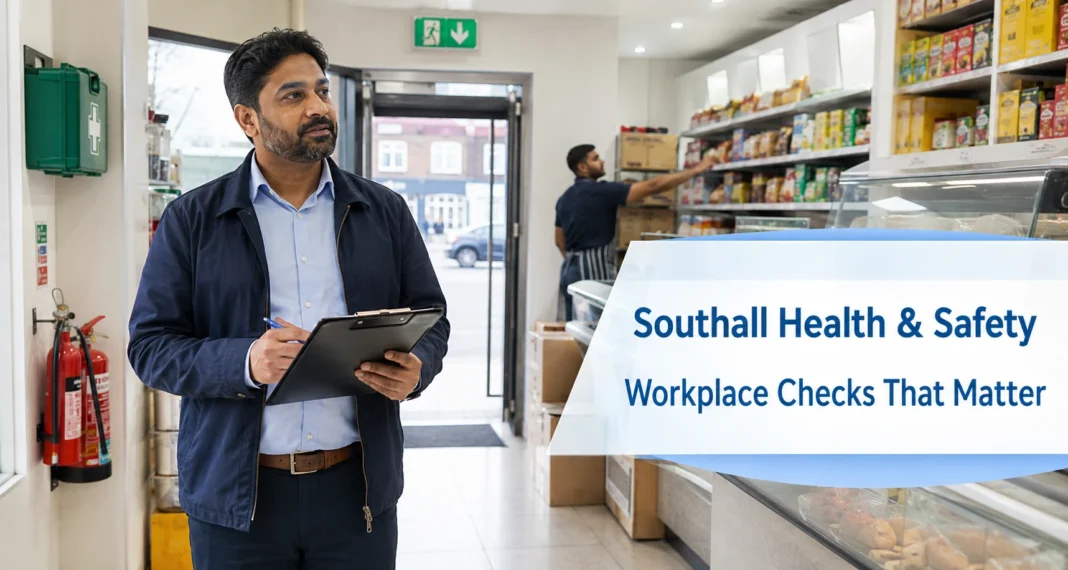
Southall health and safety matters because the area stays busy on most days. Shops open early, and many food places run late. Through the day, vans move through tight streets. Staff carry stock through small back rooms, while customers walk in and out all day. In places like this, safety is not a neat office file. It is something people feel in the doorway, near the fryer, beside the shelves, around the loading area, and at the fire exit.
Southall health and safety is not only for large companies. A small shop with three workers can still face real risk. At the same time, a family restaurant may need proper fire checks. In the same way, a warehouse can hurt someone if staff stack goods badly or use unsafe lifting methods. Even a quiet office can create problems through poor wires, blocked walkways, bad chairs, or stress.
Good safety work does not make a place perfect. It helps people see danger before it turns into harm. That is the real point.
The Local Mix Changes The Risk
Southall is not the same everywhere. One street may have food shops and retail stores. Another area may have warehouses, offices, salons, hotels, or leisure places. Many homes also sit close to business spaces because Southall is part of the London Borough of Ealing. Because of that, the mix matters. A safety plan that suits an office will not suit a hot kitchen. A restaurant plan will not cover a warehouse yard. This is why Southall health and safety should match the real workplace, not just a copied policy.
| Southall Food Business Risks | Warehouse Risks | Office Risks |
|---|---|---|
| Hot oil | Heavy lifting | Cables |
| Gas equipment | Stacked goods | Chairs |
| Allergens | Forklifts or pallet trucks | Stress |
| Food storage | Fire load | First aid |
| Slips near sinks | Loading bays | Fire routes |
| Pest control | Lighting | Screen use |
| Staff hygiene | Staff training | Poor posture |
| Waste areas | Vehicle movement | Blocked walkways |
Southall food businesses need regular checks. Food storage, hot equipment, gas, cleaning, and hygiene can affect staff and customers at the same time. A warehouse has different risks. Heavy lifting, stacked goods, moving vehicles, and fire hazards can cause harm quickly if no one controls them.
The Law Behind The Safety Duties
UK workplace safety law is clear on one thing. Employers cannot ignore risk. The Health and Safety at Work etc. Act 1974 puts a duty on them to protect workers and other people who may be affected by the business. That can include staff, customers, visitors, contractors, delivery drivers, and sometimes people near the site.
The Management of Health and Safety at Work Regulations 1999 also matter. These rules ask employers to look at the workplace properly. What can hurt someone? Who may get hurt? What can be done to lower the risk? That is the basic idea. The law does not ask a business to do impossible things. Instead, it asks for reasonable care. If the risk is serious, the action should be serious too.
A wet floor near the entrance needs quick action. Blocked fire exits should be cleared right away. Broken ladders should not stay in use. Also, a worker with no training should not handle dangerous equipment alone. Paperwork can help, yes. But a clean folder means little if the real workplace is unsafe. Business owners can also check the official HSE risk assessment guidance to understand how hazards, risks, and control steps work in a real workplace.
Who Handles Southall Health and Safety Concerns
Not every safety problem goes to the same place. In Southall, many local workplace issues can come under Ealing Council. This usually includes places like shops, offices, hotels, leisure centers, warehouses, and entertainment venues. Some workplaces are different. Construction sites, manufacturing units, some motor repair places, and higher-risk jobs may come under the Health and Safety Executive, known as HSE. So, the right authority depends on the type of work and where the risk is happening.
Also, food safety is not just a clean counter. A worker in a shop may need one route. A worker on a building site may need another. The type of workplace decides who handles the concern. A useful rule is this. If the risk comes from a normal shop, food place, hotel, office, leisure site, or similar local business, the council may have a role. If the risk comes from construction, manufacturing, or a high-risk industrial type of work, HSE may be the right body.
Small Hazards Cause Big Trouble
Most workplace accidents do not start with a big mistake. Usually, they start with small things people ignore. A box sits near the stairs. Someone leaves a cable across the floor. There is a wet patch near the entrance. Stock gets placed near a fire exit for “just one day.” Then a burnt plug socket goes unreported. Good Southall health and safety starts with small checks that staff can actually follow.
In Southall workplaces, risk does not always look serious at first. Sometimes it is just a wet floor. Grease near the kitchen. Rainwater at the entrance. A loose mat. A box left in the way. A cable on the floor. Small things, but they can still make someone slip or trip. Some areas need more care. Ladders, steps, loading bays, and storage spaces can become unsafe when people rush or nobody checks them. Hot oil, cookers, steam, heaters, knives, glass, tools, and sharp packaging can hurt a worker very fast.
Heavy lifting is common too. In shops, food businesses, and warehouses, workers move boxes and stock all day. One wrong lift can cause back pain or a real injury. Fire risk can build quietly. For example, too much stock, waste, gas problems, bad wiring, overloaded sockets, or blocked exits can turn into a serious issue. Stress should not be pushed aside either. Long hours, short staff, rude customers, and pressure from managers can wear people down. Safety is not only about floors and machines. It is also about the people doing the work.
Food businesses need extra care too. Poor storage, pests, and weak hygiene checks can affect both staff and customers. The most dangerous phrase in a workplace is often, “We always do it like this.” That line can hide years of bad habits.
Risk Assessment Should Not Sound Fancy
A risk assessment is just a careful look at what can hurt people. It does not need big words. It needs honest eyes.
A simple risk check asks
- What can harm someone here?
- Who could get hurt?
- How bad could the harm be?
- What already protects people?
- What still needs to change?
- Who will fix it?
- When will it be checked again?
When the check should change
That is enough for many small, low-risk workplaces if the owner or manager takes it seriously.
A risk assessment should change when the business changes. New equipment, new staff, new shelves, new opening hours, building work, more customers, or a new delivery route can all change the risk.
One common mistake is to write a risk assessment once and never touch it again. That may look fine in a folder, but it can fail in real life.
Food Businesses Need Tighter Control
Food is a big part of Southall, so safety cannot be treated lightly. A small takeaway, cafe, restaurant, or catering setup can affect many people in one day. Clean tables are only one part of it. Food must be stored right, prepared safely, and served in a way that does not put customers at risk. The business also needs proper labels where labels apply. If food quality, hygiene, or allergen details are weak, people can get sick fast. For food places, Southall health and safety also means clean storage, safe labels, and clear hygiene routines.
A new food business in Ealing must register at least 28 days before it starts or before a new person takes over the business. That rule matters. It gives the local authority time to know who handles food and where the business runs from. Food safety is not just a clean counter. It includes the full system.
A food business should control:
- Cooking and cooling temperatures
- Fridge and freezer records
- Raw and cooked food separation
- Allergen information
- Handwashing
- Cleaning routines
- Pest control
- Staff illness rules
- Waste handling
- Safe use of knives and hot equipment
- Gas and electrical checks
A strong food business does not rely on memory. It keeps simple records. Staff know what to check and when. Managers act when something looks wrong.
Southall Health and Safety Fire Risks Need Care
Fire safety often gets ignored because most days nothing happens. But when a fire starts, there is no time to learn the plan. Southall has shops, flats, warehouses, restaurants, and schools close together in many places. Fire planning is a key part of Southall health and safety because many local buildings sit close together.
One example came on November 25, 2025. A warehouse fire happened on Bridge Road in Southall. The site had both warehouse and retail space. At one point, around three-quarters of the building was burning. The roof later collapsed. Around 1,000 people from nearby properties had to leave because there was possible explosion risk. The official update said no injuries were reported.
That is why fire checks should stay simple but regular. Keep exits clear and Do not leave stock in escape routes. Check alarms and emergency lights then train the staff. Control waste and packaging and Store gas cylinders and chemicals safely. Do not overload sockets. Review the risk when the layout changes. A fire plan is not useful if staff only think about it after the alarm starts. They need to know it before that.
Workers Have A Voice Too
Workers should not stay silent when they see real danger. They should report it to a manager, supervisor, safety representative, or the person named in the workplace procedure.
A worker should report:
- A blocked fire exit
- A broken ladder
- Unsafe wiring
- No training for risky equipment
- Dangerous storage
- Repeated slips or near misses
- Missing guards on machinery
- Strong chemical smells
- Pest signs in a food area
- Unsafe pressure from a manager
If danger is serious and immediate, a worker may have stronger protection under UK rules. That can include leaving the work area or refusing to return until the serious danger no longer exists. This is not for minor comfort issues. It relates to real and imminent danger. Good employers do not punish staff for honest safety reports. They listen, check, and fix the issue where needed. A worker who reports danger may save the business from an accident, claim, inspection, fine, or worse.
Staff Still Have Their Own Duties
Health and safety is not only a manager problem. Workers also need to act with care. A staff member should not ignore training. They should not block exits. They should not use broken tools. They should not remove safety guards. They should not rush risky jobs just to save two minutes.
A kitchen worker should follow allergen rules. A shop worker should clean spills or report them fast. A warehouse worker should use lifting aids where needed. An office worker should report damaged wires or broken chairs. Safety culture grows from small acts. People notice when managers care. They also notice when managers only care after an inspection.
RIDDOR Is For Serious Reportable Incidents
Some workplace accidents and dangerous events need formal reporting under RIDDOR. That stands for Reporting of Injuries, Diseases and Dangerous Occurrences Regulations. Not every accident needs a RIDDOR report. Minor cuts, small bruises, or simple first aid cases may not qualify. The duty usually falls on the responsible person. That can be an employer, some self-employed people, or the person in control of the premises. Workers and members of the public do not usually file the RIDDOR report unless they have that legal duty. They can still raise safety concerns if they see ongoing danger.
That difference matters because the wrong report can delay the right action. An accident report in the staff book is not always a RIDDOR report. A complaint to a manager is not always a legal notification. A serious injury, dangerous occurrence, or work-related disease may need formal action.
The Cost Of Ignoring Safety
Bad safety does not only cause injuries. It can hurt the whole business.
A serious failure can lead to:
- Staff injury
- Customer injury
- Sick leave
- Lost income
- Insurance problems
- Legal claims
- Council or HSE action
- Fines
- Closure notices
- Reputation damage
- Staff leaving the job
- Criminal investigation in serious cases
A small business may think it saves money when it delays repairs or skips training. That is usually false. One bad accident can cost more than years of basic safety checks. The hidden cost also matters. Staff lose trust when they feel unsafe. Customers may not return if a place looks dirty, blocked, or careless. A business can lose its name long before it gets a fine.
A Simple Southall Business Safety Check
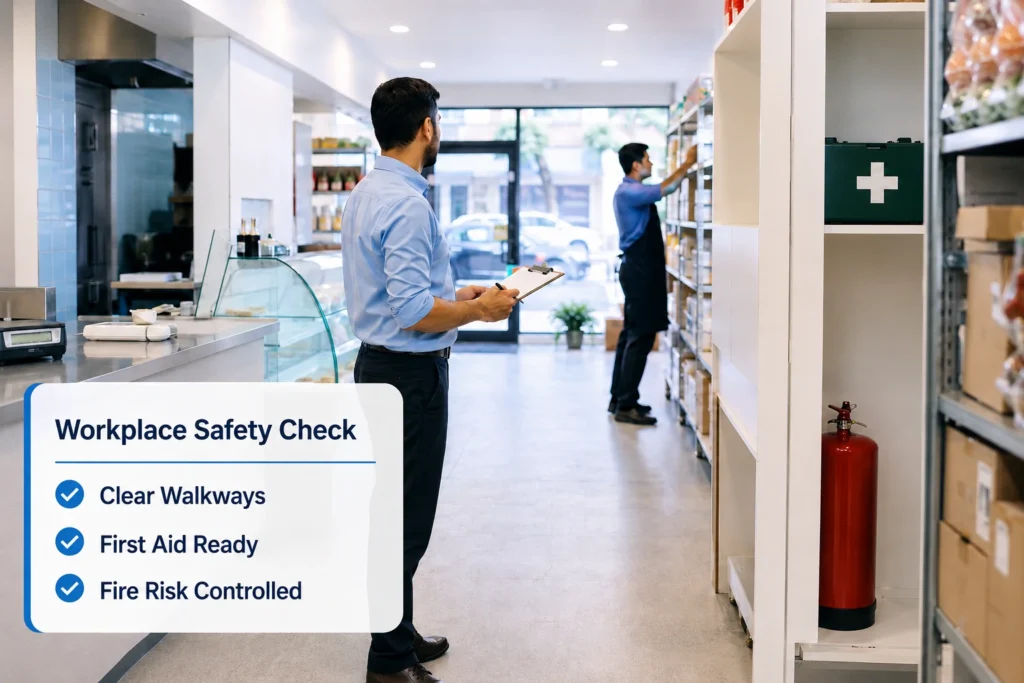
A local business owner can start with a walk-through. Do it before opening, during busy hours, and near closing time. Each time shows different risks.
Check the Entrance
Look for wet floors, loose mats, broken tiles, and poor lighting. The entrance is the first place where customers and staff may slip or trip.
Check Walkways
Make sure stock, cables, and bins do not block routes. Clear walkways help staff move safely and help customers avoid sudden trips.
Check the Fire Exit
The fire exit should open easily and stay clear at all times. Staff should also know where it leads and what to do during an emergency.
Check Staff Areas
Look at plugs, chairs, storage, cleaning chemicals, and first aid supplies. Small problems in staff areas can still cause real injuries.
Check Customer Areas
Think like a visitor. Can someone trip? Can a child touch something hot or sharp? Can a customer see warning signs clearly?
Check Storage
Heavy items should not sit high without control. Flammable items need care. Boxes should not lean, block access, or create fire risk.
Check Staff Knowledge
Ask one worker what to do if the alarm rings. Ask another where the first aid kit is. If they do not know, training has failed.
This kind of check can find problems before an inspector or accident does. A simple walk-through can protect workers, customers, and the business itself.
Southall Health and Safety Records Businesses Should Keep
Clear records make Southall health and safety easier to prove and easier to improve.
Useful records include:
- Staff training dates, Fire alarm tests, Accident book entries, Cleaning checks, Food temperature logs, Pest control visits, Equipment repairs, Risk assessment reviews, First aid checks, Near-miss reports etc.
- A near miss is a warning. If someone almost falls, almost gets burned, or almost gets hit by moving stock, the business should treat it as useful information. The next time may not be almost.
Residents And Customers Also Notice Safety
Southall health and safety is not only inside staff rooms. Customers and residents see things too. They notice blocked exits, dirty food areas, unsafe parking, smoke, broken flooring, crowding, or poor control during busy hours.
A customer should speak up if they see a serious risk. A resident near a business should report concerns if the issue could harm people. This may include unsafe storage, blocked shared exits, strong fumes, pest activity, or repeated fire risks. Reports should stay factual. Give dates, location, what you saw, and why it seems dangerous. Avoid rumors. Clear details help more than angry claims.
Readers who want more safety details can also review how public safety names and risk signals should be checked before people trust them.
A Better Way To Think About Prevention
Prevention is not one big action, It is a habit. A manager sees a spill and fixes the cleaning routine. A worker reports a loose shelf and a cook checks allergen notes twice. A shop owner moves stock away from the exit whenever warehouse supervisor trains new staff before they touch equipment. A landlord repairs lighting in a shared area.
Still, none of that looks dramatic. It works because it happens early. The best Southall health and safety system is not the thickest folder. It is the one staff can follow on a busy Tuesday afternoon when the phone rings, customers wait, and deliveries arrive at the wrong time. That is when safety either holds up or falls apart.
Small Questions People Ask About it
Who handles safety problems in Southall workplaces?
It depends where the problem is. A shop, food place, hotel, office, or leisure site may come under Ealing Council. A building site, factory, or higher-risk workplace may go to HSE instead.
Why should small businesses in Southall care about safety?
Small place does not mean small risk. A wet floor, blocked exit, bad storage, weak hygiene, or no training can still hurt someone. Staff and customers both can get affected.
What should a food business check first?
Start with the things that can make people sick fast. Food storage, fridge checks, cleaning, allergens, pests, handwashing, and hot equipment. These small checks matter a lot.
Where should a worker report unsafe conditions?
A worker should tell the manager, supervisor, safety rep, or the person named in the workplace rules. If the danger is serious, it should not be left for later.
What safety records should a business keep?
Keep simple records. Staff training, fire alarm tests, accident book notes, cleaning checks, food temperature logs, repairs, first aid checks, and risk assessment reviews. Nothing fancy. Just clear proof that checks happen.