
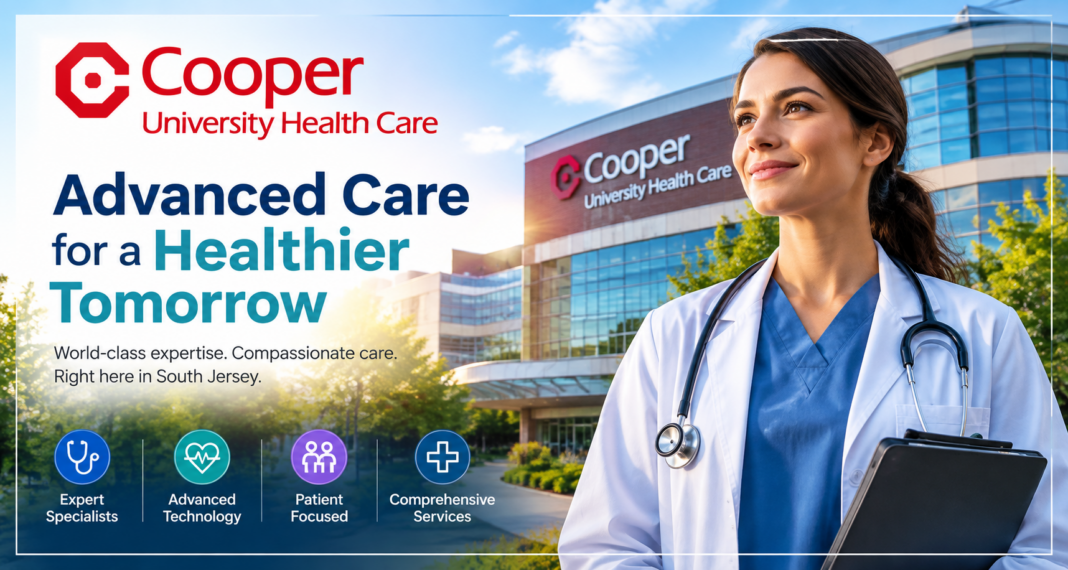
Cooper University Health Care for life-saving emergency treatment and complex medical procedures. Cooper University Health Care is based in Camden and works closely with Cooper Medical School of Rowan University. Founded more than 135 years ago, Cooper University Health Care has become an important part of the region’s healthcare system. It operates the area’s only Level 1 Trauma Center and has more than 100 outpatient locations across South Jersey and Pennsylvania.
Cooper also serves as a major referral center for 21 community hospitals in the region. When local hospitals encounter serious, complicated cases, such as severe trauma or critical conditions in children, they can transfer patients to Cooper’s Camden campus for advanced medical and surgical care.
The Backbone of South Jersey Medical Care
Cooper University Health Care operates as the main medical network in South Jersey. The system manages severe medical emergencies and complex surgeries. The main hospital sits in Camden, New Jersey. This central location houses the only Level 1 Trauma Center in the region. Emergency medical crews route the most severe cases directly to this facility. Community hospitals across 21 locations send their toughest cases to Cooper. The network also runs over 100 outpatient offices throughout nearby areas. Patients get access to top-tier specialists without a trip to Philadelphia or New York.
How a 30-Bed Hospital Became a Regional Powerhouse
Dr. Richard M. Cooper and his family opened the original hospital in 1887. The doors opened to serve local wage earners in Camden. The original building held just 30 beds. The modern system now employs about 14,000 people. This workforce includes 1,200 doctors and 2,200 nurses. The network expanded outward as suburban populations grew in the late twentieth century. Administrators built specialty clinics in Gloucester, Burlington, and Atlantic counties. This outward growth created a massive safety net. The system now protects millions of residents across the Delaware Valley.
Survival and Recovery in the Trauma Center
Severe accidents require immediate expert intervention. Cooper trauma surgeons treat over 5,000 critically injured patients every year. Helicopters land directly on the Camden campus helipad to deliver multi-organ trauma cases. The trauma unit stays open 24 hours a day. Specialized resuscitation rooms and dedicated surgical suites stand ready at all times.
Every second matters when a severe accident occurs. The trauma team operates with strict precision. A call arrives from a local ambulance. The charge nurse activates the trauma protocol. Surgeons and blood bank staff rush to the emergency bay. The patient arrives. The team secures the airway and stops the bleeding. The hospital maintains a massive on-site blood supply to survive catastrophic events. Smaller hospitals lack the budget to maintain this level of readiness.
Specialized Care for Children and Infants
Children face unique medical risks. The Children’s Regional Hospital at Cooper provides acute care just for kids. Premature infants receive treatment in a Level 3 Neonatal Intensive Care Unit. Older children with severe illnesses go to the Pediatric Intensive Care Unit. The system also runs local clinics to manage childhood diabetes and neurological disorders.
The Arrival of Houston Cancer Protocols in New Jersey
Cancer treatment requires vast resources and proven methods. Cooper formed a major partnership with the MD Anderson Cancer Center in 2013. This agreement changed the landscape of oncology in New Jersey. Doctors in Camden now use the exact same clinical protocols developed at the main MD Anderson campus in Houston. Patients access advanced chemotherapy and targeted radiation close to home. Medical oncologists create personalized plans based on global research. Local patients do not need a cross-country flight to receive world-class cancer care.
Education and the Next Generation of Doctors
Hospitals that teach medical students usually deliver better results on complex cases. Research happens daily in these environments. Cooper Medical School of Rowan University opened its main Camden building in 2012. The medical school trains over 400 future doctors each year.
The hospital also sponsors dozens of medical residency programs. The Accreditation Council for Graduate Medical Education certifies these programs. New doctors learn directly from senior experts in actual hospital wards. Patients benefit heavily from this setup. They get early access to national clinical trials. These trials test new heart procedures, trauma recovery methods, and cancer drugs before they reach the general public.
Payment Policies and Insurance Coverage
Medical costs often cause severe stress and cooper offers several ways to manage these expenses. The hospital accepts Medicare, Medicaid, and most major commercial health insurance plans. Staff members process claims directly with these companies.
Patients without insurance have options as well. New Jersey residents can apply for state charity care programs. These programs offer full or partial discounts based on state income guidelines. Financial counselors work directly with patients to set up interest-free payment plans. Federal law also protects emergency room patients from surprise out-of-network costs.
The Economic Reality of an Urban Medical Center
Cooper acts as the largest employer in Camden County. A hospital does more than heal the sick. It drives the local economy. The massive workforce buys homes, eats at local restaurants, and supports small businesses. Urban medical centers often anchor their host cities. Camden relies on Cooper for both health and economic stability.
You can Ask Healthwavy AI assistant for Detail Guidance about it.
Financial Support and Insurance Coverage
| Financial Services | Description & Guidelines |
| Accepted Insurance | Accepts major national commercial plans, Medicare, and NJ FamilyCare (Medicaid). |
| Charity Care | Offers partial or full discounts to uninsured state residents based on income criteria. |
| Financial Counselors | Staff at 856-342-3140 help set up payment plans or handle state coverage applications. |
| Surprise Bill Protection | Complies with federal rules that prevent balance billing during emergency medical care. |
Massive Infrastructure Upgrades on the Horizon
Patient volume continues to rise. Cooper invests billions to ensure physical space meets this demand. Construction teams broke ground on a massive Camden expansion in early 2025. This multi-billion-dollar project runs along Haddon Avenue. The blueprint includes three new clinical towers. Planners added modern private inpatient rooms and new surgical suites. This expansion ensures the hospital can accept more patient transfers from smaller regional facilities.
The system also looks beyond the city limits. Administrators opened a multi-specialty center in Gloucester Township. This $300 million facility focuses on outpatient care. Patients visit this location to get ambulatory surgeries, digestive health checks, and cancer infusions.
Access to Care When It Matters
Large health systems can feel complicated and patients must know the fastest route to the right doctor. The myCooper digital portal acts as the main gateway. Users book appointments online through this secure system. The app also holds lab results and allows direct messages to doctors.
Minor injuries do not require a trip to the main trauma center. The system operates urgent care centers in Audubon, Cherry Hill, Cinnaminson, and Sewell. These walk-in clinics treat simple fractures and severe colds.
Community doctors use a different channel entirely. Outside physicians call a dedicated central transfer line. This direct connection lets local doctors move critical patients straight into Cooper intensive care units.