


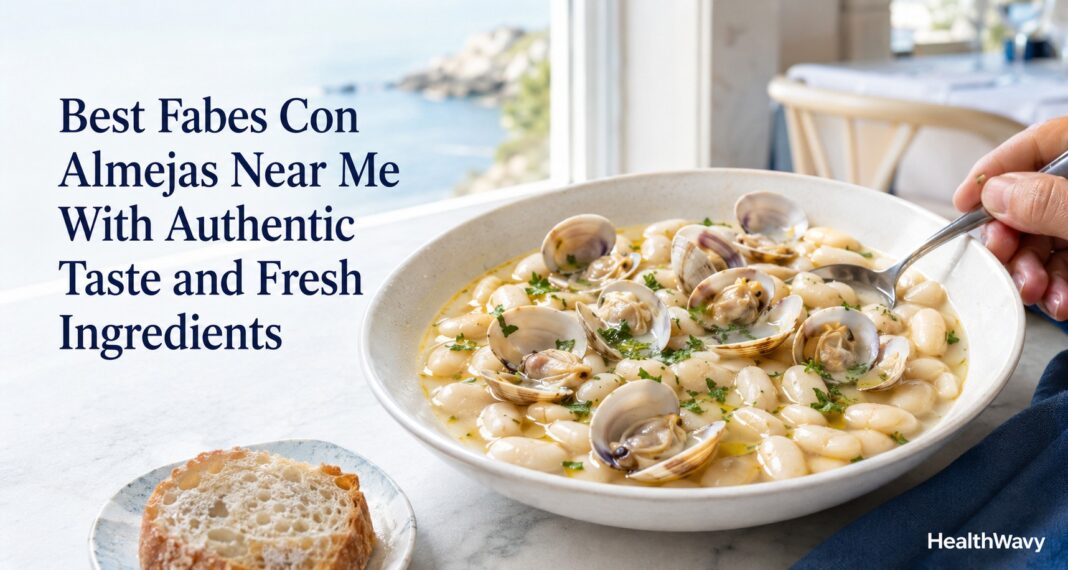
A photo of fabes con almejas can be misleading. The bowl may look perfect, yet the beans could be firm, the clams rubbery, and the broth far too salty. Reviews do not always help either. A diner may give five stars for the service without mentioning the dish you want.
The real search starts with the menu, not the restaurant’s overall rating.
Fabes con almejas is an Asturian dish of large white beans and clams. It relies on a short list of ingredients, so every weakness shows. Good beans, fresh clams, patient heat, and a balanced broth make the difference. Restaurants outside Spain do not always serve it as a permanent item. It may appear during winter, on a seafood menu, or as a weekend special. Anyone who searches for the best fabes con almejas near me should confirm the details before making the trip.
Several Names Can Lead to the Same Dish
The Spanish name means Asturian beans with clams. An Asturian menu may call it fabes con amasueles. An English restaurant might use white beans with clams, Asturian clam and bean stew, or Spanish seafood bean stew.
Searching only one name can hide useful results.
The traditional base uses large white fabes. They have a thin skin, a creamy centre, and a mild taste that absorbs the clam broth without losing all texture. Spain’s Faba Asturiana Protected Geographical Indication has been active since June 12, 1996. Certified beans belong to the traditional Granja Asturiana variety. These beans come from Asturias, a green coastal region in northern Spain. The dish reflects that geography. Beans represent the farms and inland valleys. Clams bring the flavour of the Cantabrian coast.
The two main parts do not always cook in the same pot from the start. Fabes need slow, careful heat. Clams need only a short time. Some chefs prepare the clams with garlic, parsley, olive oil, and white wine, then add them near the end. This keeps the clam meat tender. No single recipe controls every kitchen in Asturias. Saffron appears in some versions. Other cooks prefer sweet paprika, chilli, leek, seafood stock, or breadcrumbs. Asturias Tourism has even shared a restaurant recipe that includes bacon and paprika. A variation can still respect the dish. Problems begin when heavy tomato sauce, too much flour, strong spice, or excess salt hides the beans and clams.
The First Spoonful Tells You Plenty
Fabes con almejas should not taste like ordinary bean soup with seafood added at the last minute. The broth must connect both ingredients. The first taste should feel savoury and lightly briny. Garlic, parsley, wine, and olive oil can add depth. None of them should dominate. Strong garlic can bury the sweetness of the clams. Too much wine may leave a sharp taste. Excess paprika can turn a delicate broth into a smoky sauce.
Look at the beans before judging the seasoning. Good fabes remain whole, but they break easily under a spoon. Their centres should feel soft and creamy. Tough skin often means the beans needed more time. A pot full of broken beans may point to hard boiling or rough stirring. Clams require the opposite type of attention. They cook fast and become firm when left over heat for too long. Tender clam meat should feel moist and have a mild taste of the sea. Tight, dry pieces usually mean the kitchen overcooked them.
The broth can appear pale gold, green from parsley, or reddish from paprika. Colour does not prove quality. Texture and flavour reveal much more. A thick sauce may come from crushed beans, which is normal in a small amount. A paste-like broth loaded with flour can hide poor stock and weak ingredients.
The best balance becomes clear after two or three bites. The bean softens the salty edge of the clam. The clam makes the mild bean taste brighter. Neither ingredient should disappear.
“Fresh” Has to Appear in the Bowl
Restaurant menus use the word fresh very freely. The finished dish offers better evidence than the description. Clam meat should look plump and moist. Some empty shells are normal because the meat can fall into the broth. A bowl filled with shells but very little meat gives poor value. A bad smell is a stronger warning. Fresh seafood should not smell sour, rancid, strongly fishy, or like ammonia. The US Food and Drug Administration advises people not to eat seafood with those odours.
Bean quality is harder to judge from appearance alone and dried Asturian fabes can develop a smooth, buttery centre after slow preparation. Canned beans offer speed, but they may taste flat or break apart. A skilled chef can still make a good meal with another white bean. Honesty about the substitute matters more than a false claim of authenticity.
Imported fabes are not available in every US or UK kitchen. Cannellini beans, butter beans, and large lima beans may replace them. The result will differ, but it can remain enjoyable if the kitchen cooks the beans well and keeps the broth light. Freshness also applies to the whole pot. Fabes con almejas can hold well for a short time, but the clams lose tenderness after repeated reheats. Ask whether the dish was prepared that day, especially when it appears as a special.
Do Not Let an Old Menu Plan Your Dinner
A restaurant website may show a dish that left the menu months ago. Delivery services can display an old price, an item from another branch, or a menu that applies only on certain days. Social media creates the same problem. A beautiful photo proves that the restaurant served the dish at some point. It does not prove that the kitchen has it tonight.
Check the date of the menu or post. Then call.
A useful first question is simple:
Do you have fabes con almejas today, and is it part of the regular menu or a special?
The answer can save a wasted journey. It also tells you whether you need to reserve a portion. Small restaurants may prepare one pot and stop service after it sells out.
A second question reveals how the restaurant approaches the dish:
Do you use Asturian fabes or another white bean?
Imported beans can cost more, so a substitute is not an automatic reason to leave. Listen for a clear answer. A restaurant that knows its ingredients should be able to name the bean. Dietary details need direct questions too. Recipes may contain bacon, fish stock, wine, flour, or breadcrumbs. Those ingredients may not appear in the short menu description.
Search the Dish, Not Just Spanish Restaurants
A high rating does not make a restaurant Asturian. A popular tapas bar may focus on dishes from Andalusia, Catalonia, Madrid, or the Basque Country. It may never serve fabes con almejas.
Regional clues make the search easier. Check the rest of the menu for:
- Fabada asturiana
- Cachopo
- Cabrales cheese
- Chorizo cooked in cider
- Asturian cider
- Northern Spanish seafood dishes
These items do not guarantee a good bowl, but they suggest that the chef knows Asturian food. Traditional Asturian restaurants provide the strongest lead. Spanish seafood restaurants can also be useful. A restaurant led by a chef from northern Spain may offer the dish during colder months or as part of a regional event. General Mediterranean restaurants need closer inspection. Their version may use tomato, canned beans, or a thick sauce. It could taste good, but it may not have the quiet, seafood-led character of the Asturian dish.
Search engines also need more than one phrase. Try the Spanish, Asturian, and English names.
Find Fabes Con Almejas With Smarter Search Phrases
Use the Spanish name, its Asturian alternative, and your location to find restaurant menus that a basic map search may miss.
Start With Your Location
Add your city, ZIP code, postcode, or neighbourhood to the dish name.
Local SearchTry Alternative Names
Use the Spanish, Asturian, and English names to uncover more menus.
Expand ResultsConfirm the Current Menu
Call the restaurant to check availability before visiting or reserving.
Final CheckStart With Your Location
fabes con almejas near me
fabes con almejas restaurant USA
fabes con almejas near me UK
Try Alternative Dish Names
fabes con amasueles restaurant
white beans with clams near me
Asturian restaurant near me
Narrow the Search Results
"fabes con almejas" menu
"fabes con almejas" New York
"fabes con almejas" London
Add a city, neighbourhood, ZIP code, or postcode. A city name often produces stronger results than the automatic “near me” location.
Quotation marks also help. They tell the search engine to look for the complete dish name. This can reveal PDF menus, event pages, and restaurant posts that map listings miss.
The US Search May Lead to a Special Event
US diners have the best chance in cities with a large international restaurant scene. New York City, Miami, Los Angeles, Chicago, San Francisco, and Washington, DC are reasonable places to start. That does not mean the dish will appear every day. Spanish restaurants in the United States often build menus around familiar tapas, paella, tortilla, and grilled seafood. Fabes con almejas may arrive as a chef’s special instead.
Spanish cultural dinners, regional food festivals, supper clubs, and winter tasting menus can provide better leads than a normal restaurant search. Food importers may also know which local chefs use Asturian products. Search social posts with the dish and city together. Then check the date. A post from last winter needs fresh confirmation. Phone calls matter more in smaller US cities. Restaurant staff may recognise “beans with clams” even if they do not recognise the exact Asturian wording at first.
If you are in Miami, this is the best option for you.
UK Menus May Translate the Name
London offers the widest range of Spanish restaurants in the UK, but it should not be the only target. Manchester, Liverpool, Birmingham, Bristol, and Edinburgh also have active Spanish food scenes.
UK menus may translate fabes con almejas as white bean and clam stew. Others may shorten it to Asturian fabes or list it as part of a set menu.
Spanish chefs, private supper clubs, food markets, and regional restaurant events can all be useful. A winter menu is more likely to include this warm bean dish than a short summer tapas list. Search both the Spanish and English names. Staff may know the word “fabes” even when the website does not show the full title.
A Higher Price Still Needs an Explanation
Beans usually suggest a low-cost meal. Fabes con almejas does not always fit that expectation. Certified Asturian fabes cost more once imported. Fresh clams also raise the price, especially in an inland city. Preparation takes time because dried beans need soaking and slow heat.
A more expensive bowl may offer fair value when it contains a good amount of clam meat, certified beans, and a carefully prepared broth. Price becomes harder to defend when most of the serving consists of liquid and empty shells. Check how the menu describes the portion. A starter, main course, and shared plate should not be compared as if they were equal. Some Spanish restaurants price the dish for two people.
Bread, service charges, delivery fees, and side dishes can also change the total. The listed bowl price may not represent the full meal. Delivery is rarely the best test of this dish. Beans continue to absorb liquid in the container. Clams can become tough during a long journey. The broth may arrive too thick even if it left the kitchen in good condition. A restaurant serving gives you a fairer view of the intended texture. Takeaway still works when the journey is short and the food remains hot.
Its Nutrition Changes From One Pot to the Next
A fixed calorie claim would be unreliable. Each kitchen uses a different amount of beans, clams, oil, stock, wine, cured meat, and bread.
The basic ingredients still show the general nutritional picture.
| Ingredient | Main nutritional role |
|---|---|
| White beans | Fibre, plant protein and carbohydrates |
| Clams | Protein, iron and vitamin B12 |
| Olive oil | Unsaturated fat and added calories |
| Seafood stock | Flavour and possible extra sodium |
| Bacon or chorizo | More fat and sodium |
| Bread | Extra carbohydrates and calories |
Beans make the dish filling. Their fibre and carbohydrates provide much of its substance. Clams add protein and key nutrients without the heaviness of the sausage and pork found in fabada asturiana. Salt can become the weak point. Clams have a natural briny taste. Salted stock, cured pork, and extra seasoning can push the sodium level higher.
Anyone who needs less sodium can ask the kitchen not to add extra salt. Leaving part of the broth may reduce the amount consumed, but it will not remove all of it. USDA FoodData Central lists nutrient information for beans and shellfish as separate foods. Exact figures for a restaurant bowl require the restaurant’s full recipe and portion size. A calorie number copied from another recipe should not be treated as fact.
Clams Make the Allergy Question More Complicated
Clams are molluscs. A person with a mollusc or shellfish allergy should never rely on the dish name or a short menu description. UK food businesses must provide information about 14 regulated allergens used as ingredients. Molluscs belong to that list. Diners can ask staff to check the recipe and explain the risk of cross-contact.
US rules use a different legal category. Crustacean shellfish count as a major allergen under federal labelling rules. Molluscan shellfish such as clams do not fall under that same FALCPA category. That difference concerns labelling law. It does not mean clams are safe for a person with an allergy.
Tell restaurant staff that the concern involves clams or molluscs. The broad word “shellfish” may cause confusion because some people react to crustaceans, some to molluscs, and some to both. Other hidden concerns may include fish stock, flour, breadcrumbs, wine, or pork. Cross-contact can also occur through shared pans, spoons, work surfaces, or stock. A restaurant that cannot answer the allergy question should not guess.
Food allergies can also affect shopping, restaurant choices, and everyday family routines. Our guide explains how food allergies affect a family’s health and why careful meal planning matters.
Hot Clams and Cold Leftovers Need Attention
Fabes con almejas should reach the table hot and clams cooked in their shells should open during preparation. FDA guidance advises people to discard shells that stay closed. Shucked clam meat should turn firm and opaque. Raw or undercooked shellfish can carry harmful germs. The Centers for Disease Control and Prevention links food-related Vibrio infections mainly to raw or undercooked shellfish. People with liver disease or a weak immune system have a greater risk of severe illness.
The stew may be fully cooked, but storage still matters and take leftovers only when they can reach a refrigerator soon. Seafood and other perishable foods should not remain at room temperature longer than two hours. The safe window falls to one hour when the temperature exceeds 90°F or 32°C.
Reheat the stew until it becomes hot throughout. Use gentle heat and stir with care. A violent boil can break the beans and toughen the clams. A sour, fishy, rancid, or ammonia-like smell after storage means the food should not be eaten.
Six Questions That Save a Wasted Trip
A brief call can reveal more than an old menu or ten minutes spent reading general restaurant reviews.
- Do you have fabes con almejas available today?
- Is it a regular item, weekend dish, or seasonal special?
- Do you use fresh clams and Asturian fabes?
- Is it served as a starter, main course, or shared plate?
- Does it contain pork, fish stock, flour, breadcrumbs, or wine?
- Can the kitchen manage a mollusc allergy without cross-contact?
The Final Three-Part Taste Test
Once the bowl arrives, put the menu photographs aside and judge the food itself.
It should remain whole but turn creamy under light pressure.
It should feel light, savoury, and gently briny rather than salty.
It should taste fresh and remain moist, soft, and tender.
When the beans feel creamy, the broth stays balanced, and the clams remain tender, you have likely found a kitchen that understands authentic fabes con almejas.
Related guide: If appetite control is part of your meal planning, read our evidence-based review of whether Crave Burner helps control food cravings .