


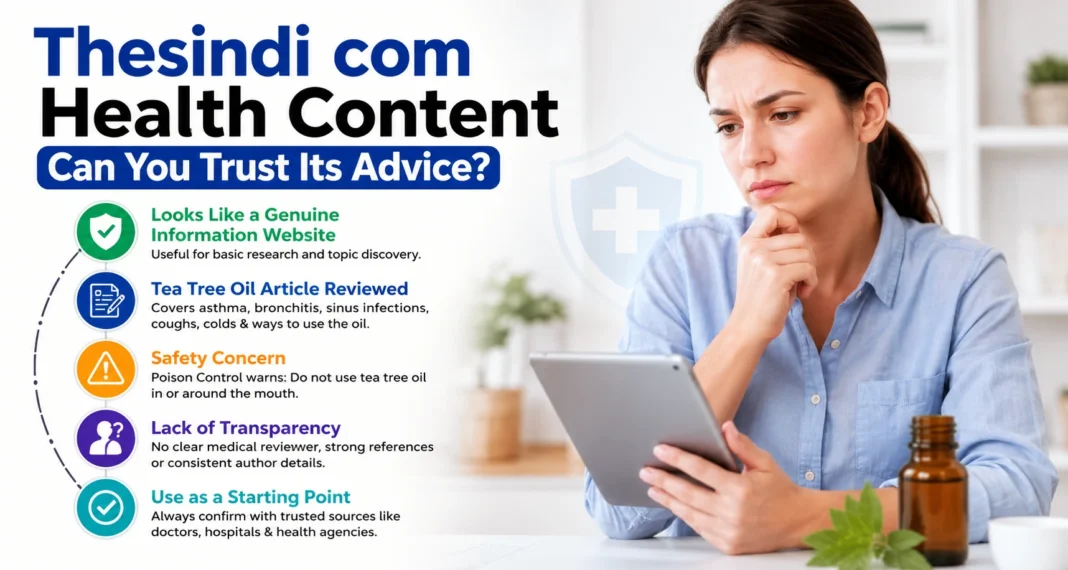
Health advice online can look clear and still miss facts that matter. Thesindi com is a real and active website with content on health, finance, business, law, education, fashion, technology, travel, sports, and lifestyle. It is a general content site, not a hospital, clinic, public health body, or medical research source.
Its health articles may help readers learn about a topic or find points to discuss with a doctor. They should not guide treatment on their own. Weak advice can lead to unsafe remedies, wrong medicine use, or a delay in proper care. Thesindi com may support early research, but trusted medical sources should confirm any health claim.
A General Website With a Health Section
Thesindi covers a wide range of subjects and Its main categories include Automotive, Business, Education, Law, Fashion, Finance, Health, Lifestyle, Sports, Tech, and Travel. A website can publish across several topics and still offer useful content. The real concern starts when a general blog gives health advice.
Health claims need more care than ordinary lifestyle content. The writer should use reliable sources, explain possible risks, and make medical expertise clear. Old advice should also receive updates when new facts become available. Thesindi can meet these standards, but its current health pages do not always show a clear review process. This makes it important for readers to check key claims through trusted medical sources.
The Health Section Has Limited Coverage
The health category on Thesindi com remains small. At the time of review, it listed only two posts:
- A prescription coupon guide published on September 6, 2025
- A tea tree oil article published on July 10, 2025
Two posts cannot show the full quality of a website’s future health content. They can still reveal how the site presents medical topics right now. The limited archive also reduces its value as a health resource. It does not offer detailed condition guides, medicine records, expert profiles, treatment standards, or clinical sources like established medical websites.
The section may help readers discover a topic. It should not serve as a complete source for medical advice or treatment decisions.
The Tea Tree Oil Post Needs More Care
The main concern comes from the article “How to Use Tea Tree Oil for Respiratory Health.” The post links tea tree oil to coughs, colds, sinus infections, bronchitis, and asthma. It also suggests several methods, such as inhalation, use in a diffuser, skin use, and gargling.
This is more than a simple guide to an essential oil. It gives health advice for problems that may need a proper medical check. Asthma can become serious very fast. Bronchitis may come from an infection or another lung issue. Sinus pain can have several causes. A cough may also point to pneumonia, allergies, acid reflux, heart disease, or a side effect from medicine.
A blog cannot confirm the cause of these symptoms. It cannot check oxygen levels, listen to the lungs, or review a person’s medical history. Advice about breathing problems needs strong proof and clear safety notes. It should never suggest that tea tree oil can replace prescribed care or advice from a qualified health professional.
The Safety Notes Do Not Go Far Enough
The tea tree oil article does include a few warnings and it tells readers to dilute the oil before skin use and to speak with a doctor if they have health concerns. It also asks pregnant people, those with sensitive skin, and those with an existing condition to take extra care. These points add some balance, but they do not match the level of risk in the article’s claims. A short warning cannot fully cover the use of an essential oil for asthma, bronchitis, sinus problems, or other breathing symptoms.
The page also fails to draw a clear line between traditional remedies and proven medical care. Readers need that difference explained in plain terms. Without it, they may give too much weight to advice that lacks strong clinical support.
Gargling Tea Tree Oil Can Be Risky
The advice to gargle tea tree oil needs a much stronger warning. Poison Control states that the oil can cause harm if a person swallows it. It also advises people not to use tea tree oil in or near the mouth. A person may intend to spit out the mixture, but a small amount can still reach the throat or stomach. This creates a risk that the method itself could cause harm.
Any article that mentions gargling should explain this danger before it gives instructions. A brief caution in another part of the page is not enough. The word “natural” can also make a remedy seem safer than it is. Natural products may cause poisoning, skin irritation, allergies, breathing trouble, or reactions with other treatments. A natural source does not guarantee safe use.
The Sources Are Hard to Find
Health advice should show where each important claim comes from. The tea tree oil article does not link clear evidence to its statements about asthma, bronchitis, sinus infections, coughs, or respiratory relief. It also lacks a visible source list. This makes the claims hard to check. Readers cannot tell whether the advice comes from a human study, a lab test, traditional use, or research on a different type of treatment.
That difference matters. A product may affect bacteria in a lab but fail to treat an illness in a person. It may help with a skin issue yet cause irritation near the airways. A small study may also lack enough proof to support broad health advice. Clear sources help readers judge the strength of a claim. Without them, the article asks people to accept the writer’s view without a reliable way to confirm it.
Clear author details matter, as seen in our Donna Sicuranza Marconi profile, which identifies the writer, reviewer, and update date.
Good Health Advice Shows Its Sources
A reliable health page should link its main claims to trusted sources. These may include government health agencies, medical guidelines, peer-reviewed studies, hospitals, medical schools, professional health groups, and drug safety databases.
A list of links does not make an article accurate and the source must support the exact advice on the page. A study about tea tree oil and skin bacteria does not prove that it can treat asthma. A general article about essential oils also does not show that gargling them is safe. The proof should match the condition, method, and health claim. That clear link is missing from the reviewed article.
It Is Not Clear Who Reviewed the Advice
The tea tree oil article names Brijesh as the author and lists the role as “Administrator.” This may show a website role, but it does not prove medical knowledge or health experience. The author section does not mention a medical degree, pharmacy background, research work, or clinical role. It also does not name a doctor, nurse, pharmacist, or other health expert who checked the article.
The Health archive adds more confusion. It lists the same post under the name Roland. A site update, account change, or post transfer may explain the difference, but readers still deserve clear author details. A health article should show who wrote it, what experience that person has, and who reviewed the medical claims. The tea tree oil page does not provide clear details about the writer’s health background or any qualified reviewer.
The Dates Tell Only Part of the Story
Thesindi com shows a date on each health post. The tea tree oil article was published on July 10, 2025. The prescription coupon guide appeared on September 6, 2025. These dates help readers see when the content first went live. They do not show when a medical expert last checked the advice. Health facts can change and new safety alerts may appear. Drug guidance may shift. A later study may also weaken an older claim.
A reliable health page should make a few details clear:
- First publication date
- Latest update date
- Medical review date
- Reviewer’s name and role
- Notes about key changes
The tea tree oil page shows its original date, but no separate medical review date is clear. This matters because the article gives direct advice on how to use the product. Health product guidance needs regular checks, especially when safety risks may affect the reader.
A Category Error Raises Questions
The homepage placed an article about medical emergencies under the Fashion category. This may be a simple tag or setup mistake. The error does not prove that the article is false. It also does not show that the whole website lacks proper review.
Still, a medical emergency post should not appear under Fashion. A basic content check should catch that type of mistake. Small errors matter more on health pages because readers expect careful review. A category mismatch may make them question whether the medical claims received the same level of attention.
A Real Website Can Still Give Weak Health Advice
Words like “safe,” “real,” and “trustworthy” do not mean the same thing. Thesindi.com appears to be a genuine and active website. It has articles, dates, categories, author names, contact details, and a normal site menu. These signs show that it is not an empty or fake page. That does not make it a trusted medical source.
A website may be safe to open but still publish health advice that lacks proof, clear warnings, or expert review. It may offer useful background details yet fail to support treatment claims. Medical trust depends on more than an active domain. Readers should look for qualified writers, expert review, reliable sources, update dates, correction rules, and clear limits on advice.
The reviewed tea tree oil page does not show enough of these trust signals. Readers should confirm its health claims through a recognized medical source before they act on them.
The Site Can Still Help at the Start
Thesindi com may help readers begin their research. It can introduce a health term, explain a basic idea, or help someone prepare questions for a doctor or pharmacist. Its prescription coupon content may also help readers compare medicine costs. This type of advice carries less risk as long as it stays focused on savings and does not suggest changes to prescribed treatment.
The site may help readers ask useful questions, such as:
- Is this topic worth a closer look?
- Which term should I search next?
- Does this product or service exist?
- Which questions should I ask my doctor?
- Where can I confirm this health claim?
- Are there safe ways to reduce medicine costs?
This is where a general website can offer value. The risk starts when readers use it to diagnose a condition or make treatment decisions.
Some Health Questions Need Expert Advice
Thesindi com may explain basic health topics, but it should not guide serious medical decisions. Questions about medicine doses, drug reactions, pregnancy, asthma, severe breathing problems, poisoning, allergies, or infections need a trusted medical source. The same rule applies if someone plans to stop prescribed medicine or replace medical care with an essential oil.
A general blog cannot check medical history, current drugs, allergies, test results, or the full cause of a symptom. These details can change whether a remedy is safe. A doctor, pharmacist, poison control service, or recognized health authority can give advice based on the actual risk.
How to Check a Health Article Before You Trust It
The National Library of Medicine advises readers to check who owns a health website, who pays for it, where the claims come from, how experts review the content, and when the page was last updated. These checks can help with Thesindi com and any other health blog.
Check the author first
Look for the writer’s full name and relevant experience. A simple wellness article may not need a doctor as the author. Direct advice about treatment, medicine, asthma, pregnancy, or serious symptoms should still receive a review from a qualified health expert. A label such as “Administrator” only shows a website role. It does not confirm medical knowledge.
Read the source, not just its title
Open the study or medical link cited in the article. Check whether it supports the exact claim. Research about an ingredient does not always prove that it treats a health condition. A lab test, animal study, or skin study may not apply to respiratory problems in people. The source should match the product, method of use, and condition discussed on the page.
Pay attention to confident claims
Reliable health articles explain limits. They may state that evidence is weak, research remains early, or human studies have not confirmed a result. Take extra care when one remedy appears to treat several different conditions. Broad claims need clear and strong proof.
Read the safety details before the instructions
A responsible article should explain the risks before it tells readers how to use a product.
Check whether it covers:
- Side effects
- Allergic reactions
- Unsafe amounts
- Risky methods
- Drug interactions
- Pregnancy concerns
- Risks to children
- Signs that need medical care
One short warning at the end may not give readers enough protection.
Confirm the advice with another source
Check the same claim through a government health agency, major hospital, medical school, or professional medical group. A second source may reveal a missing warning, weak evidence, or a reason the remedy may not suit certain people. This extra check can prevent a reader from acting on incomplete advice.
Health advice can change after new research or official updates. Our guide to women’s health news shows why readers should check the date, source, and personal risk before they follow new medical advice.
The Basic Trust Check Shows Clear Gaps
The reviewed pages show that Thesindi com is an active website. It publishes content across several subjects and adds dates to its health posts. Still, its medical review process is not clear.
| Trust point | What the review found |
|---|---|
| Active website | Yes, with content across several categories |
| Main focus on health | No, it is a general information blog |
| Publication dates | Shown on the health posts |
| Author details | Present, but one post shows different names |
| Medical background | Not shown on the tea tree oil article |
| Expert health review | No qualified reviewer is clearly named |
| Research support | No clear sources appear beside key treatment claims |
| Safety advice | Present, but too brief for the claims |
| Useful for early research | Yes, with caution |
| Safe as the only medical source | No |
This does not prove that every post on the website is false. It shows that readers lack enough information to judge the medical advice with confidence.
Breathing Problems Need More Than a Blog Post
The tea tree oil article needs extra care because it discusses coughs, asthma, bronchitis, and other respiratory problems. A website cannot listen to the lungs, test oxygen levels, check medical history, or find the true cause of a cough. Cold symptoms can look similar to asthma, pneumonia, an allergic reaction, or another serious condition.
Essential oils can also cause harm if people use them the wrong way. Poison Control notes that some essential oils can cause skin reactions, poisoning, or lung injury after accidental exposure. Tea tree oil can also irritate the skin and cause allergic reactions. People should not replace inhalers, antibiotics, steroids, or other prescribed care with tea tree oil unless a qualified clinician approves the change.
Severe breathlessness, chest pain, confusion, fainting, or blue or grey lips need urgent medical help. Health authorities list these signs as possible medical emergencies and home remedy should never delay proper care.
How Much Trust Does Thesindi com Deserve?
Thesindi com appears to be a real general information website. Its health section may help readers find a topic and begin basic research. However, it does not show enough medical proof to guide treatment decisions. The tea tree oil article covers asthma, bronchitis, sinus infections, coughs, and colds. It also explains several ways to use the oil. Yet the page does not clearly name a qualified medical reviewer, provide strong medical sources, or show consistent author details.
The advice to use tea tree oil near the mouth also raises concern. Poison Control warns that tea tree oil can cause harm if swallowed and should not be used in or around the mouth. These issues do not prove that every article on the site is inaccurate. They do show that readers should check important health claims before they follow them.
Thesindi can serve as a starting point, but it should not be the final source for medical advice. Readers should confirm health information through a government health agency, trusted hospital, medical school, pharmacist, or licensed healthcare professional.
Before You Trust the Advice
Thesindi com appears to be an active general information website. It publishes content across health, finance, business, law, travel, and other topics.
Its health content may help with basic research, but readers should verify important claims through trusted medical sources. The reviewed pages do not show clear medical review or strong source support.
Thesindi is a general blog, not a hospital, clinic, public health agency, or medical research platform. It should not replace advice from a qualified health professional.
The article links tea tree oil to asthma, bronchitis, coughs, colds, and sinus problems. It also suggests methods that may carry risks, yet the page does not clearly show strong medical evidence or expert review.
Readers can use the site to discover topics and prepare questions. Treatment choices, medicine changes, and serious symptoms should always be checked with a doctor, pharmacist, or trusted health authority.