

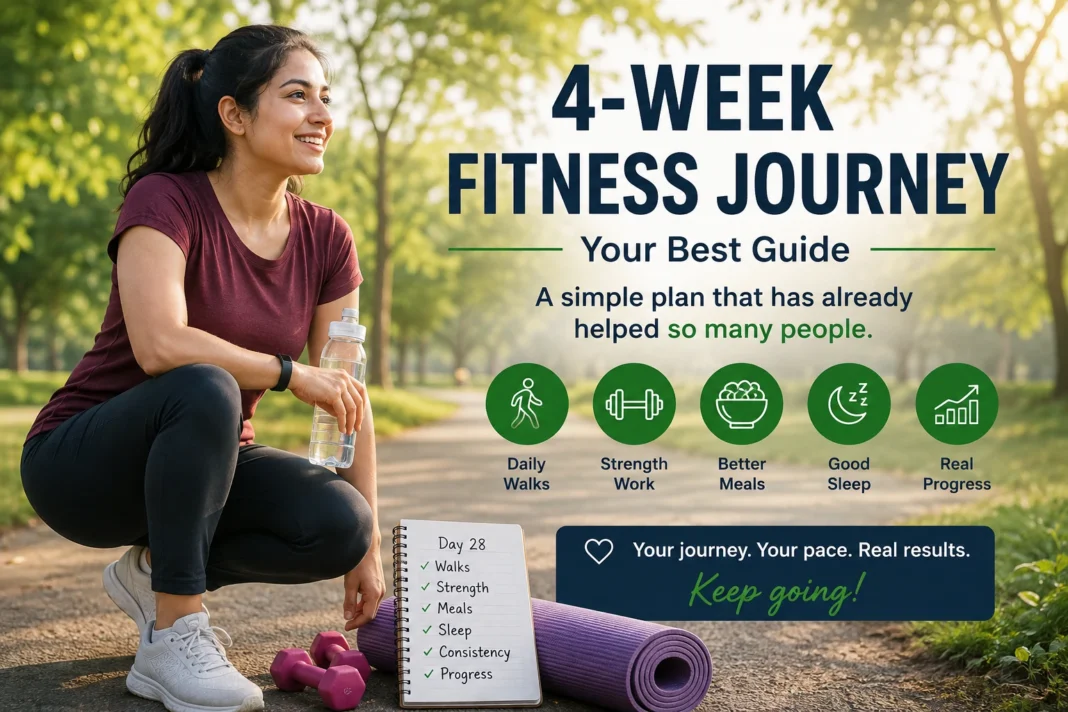
Day 28 is close, but this is not the time to turn your routine into a test. You already know what your body can handle. You know which walk time feels right, which strength moves still need effort, and how sleep, food, stress, or a busy day can change your routine. That gives us something useful to work with now.
This week is not about pushing harder just because Day 28 is close. It is about using what worked, fixing what still feels difficult, and deciding which parts of the routine are worth keeping after the plan ends.
Your first three weeks prepared you for this point. Week 3 helped you build more strength and stamina without rushing progress. Week 4 now brings everything together.
Keep your Week 3 notes nearby. We will use them to choose your final level, shape your last seven days, and help you leave this four-week plan with a routine that still makes sense in normal life.
Let Week 3 Set the Pace for Your Final Week
Week 4 does not need a big jump. Your Week 3 notes already show what your body can handle and where you may need more time.
Use your real results to choose the right approach:
| How Week 3 Felt | What to Do in Week 4 |
|---|---|
| Walks and strength felt easier | Add one small step |
| Most sessions felt right | Keep the same level in most areas |
| You often felt tired | Stay close to your Week 3 routine |
| You missed several days | Aim for better consistency |
| One exercise caused pain | Do not make that move harder |
| The routine was hard to fit into your day | Use a simpler version |
Do not increase walk time, reps, and workout length just because Day 28 is close. Change only what feels ready.
Marcus: I want you to think beyond the last day of this plan. A useful Week 4 should leave you with something you can repeat next week and next month. A strong finish does not mean your hardest workout. It means finding a level that still works after the four-week plan ends.
Choose the Level That Fits How Week 3 Really Felt
Your final week should match your recent progress. Use the level that reflects your energy, recovery, and comfort from Week 3.
Level A – Ready to Add a Little More
Choose Level A if Week 3 felt comfortable and your body recovered well after most sessions. Strength work should also feel controlled and free from clear pain. This level allows one small increase. You might add a few minutes to a walk or a couple of reps to one exercise. Keep everything else close to your usual routine.
Level B – Stay With What Works
Choose Level B if Week 3 gave you enough challenge without leaving you exhausted. Keep most of your walk times and strength work the same. Focus on smoother reps, good form, and regular sessions instead of extra work. Progress does not always need a bigger number.
Level C – Give Yourself Another Week at an Easier Pace
Choose Level C if Week 3 often felt hard, your energy was low, or several sessions did not happen. Keep walks shorter and strength work manageable. Your main goal is to complete a routine that fits your day without too much pressure.
Level C still takes you to Day 28. Finishing this plan means finding a level you can use in real life, not forcing yourself through the hardest option.
Day 22 Choose One Goal for Your Final Week
Day 22 is not about doing more. It is about deciding what deserves your attention during these last seven days. Look back at Week 3. Think about your walks, strength work, meals, sleep, recovery, and how often you stayed with the plan. One area may already feel easier. Another may still cause trouble.
Choose one main focus for Week 4. If walking feels comfortable but strength still feels hard, keep your strength level where it is. You can make a small change to your walk instead. If exercise feels fine but food becomes difficult on busy days, work on your meal routine rather than adding more exercise. One clear goal makes it easier to see what actually changes this week.
Marcus Has One Question Before Your Walk
Complete this sentence:
“At the end of Week 4, I want to feel better about __________.”
Your answer might be your walk time, strength, meals, sleep, confidence, or consistency. Keep that answer for Day 28. We will compare it with how you feel at the end of the plan.
Take Your Day 22 Walk
Use the level you chose from your Week 3 results.
| Level | Day 22 Walk |
|---|---|
| Level A | 25 to 30 minutes |
| Level B | 20 to 25 minutes |
| Level C | 15 to 20 minutes |
Use a pace that feels active but comfortable. Do not chase speed or distance today.
After the walk, ask yourself:
Could I comfortably repeat a walk like this on another normal day?
Yes / Maybe / No
If your answer is Yes, your current walk may fit your routine well. Maybe tells you to stay close to this level. No is a sign to reduce the time or pace rather than push harder and day 22 has one job find a level you would actually be willing to do again.
Day 23 Check How Much Control You Have Gained
Day, 23 uses the same strength moves you already know. That is useful because we can compare them with your earlier weeks without adding anything new.
Use the level that matches your Week 3 results:
| Exercise | Level A | Level B | Level C |
|---|---|---|---|
| Chair sit to stand | 12–14 reps | 10–12 reps | 6–10 reps |
| Wall push-up | 12–14 reps | 10–12 reps | 6–10 reps |
| Supported calf raise | 14–16 reps | 10–14 reps | 8–10 reps |
| Slow march | 45–60 sec | 35–45 sec | 20–35 sec |
Complete one round at a steady pace. Level A can add a second round if the first feels comfortable, Level B can add another round if form stays controlled and level C can finish after one round. Do not rush to complete the reps and clean session tells us much more than a larger number done with poor form.
Amelia’s Day 23 Check
Today I want you to notice how each exercise feels, not just how many reps you complete. Compare the moves with your first week. Does it take less effort to stand from the chair? Do wall push-ups feel smoother? Are calf raises easier to control? Can you complete the slow march with fewer pauses?
Those are useful signs of progress and do not add extra reps because this is your final week. Finish at the planned level and save enough energy for the days ahead.
After the session, record what you noticed:
| Exercise | How It Feels Now |
|---|---|
| Chair sit to stand | Easier / Same / Harder |
| Wall push-up | Easier / Same / Harder |
| Supported calf raise | Easier / Same / Harder |
| Slow march | Easier / Same / Harder |
Keep these answers for Day 28. We will compare them with where you started and use them to decide what strength routine makes sense after the four-week plan ends.
Day 24 Make Food Easy Enough to Repeat
Week 4 is not the time to start a strict diet. You need meals that can still work after this plan ends. Jasmine wants today to stay practical. Think about a normal workday. Food should fit your time, budget, and usual habits without making every meal feel like a new task.
Here is a simple day you can use or adjust:
| Meal | Simple Reliable Choice |
|---|---|
| Breakfast | 2 eggs, whole-grain toast, and fruit |
| Lunch | Chicken or lentils with rice and vegetables |
| Dinner | Fish or beans with potatoes, roti, or salad |
| Optional snack | Plain yogurt with fruit or a small handful of nuts |
These are examples, not strict rules. You can replace any food with a similar option that suits your home and preferences. Try to give each main meal a useful base. Add a source of protein, fruit or vegetables, and a fiber-rich food. Water can be your usual drink unless your personal health needs require something different.
Jasmine’s Choice for a Busy Day
A difficult day needs an easy food option too. You should not have to order a large meal or skip food just because you have little time. A simple backup could be Backup meal: Egg or chicken sandwich on whole-grain bread with fruit and water.
You could also use leftovers, lentils with roti, or yogurt with oats and fruit. Keep one option in mind that takes little effort. It can help you avoid the point where you become very hungry and choose food only because it is fast.
Day 24 is complete when you know what you can eat on both a normal day and a busy day.
Day 25 Give Your Body a Real Recovery Day
You have already completed a walk and a strength session this week. Today gives us a chance to see how your body responds before we add another full session. If you feel fresh, take an easy 10 to 20-minute walk. If your body feels tired, use today as a rest day. Both choices fit the plan.
Sofia wants you to check five things before you decide.
| Recovery Check | What to Notice | What to Do |
|---|---|---|
| Legs | Fresh or mildly sore | Easy walk is fine |
| Legs | Very sore | Rest or keep activity very light |
| Joints | No pain | Continue at your usual level |
| Joints | Pain or repeated discomfort | Do not increase the exercise that hurts |
| Energy | Good or normal | Follow the easy Day 25 option |
| Energy | Very low | Reduce activity and give yourself more rest |
| Sleep | Good | Continue as planned |
| Sleep | Poor | Keep today lighter than usual |
| Stress | High | Choose a shorter session or rest |
One low-energy day does not mean your routine has failed. Sleep, stress, soreness, work, and family demands can all change how exercise feels. Muscle fatigue after exercise can settle with time. Sharp pain or repeated pain in the same knee, hip, ankle, shoulder, or back needs more care. Do not add reps or extra time to a move that keeps causing pain.
Sofia’s Check Before Day 26
Ask yourself one question tonight:
“Do I feel ready to combine a walk and strength work tomorrow?”
- If the answer is Yes, continue with Day 26 as planned.
- If the answer is Maybe, use the lower end of your walk range and keep strength to one round.
- If the answer is No, give your body more time. Day 26 can wait.
Rest will still matter after Day 28. A routine you can keep needs space for both active days and easier days.
Day 26 See If This Routine Fits Into One Day
Today brings two parts of the plan together: your walk and your strength work. The goal is not to create a long workout. We want to see whether both can fit into a normal day without leaving you too tired afterward.
Start with the walk that matches your level.
| Level | Day 26 Walk | Strength Afterward |
|---|---|---|
| Level A | 25 to 30 minutes | 1 round, second only if you still feel good |
| Level B | 20 to 25 minutes | 1 controlled round |
| Level C | 15 to 20 minutes | 1 easy round |
You do not need to complete the whole walk at once. Two shorter walks are fine if they fit your schedule better. Take a short rest after the walk. Drink water if you need it, let your breath settle, and then use the strength moves from Day 23. Keep each rep slow enough to control.
Stop at one round if your legs already feel tired. There is no benefit in forcing a second round just because you completed one earlier in the week.
Amelia’s Check After the Session
I want you to judge today as a normal-life session, not as a fitness test.
Ask yourself: Could I realistically have a day like this once or twice in a normal week?
- Yes: This amount may fit your future routine well.
- Maybe: Keep the same exercises but reduce the walk or use one strength round.
- No: Separate your walk and strength work onto different days.
A “No” gives us useful information. It does not mean you lack fitness. Your schedule or current energy may simply suit a different setup. Day 26 should help you find a routine that fits your life instead of forcing your life to fit the workout.
Day 27 Make a Plan for the Days That Go Wrong
A routine can feel easy to follow when you have enough time, good sleep, and plenty of energy. Real life does not give you that every day. Day 27 is about the opposite type of day.
Work may run late. Family may need you. Bad weather may stop an outdoor walk. You may sleep poorly or have little interest in exercise. Dinner may also need to be quick. Instead of skipping everything, use a smaller version of the habits you have built this month.
Here is one practical option:
| Busy-Day Habit | Simple Version |
|---|---|
| Walk | 10 to 15 minutes |
| Strength | 1 round of your main exercises |
| Meal | Use the backup meal from Day 24 |
| Water | Keep your bottle nearby during the day |
| Sleep | Aim for your normal bedtime |
| Recovery | Rest if pain or strong fatigue is present |
These numbers are not new targets. They show how the plan can shrink when your day has less room.
A short walk still gives you activity. One controlled strength round still keeps the habit alive. A simple meal can save you from reaching the end of the day with no plan at all.
Marcus Calls This Your Backup Routine
I want you to leave this four-week plan with two versions of your routine. One is the normal version you use when the day goes well. The other is the version you can use when time and energy are limited.
Your backup routine might look like this: 10-minute walk + one strength round + an easy meal + your usual bedtime
Your version can be different. Keep it realistic and do not use the backup routine as punishment, and do not try to make up the missing exercise tomorrow. Return to your normal schedule when life allows it.
If you can keep one or two useful habits alive on a difficult day, you have something far more practical than a plan that only works when everything goes perfectly.
Day 27 is not a test of how much you can do. It shows you what you can still do when the full routine does not fit. annot follow the full plan.
Day 28 See What Changed Since Day 1
Day 28 is not a day to prove how hard you can work. Use it to see what changed across the month. Open your Week 1 notes and compare them with how you feel today. Look beyond workout numbers. Your energy, comfort, food habits, recovery, and confidence all matter.
Use this review:
| Area | Week 1 Reference | Day 28 Check |
|---|---|---|
| Comfortable walk time | Check your first walk | Longer / Same / Shorter |
| Chair sit to stand | Check your first reps | Easier / Same / Harder |
| Wall push-up | Check your first reps | Easier / Same / Harder |
| Supported calf raise | Check your first reps | Easier / Same / Harder |
| Slow march | Check your first time | Easier / Same / Harder |
| Energy after activity | Check your early notes | Better / Same / Lower |
| Sleep | Check your Week 1 record | Better / Same / Worse |
| Hunger | Check your early food notes | Easier to manage / Same / Harder |
| Food routine | Check your first week | More reliable / Same / Less reliable |
| Pain or discomfort | Check your Week 1 record | Less / Same / More |
| Confidence | Think back to Day 1 | Higher / Same / Lower |
| Fit with daily life | Think about your first week | Better / Same / Harder |
Do not expect every row to show a big change. Your walk may feel easier even if the time stayed the same. Chair stands may feel more controlled even if you use the same number of reps. A meal routine that now takes less thought is also useful progress. Pay close attention to the areas that still feel hard. They can help you decide what to keep, what to reduce, and what deserves more time after this plan ends.
One Question Before You Look at the Scale
Ask yourself: “What feels easier now than it did on Day 1?”
Your answer may be a longer walk, better control during strength work, less fear before exercise, a more reliable meal, or a better sense of when you need rest. Keep that answer. It tells you something the scale cannot.
Let the Scale Be One Part of the Review
If weight loss was one of your goals, you may want to check your weight today. That is fine, but I want you to look at the rest of your month first. A scale number does not show how your walk feels, whether your strength improved, or how well the routine now fits your day.
Before you judge your four-week result, answer these questions:
- Are your walks easier to complete than they were in Week 1?
- Do the strength exercises feel more controlled?
- Can you recover from a normal session more easily?
- Did you complete more planned days as the month went on?
- Do your meals feel easier to manage?
- Can you return to the routine after a missed day?
- Does your current plan fit your normal life better?
If several answers are positive, something useful changed during these four weeks. Day 28 is not about finding one perfect result. It is about seeing what became easier, what still needs work, and what is realistic enough to carry into your next month.
Scale Change Smaller Than You Hoped?
Four weeks of effort can make a small change on the scale feel disappointing. Do not let that result push you toward a very strict diet or a much harder workout on Day 29.
Use your monthly record first. Check where the plan worked and where it became difficult. You may have completed most strength sessions but missed several walks. Your exercise routine may have stayed steady, yet meals were harder to manage. Poor sleep, pain, stress, or a busy schedule may also have affected the month.
Use those details to choose your next step. Change the part that needs attention instead of making the whole plan harder. Talk with a qualified health professional if weight remains a major concern or if you need personal advice about medicines, health conditions, or an appropriate weight goal.
Keep Your Health Routine in One Place
HealthWavy gives you one private place to keep track of your daily health. You can record water, sleep, activity, meals, medicines, symptoms, appointments, lab values, and other health details without using several separate tools.
Water, sleep, activity and symptoms
Save meals and plan your week
Appointments, medicines and lab values
Get help to organize your health information
HealthWavy supports health organization and general wellness. It does not replace professional medical care.
Scale Higher Than It Was on Day 1?
A higher number does not explain what happened across the month. Check your Day 28 review again. Look at your walk time, strength, energy, meals, sleep, recovery, pain, and how often you followed the routine. One scale result should not erase useful changes in those areas.
Avoid a sudden cut in food or a large increase in exercise based on one weigh-in. Seek personal medical advice if your weight continues to rise, the change concerns you, or you have other symptoms that need attention.
Jasmine’s Last Food Check
Jasmine has one simple request before you leave the plan: keep the meals that made life easier. If a certain breakfast worked well before work, keep it. If you found a lunch that was easy to prepare, use it again. Keep your backup meal too. There is no need to replace foods you enjoy just because a new month starts.
Your next food routine could be as simple as this:
- Keep two or three reliable meals.
- Have one easy option for busy days.
- Eat regular meals instead of trying to “make up” for another meal.
- Change a meal only when it no longer works for you.
You have spent four weeks learning which choices fit your real life. Use that information instead of creating a new set of food rules.
Cravings Can Stay Part of Real Life
Dessert, snacks, restaurant food, and family meals will still be part of life after Day 28. Wanting them does not mean you lost control or ruined your progress. If you choose a food you enjoy, have it without turning the next day into punishment. Return to your usual meals afterward.
Do not skip breakfast because dinner was heavy. Do not add an extra workout because you had dessert. One meal does not decide the quality of your whole week.
Missed Days Need a Simple Response
Next month will not go exactly as planned. Work can run late. Travel may interrupt your routine. Bad weather can affect a walk. Illness or family needs may change your day. Use the same rule you practiced during these four weeks: return at the next normal chance.
- Missed a walk? Use your next planned walk.
- Missed a strength session? Return on your next strength day.
Do not double the next session to catch up. A routine becomes much easier to keep when one missed day does not turn into a problem you have to repay.
Period Days Can Use an Easier Version
Your energy and comfort may change during your period. Let how you feel guide that day. If you feel well, use your normal routine. If cramps, fatigue, or discomfort make exercise harder, reduce the session or take a rest day.
There is no need to add extra exercise later to replace an easier day. Severe pain, faintness, very heavy bleeding, or symptoms that feel unusual need medical attention rather than a harder workout.
Sofia’s Last Recovery Question
Sofia does not want rest to disappear just because this guided plan ends. Sleep, easier days, and pain checks should remain part of your next month. A routine that leaves no room for recovery will be harder to maintain.
Ask yourself: “Can I now tell when my body needs normal effort and when it needs an easier day?”
That is an important skill to take from these four weeks. Extra walk time or extra reps are useful only when your body can handle them well. Pain that lasts, becomes worse, or affects daily tasks deserves advice from an appropriate health professional.
Four Weeks Are Complete – Decide What Comes Next
You do not need another 28-day challenge tomorrow. Your month has already given you enough information to make a more useful choice. Look at your Day 28 review and choose the path that matches how the plan actually felt.
Option 1 Keep Your Current Routine
Choose this option if Week 4 felt comfortable enough to repeat. Keep your current walk time, strength sessions, reliable meals, and recovery days for the next few weeks. There is no reason to increase something that already gives you enough challenge.
Your next goal can simply be to follow the routine more consistently. A normal week might include the same walk duration you used in Week 4, the strength exercises you can control well, and enough rest between harder days. Give that routine time before you decide it needs another change.
Option 2 Add One Small Challenge
Choose this path if Week 4 felt easier than expected and your body recovered well. Pick only one area to change. You might add a few minutes to selected walks, add one or two reps to a strength exercise, or use a second controlled round on one strength day.
Keep everything else close to your current level. This makes it easier to see how your body responds to the new challenge. If you increase walk time, reps, rounds, and pace at once, you lose that clear comparison. Stay with the new level before you add anything else.
Option 3 Repeat the Part That Still Needs Time
A difficult part of the plan does not mean you need to repeat the full month. Go back only to the stage that still suits you.
Your Week 2 walk time may still feel right. Week 3 strength work may still give you enough challenge. Exercise may feel comfortable, but your meal routine or sleep may need more attention.
Use the section that solves the problem you still have. Repeating a useful level is not a step backward. It means you have enough information to know where more time will help.
Your Next Month Does Not Need to Look Like This One
The daily Day 1 to Day 28 format can end here. Your next routine can be much simpler. Use what this month taught you and decide how a normal week should look. Keep walk days you can fit into your schedule. Choose strength days that leave enough recovery time. Keep reliable meals and your backup option. Leave space for rest.
A difficult week may use your shorter backup routine. A good week may allow a little more. That flexibility is part of the plan now.
You are no longer trying to finish 28 days. You are deciding which habits deserve to stay.
Add One Thing, Not Five
Use this path if Week 4 felt comfortable and recovery stayed good and choose one area.
Add a few minutes to selected walks. Add one or two reps to one strength move and add one second round on a suitable day. Then stay there long enough to see how your body responds. A small change gives you useful information. Five changes at once make it hard to tell what helped.
Repeat Only the Part That Still Feels Hard
A full 28-day restart is not required. Maybe your Week 2 walk level still suits you. Week 3 strength work may still provide enough challenge. Exercise may feel fine, but food consistency may need another week of attention.
Go back to the part that helps. Repeating one useful stage is not going backward. It means you know what needs more time.
Make Your Own Week From Here
Daily instructions stop after Day 28. That is intentional.
Use what you learned to create a week that fits your actual schedule.
| Your Next Week | Your Plan |
|---|---|
| Walk days | __________ |
| Usual walk time | __________ |
| Strength days | __________ |
| Strength rounds | __________ |
| Recovery day | __________ |
| Two reliable meals | __________ |
| Backup meal | __________ |
| Sleep habit to keep | __________ |
| Main problem to watch | __________ |
Do not fill this table with the most ambitious version of yourself. Write what you believe you can repeat. A realistic week has more value than a perfect schedule that lasts three days.
Four Voices, Four Final Questions
Our team has worked through different parts of the plan with you. Each person has one final question.
- Amelia: Can you complete the basic strength moves with better control than you could in Week 1? If yes, keep your progress small and steady. If not, stay with the version that still challenges you without pain.
- Jasmine: Did you find a few meals that work on ordinary days? Keep those. Food does not need a fresh plan every week.
- Sofia: Can you tell when your body needs an easier day? Keep that skill. Sleep, soreness, rest, and pain still matter after this guide ends.
- Marcus: Could you now describe a normal fitness week that fits your actual life? If yes, that answer may be one of the most useful results from the whole month.
Give Yourself One Final Day 28 Check-In
Answer each question based on how the full four weeks felt. There is no perfect score. Your answers will help you choose a realistic next step.
Your Result
Need Help With What Comes After Week 4?
Email us at info@healthwavy.com if you are unsure which path fits your results. Tell us what became easier, what stayed difficult, and which part of the plan still causes confusion. HealthWavy can help you understand the guide and your options.
This four-week plan provides general wellness education. It does not replace personal medical care. Persistent pain, worse symptoms, health conditions, or concerns about safe activity may need advice from an appropriate health professional.
Day 29 Does Not Need a Fresh Start
A month ago, the goal was simply to begin. Week 1 helped you find a level you could handle and week 2 showed which parts needed an adjustment. Week 3 gave you room to build more strength and stamina, week 4 asked a different question: Which parts are useful enough to keep?
That question matters now. Keep the walks that fit your day, and keep the strength moves you can control and keep meals that make busy days easier. Keep recovery days, keep your short version of the routine for times when life feels crowded.
A perfect next month is not required. Starting over is not required either. Your next step can be much simpler: keep what worked, change what did not, and give each new change enough time before you add another.
The four-week plan ends here. Your routine does not have to.
Your Four-Week Fitness Journey Ends Here
Four weeks ago, this journey started with small walks, simple strength work, and a lot of questions about what would actually feel manageable. Since then, you have learned how your body reacts to effort, rest, food, sleep, soreness, busy days, and missed sessions. You have also learned that progress does not always look dramatic. Sometimes it is a longer walk. Sometimes it is better control and sometimes it is simply returning after a difficult day instead of giving up.
Amelia helped you focus on strength and control. Jasmine kept food practical. Sofia reminded you to respect recovery. Marcus helped you look at the bigger picture instead of one difficult day or one number on the scale.
Now the four-week journey is complete. You do not need to start over. You do not need a harder challenge tomorrow. Keep the parts that worked, adjust the parts that did not, and carry your best habits into the next month. That is the real finish to this plan not a perfect Day 28, but a routine you understand well enough to keep.
Your Day 28 results may leave you unsure about what to do next. The HealthWavy AI Assistant can help you review your walks, strength, meals, recovery, and missed days, then guide you toward a practical next step.
Your Four-Week Journey Questions Answers
This plan helps you build a routine that feels realistic and safe to repeat. Week 1 finds your starting level, and week 2 adjusts the routine. Week 3 adds strength and stamina and week 4 helps you decide what to keep after Day 28.
Each week uses your results from the week before it. Start with Week 1 if you are new to the plan. Your walk time, strength level, recovery, and daily check-ins help you choose the right level in later weeks.
Stay at the level that feels manageable. You can repeat a walk time, reduce reps, use one strength round, or take an extra recovery day. Progress does not require a harder routine every week.
A missed day does not mean you need to restart the whole plan. Return to the next normal session when you can. Avoid double workouts or extra exercise to make up for missed days.
Strength sessions appear throughout the plan with simple moves such as chair sit to stands, wall push-ups, supported calf raises, and slow marches. Later weeks use the same exercises so you can compare control, comfort, and effort.
Pain is a reason to stop or reduce the move that causes it. Do not add more reps or extra time to an exercise that keeps causing pain. Pain that lasts, becomes worse, or affects daily life may need advice from an appropriate health professional.
Strict food rules are not part of this plan. Meals should fit your normal life, budget, and food preferences. The plan focuses on reliable meals, simple food choices, a backup meal for busy days, and a routine you can continue after Week 4.
A scale result is only one part of the review. Look at your walk time, strength, energy, sleep, food habits, recovery, confidence, and how well the routine fits your life. A small weight change does not erase progress in those areas.
A lighter session or rest day can make sense if cramps, fatigue, or discomfort make exercise harder. Use your normal level when you feel well. Severe pain, faintness, very heavy bleeding, or unusual symptoms need appropriate medical care.
Choose the next step from your final check-in. Keep your current routine if it still feels useful. Add one small challenge if Week 4 felt comfortable and recovery stayed good. Repeat only the part that still needs more time if one area remains difficult.
A full restart is not required. You can keep the parts that worked and return only to the section that still helps. Your Week 2 walk level may still suit you, or Week 3 strength work may remain enough for now.
Look for changes beyond the scale. Walks may feel easier. Strength moves may feel more controlled. Meals may take less effort to plan. Recovery may improve. You may also find it easier to return after a missed day. Those changes can show that your routine has become easier to manage.