


Soursop leaf tea often starts as a simple home habit. A few dried leaves in a jar and a warm cup after dinner. Then online posts turn it into a “cure-all,” which creates confusion fast.
Here’s the plain truth: Soursop leaf tea can fit into a calm, low-sugar routine, especially at night or after heavy meals. It is not a drink to sip all day like water. Strong tea can cause side effects. It may also affect blood pressure or blood sugar in some people, especially if you take medicine.
This guide keeps it practical and you’ll see 15 potential benefits and everyday uses people connect with soursop leaves. You’ll also learn how to brew it mild, how often to drink it, who should avoid it, what to look for on labels, and the warning signs that mean it’s time to stop.
Read this first before you chase the health benefits of soursop leaves
Many individuals use soursop leaves in different ways. Some prefer tea, while others choose capsules or liquid extracts. These options may look similar, yet they do not act the same once used. Tea usually feels lighter and easier to manage. You can keep it mild and stop anytime. Capsules and extracts are often stronger, so they may not suit everyone right away.
It also helps to stay realistic about plant-based remedies. Something coming from a plant does not make it automatically safe. Soursop tea may stay comfortable when you keep it light and drink it once in a while. Trouble can start when the tea becomes too strong or turns into a daily habit for a long time. Strong supplements can raise more concerns, especially if you already take medicine.
Soursop leaves may support a wellness routine for some people, but they are not a cure, treatment, or replacement for medical care.
A quick note about the biggest confusion online
This guide focuses on soursop leaves and leaf tea because the leaves, fruit, and seeds often get mixed together online. Soursop fruit may be a food in many places, but that doesn’t mean every part is safe to use, so avoid DIY powders from unknown plant parts and do not treat the seeds as a health add-on.
Why health benefits of soursop leaves feel different person to person
Soursop tea usually isn’t chosen because of research papers; it’s chosen because it feels warm at night, feels light after heavy meals, and can replace sugary drinks, which are practical everyday goals. They also explain why people notice benefits even when the leaf itself isn’t doing anything dramatic.
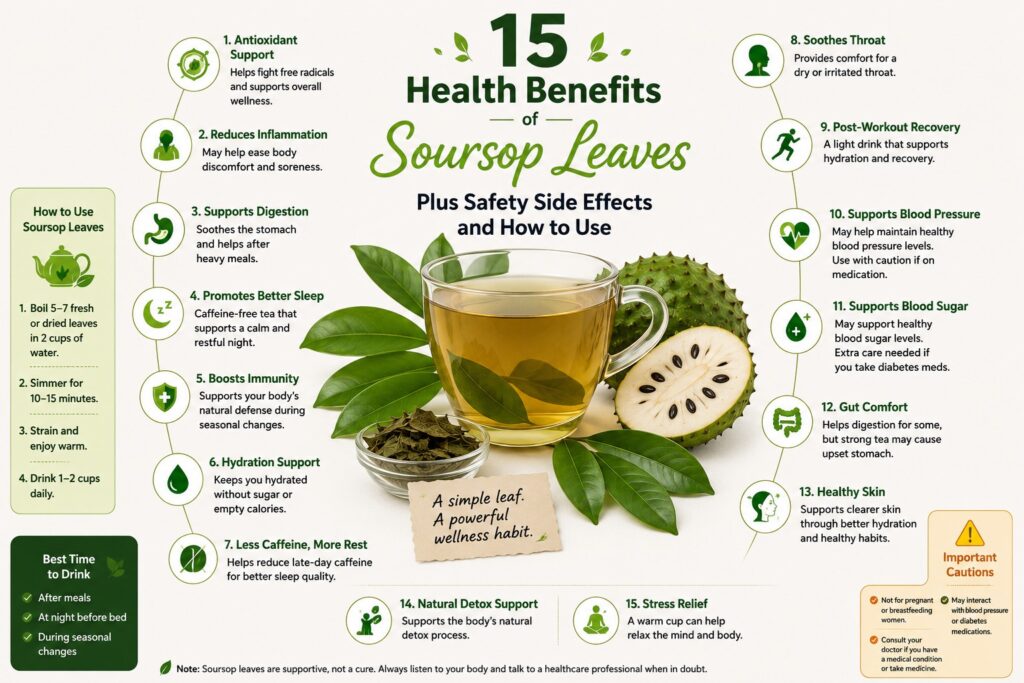
15 Potential Benefits and Everyday Uses People Connect With Soursop Leaves
Many people use soursop leaves as a light herbal tea and taste feels gentle. The routine feels calm and simple. Some people also try capsules or extracts, but tea gives more control over strength and portion.
These uses do not mean soursop leaves cure any disease. They do not replace a doctor, lab tests, or prescribed care. Human research stays limited, so keep expectations realistic. Use it as a wellness drink, not as a medical plan.
Mild Antioxidant Support
Soursop leaves contain several natural plant compounds and researchers study some of them because they may act as antioxidants. Antioxidants help the body manage day-to-day stress from normal life and the environment. A mild cup of tea can fit into a healthy routine. Add more fruits and vegetables to meals. Drink enough water through the day. Stick with regular meal times when possible. Those habits do far more than any single drink.
Do not treat soursop leaf tea as medicine so do not treat it as a “detox” cure. Your liver and kidneys already clear waste. Use the tea as a low-sugar drink option that supports better habits. Keep the tea light. Use it in moderation.
Comfort After a Long Day
A warm drink can help you feel more settled at night so many people choose herbal tea after stress, short sleep, or a busy day. The comfort often comes from the warmth and the quiet moment. Soursop leaf tea has no caffeine. That makes it a good evening choice when you want to avoid coffee or strong tea. It can also replace sugary drinks at night, which helps many people feel better the next morning.
Tea can support your wind-down routine, but it cannot fix fatigue alone. Sleep matters most. Regular meals and steady hydration also help. Use this tea as a small support, not a quick solution.
Better Choice After Heavy Meals
A heavy meal can leave your stomach tight or uneasy and warm tea can feel easier than soda, sweet tea, or juice after food. Many people drink soursop leaf tea at this time because it feels light and simple. It also supports hydration without extra sugar.
Tea strength matters strong, dark cup can irritate a sensitive stomach. Some people feel nausea or lightheadedness after a strong cup. Start with a mild cup and check how your body reacts. Sip slowly. Avoid it on an empty stomach if your gut feels sensitive. Stop if discomfort starts. Switch to water or a gentler tea. A light routine works better than a strong cup that makes you feel worse.
A Night Cup That Doesn’t Mess With Sleep
Soursop leaf tea has zero caffeine and that matters at night. A lot of “relaxing” drinks still sneak in something that keeps your brain awake. This one does not. People often use it as a simple bedtime cue. The tea is warm. The pace slows down. That alone can make the night feel smoother.
Try to make the moment quiet. Put the phone across the room for a bit. Drop the lights. Sit down and drink it slow. The routine does half the work here. This tea is not a sleep fix. It will not treat insomnia. Sleep problems that stick around need real medical advice.
When the Weather Shifts, Tea Shows Up More
Season changes push people toward warm drinks. Cooler air can dry out the throat. Heater air can do the same. Tea helps because it adds fluids in a form people actually enjoy. Soursop leaf tea also fits well in “cleaner” months. Many people cut back on soda and sweet drinks when they start to feel run down. Less sugar and more rest can help the body feel more stable. A mild tea can slide into that plan without effort.
Do not expect tea to prevent illness and good sleep still matters. Balanced meals still matter. Basic hygiene still matters. Tea can support the routine, but it cannot replace it.
The Easiest Win: Replace One Sugary Drink
This is the most practical use, and it has nothing to do with hype. If soursop leaf tea replaces one sugary drink each day, that change can add up.
It can take the place of:
- Soda
- Sweet tea
- Sports drinks
- Flavored juice drinks
That swap lowers added sugar. It can also cut extra calories without a strict diet plan. Most people do better with small changes they can keep, not big rules they quit after a week.
If you use flavored fitness water, check this quick breakdown of Propel Fitness Water ingredients and safety before you make it a daily habit.
Late Coffee Ruins Sleep More Than People Think
A lot of sleep trouble starts in the afternoon, not at bedtime. Late coffee. Strong black tea. Energy drinks. Even “one cup” can push sleep back or make it lighter. A caffeine-free drink after dinner can help the body settle. It also helps with the random snack urge that hits late at night. Tired people crave quick food. Better sleep often makes appetite feel more stable the next day. Herbal tea is a smart evening choice if you want something warm that does not fight your sleep.
Dry Throat Comfort, Nothing More
Warm liquids can feel good when the throat feels dry or scratchy. Soursop leaf tea can help in the same way other herbal teas do. It also helps people drink more fluid when they forget water during the day. This tea does not treat infections. It does not replace medical care. Get help if symptoms feel severe, last more than a few days, or come with fever, chest pain, or trouble breathing.
Your Post-Workout Drink Does Not Need Sugar
After a workout, your body mainly needs fluids. Some people hate plain water right after training. The taste feels flat, or they just want something warm. A mild tea can work as a low-sugar option. It helps you add fluid without turning to soda or sweet sports drinks. Keep the expectation simple. Tea supports hydration, nothing more. Water still matters most. Electrolytes matter too after heavy sweat or long sessions. A light tea can sit next to that plan, but it cannot replace it.
The Tea Strength Can Make or Break Your Stomach
A light cup often feels fine. A strong, dark, bitter cup can cause problems fast. Some people feel nausea. Some feel stomach upset. Some feel lightheaded after a strong brew. This is not the moment to “go strong.” Start small. Use fewer leaves. Keep the tea mild. Stop if you feel unwell. A gentle cup is the safer test.
Blood Pressure: This Is Not a Casual Experiment
A lot of people talk about soursop tea and blood pressure. Some people believe it can lower blood pressure and results vary, and this area needs caution.
Risk goes up if you take blood pressure medicine. Blood pressure that drops too low can cause dizziness, weakness, or a faint feeling. That is not a small issue. Ask a clinician before you try it if you use blood pressure pills. Do not guess your way through it.
Blood Sugar: This One Can Turn Risky Fast
Soursop tea shows up often in blood sugar searches. This topic needs extra care. Blood sugar may drop too low in some people, especially in those who use insulin or diabetes medicine. Low blood sugar can feel scary. Warning signs include shaking, sweat, fast heart rate, weakness, and mental fog. Some people also feel sudden hunger or feel “off” in a way they cannot explain.
People with diabetes should not test this herb without medical guidance. Do not mix it with diabetes care and “see what happens.”
Skin Changes Usually Come From the Routine, Not One Leaf
People often link herbal tea with “better skin.” Tea can help, but in an indirect way. More fluids help hydration. Less sugar can help some people. Better sleep also helps. One herb does not “fix” skin. Most visible changes come from habits you repeat each day. Tea can support the routine, not replace it.
Lab Studies Get Turned Into Big Claims Online
Soursop has a lot of hype online because researchers have explored some plant compounds in lab settings. Many posts take that and turn it into bold health claims. Lab results do not prove the same outcome in humans. Soursop tea should never replace care for cancer, diabetes, infections, or high blood pressure. This is not a backup plan for real treatment. Major cancer centers also warn people to treat graviola or soursop claims with care. Keep it as an occasional wellness tea, not a treatment plan.
Herbal ‘fat loss’ claims often sound similar, so this quick guide on lemongrass and metabolism research can help you compare what science actually supports.
The “Safe Lane” Approach Most People Miss
A mild cup can fit into a low-sugar routine for some healthy adults. The key is moderation. Avoid strong daily use for long periods. Avoid casual use of capsules or extracts too. Those forms can deliver much higher doses than tea. People often take them without realizing how strong they are. Stop if you feel dizzy, weak, shaky, sick, or “off.” Soursop leaves may have a place in a calm routine, but they must stay in the right lane.
A balanced medical overview helps separate early research from real-life treatment claims – MD Anderson overview on soursop claims and safety.
A straight line about what this tea cannot do
Soursop leaf tea cannot treat or cure disease. It does not replace care for high blood pressure, diabetes, infections, depression, anxiety disorders, or cancer. It also cannot take the place of tests, prescriptions, or follow-up visits. Do not use this tea as a reason to stop medicine. Do not use it to delay medical care. You can still drink it as a wellness tea if it feels good and your doctor says it is safe. Keep it in the “support” lane, not the “treatment” lane.
Trusted medical references flag blood pressure, blood sugar, and medicine interaction risks with graviola, and this summary helps explain those risks , Memorial Sloan Kettering graviola safety guide.
Side effects people report most often
Some people drink soursop leaf tea with no issues. Others feel side effects, especially after a strong brew or a concentrated product. The most common complaints include nausea, stomach discomfort, dizziness, weakness, headaches, and a lightheaded feeling. Pay attention to how you feel after a cup. Shaky hands, sweating, unusual tiredness, or mental fog can signal low blood sugar. This matters even more if you use diabetes medicine. Stop the tea and get medical advice if symptoms feel strong or keep coming back.
The “daily for months” issue
One mild cup once in a while is not the same as strong tea every day for months. Heavy use raises more safety concerns in health discussions, including concerns tied to the nervous system.
That is why a safer approach uses moderation and breaks. Avoid high-dose habits. Take time off between use. Extra caution matters with extracts and capsules, since they can deliver a much stronger dose than tea. Many people take a concentrated product and do not realize how strong it is.
Who should not treat this like a casual drink
This is not about fear. It is about smart choices.
Use extra caution or avoid soursop leaf tea if any of these apply to you:
- You are pregnant or breastfeeding (use only with clinician approval)
- You want to give it to a child
- You have Parkinson’s disease or another neurologic condition
- You take diabetes medicine or insulin
- You take blood pressure medicine
- You have kidney or liver concerns
- You take several daily prescriptions
A quick check with a licensed clinician is the safest step when medicine or chronic health issues enter the picture.
Common medicine mixes people overlook
Many people assume “herbal tea” means harmless. That is not always true. Some mixes raise the risk of side effects.
Higher-risk combinations often include:
- Diabetes drugs or insulin, since blood sugar can drop too low
- Blood pressure pills, since blood pressure can drop too low
- Blood thinners, since herb mixes with blood thinners are not casual
- Sleep or anxiety medicine, since added calming effects can feel stronger than expected
This is not a complete interaction list. Treat herbs like real substances, not flavored water. When in doubt, ask a pharmacist or clinician before you mix soursop products with medicine.
Tea vs capsules vs extracts, the difference matters
| Form | Strength and control | Side effect risk | Interaction risk | Best fit |
|---|---|---|---|---|
| Tea | Usually lighter and easy to adjust by using fewer leaves or less simmer time | Lower | Lower | Best beginner option |
| Capsules | Often more concentrated and harder to “tune” once swallowed | Higher | Higher | Better for experienced users who know their tolerance |
| Extracts | Most concentrated and varies a lot by brand and dose | Highest | Highest | Use extra caution, not ideal for beginners |
| Bottom line | Tea stays easier to control | Safer start | Fewer surprises | Tea is the better first step |
Fresh or Dried? Start With the Version You Can Control
A lot of people assume “a leaf is a leaf.” That sounds true until the first cup hits too hard. Soursop leaf tea changes fast based on leaf type, leaf size, and simmer time. One person gets a mild cup. Another person gets a dark brew and feels dizzy. The difference often comes down to simple details, not the herb itself.
Fresh leaves often feel stronger than dried leaves and fresh leaves can vary in size and thickness. A long simmer can pull out more plant material and push the cup into “too strong” territory. Dried leaves feel more consistent when you buy from a reliable source. They also store better and make strength easier to repeat.
New users usually do better with dried leaves. Dried leaves help you control the cup. Fresh leaves can still work if that is what you have. Start with less than you think you need. You can always make a second mild cup later. You cannot undo a strong one once you drink it.
The Mistake That Ruins Most Cups
Most problems start with one habit: people boil the leaves too hard and too long.
The tea turns very dark and bitter. Then nausea or dizziness can show up, and the herb gets blamed. In many cases, the cup was simply too strong.
Keep it light and steady. Avoid a “dark and intense” brew.
- 1Rinse the leaves with clean water.
- 2Bring water to a boil.
- 3Reduce heat right away and keep a gentle simmer.
- 4Add 1 to 2 dried leaves per cup.
- 5Simmer for 10 to 15 minutes.
- 6Turn off heat and let it sit for a few minutes.
- 7Strain the tea and drink it warm.
If this is your first time, keep the tea light and watch your body’s response.
- Color test: light golden is a good start. Very dark often means “too strong.”
- Timing test: try it on a day you stay home. Avoid testing it before driving.
- Body check: stop if you feel nausea, dizziness, weakness, or a faint feeling.
How You Know You Pushed It Too Far
Strong tea has obvious signs and color turns very dark. The smell feels harsh. The taste turns aggressively bitter. Simmer time past 15 minutes can raise strength fast.
Pay attention to your body after a strong cup. Stop if you feel nausea, dizziness, weakness, or a faint feeling. Try again another day with a lighter brew. Do not “power through” discomfort. A mild cup should feel gentle, not like a test.
Make It Taste Better Without Turning It Into Dessert
Some people quit soursop tea because the taste feels bitter. You do not need a lot of tricks to fix that and lemon can help. A small squeeze can make the cup taste cleaner and less sharp. Sweetener can help too, but keep it minimal. Sugar can defeat the point of a low-sugar routine, especially if blood sugar matters to you.
Try this simple approach:
- Add lemon first.
- Add a tiny amount of sweetener only if needed.
- Skip heavy sugar and syrup-style add-ins.
A lighter brew often tastes better on its own. Strong tea tastes worse and causes more complaints.
Sensitive Stomach? Take the Gentle Route
Some people do fine with herbal tea on an empty stomach and others do not. Soursop leaf tea can feel rough if your stomach runs sensitive, especially with a strong brew. Start small. Drink half a cup first. Use a mild brew. Drink it after food instead of first thing in the morning. That step alone helps many people avoid nausea. Stop the tea if nausea shows up. Drink water and keep the day simple. Try again later with a lighter cup if you still want to test it.
Extra strong extracts are not a good first step. Capsules and extracts can hit harder than tea. Many people take a concentrated dose and do not realize how strong it is until side effects start.
Daily Use Sounds Normal Online. It Often Isn’t Smart.
Plenty of posts push daily use like it is harmless and that is not a responsible way to talk about an herb that can cause side effects in some people. A safer routine keeps frequency low and strength mild.
A cautious routine looks like this:
- 1 mild cup
- 2 to 3 days per week
- Breaks built in
Stop if you feel dizzy, weak, shaky, or unusually tired. Do not treat side effects as a “good sign.” Discomfort does not mean the tea works. It often means the dose is too strong or too frequent.
Want a safer weight-loss routine that stays realistic? Use this 7-day smoothie weight loss plan as a better option than relying on strong herbal habits.
A Break Schedule You Can Actually Follow
Many people do not fail because they “lack discipline.” They fail because the plan feels unrealistic. A break pattern keeps things safer and easier to track.
Try this pattern:
Use it 2 to 3 times per week for 2 weeks.
Take 1 week off.
Restart only if you feel fine.
Breaks help you notice what the tea does in your body. Breaks also reduce the chance of side effects that show up with frequent use. Avoid nonstop daily use. Frequent use can raise side effect risk, especially if you make strong cups.
Best Time to Drink It Depends on Why You Use It
Timing matters because your goal matters. A cup after dinner often works best if you want a calm night routine. The warm drink can replace late coffee or dessert-style drinks, so bedtime feels smoother.
A cup after a heavy meal can also make sense. Many people want something warm that feels lighter than soda, sweet tea, or juice. A mild tea can fit that moment better than a sugary drink.
Evening use can help if your main goal is to cut late caffeine. Just test your first cup on a day you stay home. Some people feel relaxed. Some people feel lightheaded. Learn how your body reacts in a low-stress setting. Avoid testing a new herbal tea right before a long drive or an important meeting.
When People Notice a Difference
Some changes feel quick because routine changes fast. Calm and comfort can show up the same day. Digestive comfort can show up within hours, especially if tea replaces soda or sweet drinks after meals.
Changes tied to habits take longer. Sleep quality and skin often take weeks because the routine needs time. Do not expect a “one cup” miracle. Honest expectations protect trust and keep people safe.
If You Already Drink It Every Day, Scale Back Without Panic
Daily tea habits can feel normal, so do not panic if you already drink it often. A smarter approach scales back in steps. Start with strength first. Use fewer leaves and a shorter simmer time. After that, reduce how often you drink it over the next two weeks. Add breaks so your body does not stay stuck in a nonstop cycle.
Talk with a clinician first if you take blood pressure medicine or diabetes medicine. Daily herbal habits can create problems with those meds, even if the tea feels “natural.”
How to Spot Good Leaves Before You Buy
Bad leaves taste harsh and may upset the stomach. Quality matters. Choose leaves that smell clean and look dry. Avoid leaves that look dusty. Look for sellers with clear labels and basic product details.
Avoid products that claim cures. Avoid powders with unclear ingredients. Skip bags that smell musty, feel damp, or look poorly stored. Storage matters too. Store dried leaves in an airtight container. Keep them away from heat, moisture, and direct light. A humid kitchen shelf can ruin leaves fast.
Stop Signs Your Body Sends and What to Do Next
Some signs mean you should stop right away. Do not label these signs as “detox.”
Stop use if you notice:
- Strong dizziness
- A faint feeling
- Ongoing nausea
- Shaking or sweating
- Confusion or mental fog
- Numbness or tingling
If symptoms feel mild and pass fast, stop the tea and drink water. If symptoms feel intense, repeat, or scare you, get medical help. Safety matters more than any routine.
Keep It in the Safe Lane
A mild cup of soursop leaf tea can fit into a simple routine. Many people drink it at night or after a heavy meal. It also works as a clean swap for sugary drinks. Keep expectations simple. This tea is not a cure. It should not replace medical care or prescribed medicine. Start with a light brew and see how you feel. Take breaks instead of daily long-term use. Ask a clinician or pharmacist first if you take regular medicine.
If you also use diet supplements, read this Multi Collagen Advanced Lean safety review so you know what to watch for.
Soursop Leaf Tea Questions People Actually Ask
| Question people ask | Clear answer |
|---|---|
| How do you start soursop leaf tea safely? | Start with a mild cup using fewer leaves and a short simmer time. Drink it after food, not on an empty stomach. Stop and take a break if nausea or dizziness shows up. |
| How many soursop leaves should go in one cup? | One to two dried leaves per cup keeps the tea mild for most beginners. Fresh leaves can brew stronger, so start with less. Very dark, very bitter tea usually means the brew got too strong. |
| How often can soursop leaf tea be used? | Two to three cups per week is a cautious routine for most healthy adults. Long daily use without breaks can raise safety concerns, so breaks matter. |
| Can soursop leaf tea affect blood pressure or blood sugar? | Blood pressure or blood sugar can drop in some people, especially with strong tea or extracts. Lightheadedness, faint feelings, shakiness, sweating, or mental fog are warning signs. |
| Who should avoid soursop leaf tea? | Pregnancy and breastfeeding call for avoiding it unless a clinician approves. Children, people with neurologic conditions, kidney or liver concerns, or multiple prescriptions should get medical guidance first. |
| What are the stop signs that mean it is time to pause? | Strong dizziness, faint feelings, ongoing nausea, shakiness with sweating, confusion, or numbness and tingling are signals to stop. Repeating or intense symptoms deserve medical help. |