


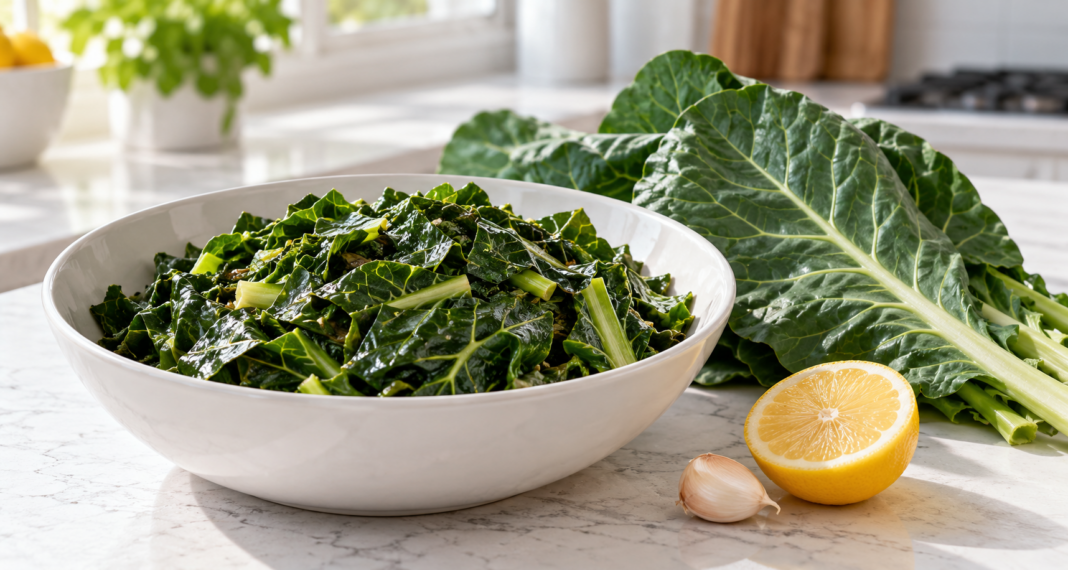
Are collard greens good for you? Plain collards are a nutritious choice: they provide fiber, calcium and vitamins C and K without much fat. Preparation changes the finished dish, though. Greens cooked with a little oil and garlic are different from the same leaves served with large amounts of salty meat, butter or seasoned broth.
A useful way to judge collards is to separate the vegetable from the recipe. Pay attention to the serving size, what goes into the pot and whether a medication affects your food choices. You do not need an expensive supplement or an elaborate meal plan to put these greens on your plate.
A cooked serving offers more than a green side dish
Nutrition figures vary because databases describe different foods and portions. Fresh, frozen, raw and cooked collards do not all have the same values. Even two recipes labeled “one cup” can contain different amounts of leaves and liquid.
These figures describe one cup of chopped collards, boiled, drained and prepared without salt, as listed in the University Hospitals nutrition reference. They are estimates for that specific entry, not a promise about every bowl.
| Nutrient | Amount in the listed cooked cup |
|---|---|
| Energy | About 49 calories |
| Fiber | 5.3 grams |
| Protein | 4 grams |
| Calcium | 266 milligrams |
| Vitamin C | 34.6 milligrams |
| Vitamin K | 836 micrograms |
| Sodium | 30 milligrams before added salt |
Use this table as a comparison point rather than combining it with figures for a different serving. A restaurant portion, canned product or recipe with cooking fat needs its own label or recipe calculation. A single precise calorie number cannot describe every version of collard greens.
Fiber helps, but a sudden large portion can be uncomfortable
Collards belong among foods that can help you reach your fiber needs. The NIDDK guidance on food and constipation includes them alongside legumes, whole grains and other vegetables. It recommends that adults get 22–34 grams of fiber a day, depending on age and sex, and increase fiber gradually.
Try a smaller portion first if leafy greens rarely appear in your meals. A larger bowl is not automatically a better choice when it leaves you uncomfortable. Drink an appropriate amount of fluid, and follow any fluid restrictions your healthcare team has set.
HealthWavy’s guide to high-fiber foods and practical serving sizes can help you plan variety around the greens. Beans, fruit and whole grains can contribute too, so collards do not have to carry the whole day’s fiber target.
Calcium contributes to your diet without making collards a treatment
Calcium supports bones and teeth as well as normal muscle and nerve function. NIH guidance on calcium lists collard greens among plant foods that supply this mineral. That makes them useful when you want more than dairy foods in your calcium mix.
Calcium in a vegetable is part of your total intake, not a reason to assume you can stop prescribed treatment or need a tablet. HealthWavy’s explanation of calcium from food and supplements covers the difference between meeting a dietary need and adding an unnecessary dose.
A complete meal still needs other foods. Pair greens with a protein source and a suitable grain or starchy food rather than expecting a bowl of leaves to provide everything. Rice and beans with collards, or fish with potatoes and greens, are practical meal ideas, not medically prescribed plans.
Vitamin K deserves special attention with warfarin
Vitamin K supports normal blood clotting and bone-related proteins. Collards are a concentrated food source. People who take warfarin need consistent vitamin K intake, because changes can affect the medicine’s action.
That does not mean everyone on warfarin must avoid green vegetables. Tell your prescribing clinician or anticoagulation team before you substantially change how much you eat. Do not alter a medication dose on your own. This specific food interaction should not be assumed to apply in the same way to every medicine described as a blood thinner.
Flavor does not have to depend on a salty pot
Collards have a strong place in Southern cooking, and a nutritious meal does not require abandoning familiar flavors. The useful question is how much seasoning, meat and cooking fat ends up in the portion you actually eat.
Garlic, onion, lemon, vinegar, pepper and measured amounts of oil offer several ways to build flavor. Compare sodium on packaged broth and canned greens. A product marked “no salt added” can make it easier to decide the seasoning yourself; the full Nutrition Facts label still matters.
An Illinois Extension collard-green recipe uses garlic, onion, olive oil and lemon. It is one example of a flavorful preparation that does not require a large amount of smoked meat. Keep recipe portions in mind instead of treating “healthy ingredients” as unlimited.
Clean the leaves, then cook for the texture you enjoy
Grit can hide between broad collard leaves. FDA produce-cleaning guidance recommends plain running water rather than soap or produce wash. Clean hands, equipment and preparation surfaces matter too; washing does not make contaminated food sterile.
- Separate the leaves and inspect them. Discard spoiled leaves and rinse away visible dirt.
- Remove thick stems if you prefer a softer dish. Slice leaves into strips for a quick sauté or leave larger pieces for a braise.
- Cook until the texture suits the leaves. Mature leaves can need more time than tender ones; follow a reliable recipe rather than one universal timer.
- Taste before adding more salt. Remember that broth, meat and sauces may already supply it.
Boiling does not turn the vegetable into empty food. Fiber and minerals remain, although certain nutrients move into the liquid. Illinois Extension’s preparation guidance explains that the cooking liquid, often called potlikker, can be used in other dishes. Keep its salt content in mind if you choose to use it.
Match the portion to your health needs
Most food questions depend on context. The Academy of Nutrition and Dietetics collard guide notes a possible thyroid concern with cruciferous vegetables when iodine intake is inadequate or a thyroid condition already exists. This is a reason for individualized advice, not a blanket claim that ordinary servings damage everyone’s thyroid.
An existing medically restricted diet also takes priority over a general food article. Ask your clinician or registered dietitian how greens fit if your treatment limits particular nutrients. Persistent digestive symptoms deserve an assessment rather than repeated attempts to fix them with a larger vegetable portion.
A sensible everyday choice is a portion you enjoy, a preparation you can repeat and a place for other vegetables as well. Think of collards as one useful ingredient in a varied diet, without promises that a single food will cure illness or cancel the rest of a meal.
Questions that come up at the dinner table
Collards can fit into regular meals, but variety still matters. Rotate them with other vegetables rather than treating one food as a complete diet. Anyone who takes warfarin should discuss major changes in leafy-green intake with the prescribing team.
Frozen and canned collards are useful options when fresh bunches are inconvenient. Compare ingredient lists and sodium per serving. Plain frozen greens let you choose the seasonings, while canned products may already contain salt or other ingredients.
Raw collard leaves are edible, although mature leaves can feel tough. Wash them thoroughly, remove thick stems and slice the leaves thinly. Cooked greens offer a softer texture. A cup of raw leaves and a cup of cooked greens are not equivalent portions.
Cooked collards still supply fiber and minerals. Certain nutrients move into the cooking liquid, so a soup or a modest amount of lower-sodium potlikker can retain part of what would otherwise go down the drain. Cooking time should suit the leaves and the texture you want.