



A hospital discharge can feel like the end of treatment. At home, families often discover that it is only the start of another stage. A wound still needs attention. Walking may remain difficult. Medicines have to stay on schedule. Bathing or getting dressed may suddenly require another person’s help. This is where in home health care can become part of the care plan.
It allows a person to receive certain health services or everyday assistance without moving into a hospital, nursing facility, or rehabilitation center. Home health care is not one service. A registered nurse who checks a wound has a different role from an aide who helps a person get dressed. A physical therapist who works on mobility also provides a different service from a caregiver who prepares a meal.
Start With the Problem at Home
A person who has returned home after hip surgery may need a nurse and physical therapist for a limited period. Another person may have no wound or medical treatment to manage but cannot safely bathe, dress, prepare meals, or move around the house alone. Both people need help at home. They do not necessarily need the same kind of help.
Common needs can include:
- • Skilled nursing care
- • Physical therapy
- • Occupational therapy
- • Speech-language pathology
- • Help with bathing and grooming
- • Dressing assistance
- • Mobility and transfer support
- • Help with everyday routines
- • Medical social services when applicable
- • Longer-term personal support
- A clear list of actual problems is more useful than choosing an agency first and trying to fit the person into its available services.
Home Health Care and Personal Home Care
Home health care generally refers to skilled or clinical services provided at home. Nurses, physical therapists, occupational therapists, speech-language pathologists, medical social workers, and home health aides may form part of a home health plan when the person’s needs and eligibility support those services.
Both types of care can also exist at the same time. An older adult could receive wound care from a nurse but still need another person to help with bathing and meals. This distinction becomes especially important with Medicare. Needing help at home does not automatically mean Medicare will pay for all of that help.
Recovery Can Continue in the Rooms
Rehabilitation does not always end when a patient leaves a hospital or rehabilitation facility. Strength may still be poor. Stairs may feel unsafe. A person may struggle to get out of a chair or reach the bathroom without help.
Physical therapy may address strength, balance, walking, movement, and safer mobility. Occupational therapy can focus on practical activities that support independence at home. Speech-language pathology may address communication or swallowing problems when appropriate.
A person may walk successfully across a flat clinic floor yet struggle with three steps at the front door. A bathroom may be difficult to enter with a walker. Furniture may leave too little space for safe movement.
Everyday Help Does Not Have to Be Medical
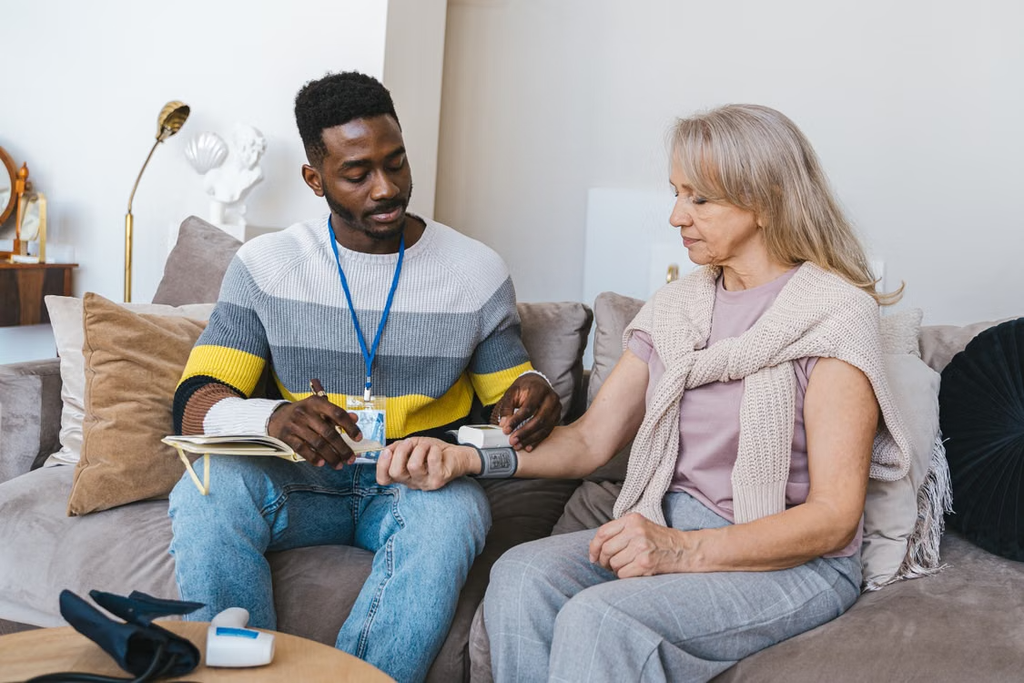
A person can be medically stable and still have serious trouble with daily life. Home health and personal care aides often support people who have disabilities, chronic conditions, age-related limitations, or other problems that reduce independence.
Help may include bathing, grooming, dressing, eating, toileting, walking, transfers, basic household support, and assistance with daily routines. An aide may also observe the person and report important changes according to the care arrangement.
Families should never assume that every caregiver can give injections, change complex dressings, administer medications, or perform another clinical task. State law, professional scope of practice, training, agency policy, and the person’s care plan can determine which tasks a worker may perform.
Small Changes Often Signal That Extra Help Is Needed
Need for care does not always arrive with a major medical event.
A parent may start avoiding the shower because stepping into it feels unsafe. Medicines may remain untouched. Meals become smaller or less regular. Stairs take much longer. A person who once went outside every day may stay in because getting through the doorway has become difficult.
Other families face a sudden change after surgery, a fall, an infection, or hospitalization.
Signs worth taking seriously include:
- • Repeated falls or near-falls
- • Trouble walking safely
- • Difficulty getting in or out of bed
- • Problems with bathing or dressing
- • Missed medicines
- • Poor food intake
- • New trouble with usual household activities
- • Loss of independence after illness or surgery
- • Difficulty managing a medical condition at home
Waiting until someone can no longer live alone can make the decision much harder.
A more useful question is whether particular daily activities have become unsafe, unreliable, or exhausting
Homebound Has a More Specific Meaning
A person may still leave home for medical treatment and certain short or infrequent non-medical reasons without automatically losing homebound status. Attendance at adult day care does not necessarily prevent a person from qualifying either.
A key issue is how difficult it is for the person to leave home because of illness or injury and whether doing so requires considerable effort or help. Families should rely on the actual Medicare criteria and a professional assessment rather than deciding eligibility from the everyday meaning of the word.
Medicaid May Matter When Support Is Needed
Home and Community-Based Services can allow eligible people to receive support in their homes or communities instead of an institution. Programs can serve older adults and people with qualifying disabilities or other needs.
Depending on the state’s approved program and the person’s eligibility, certain HCBS programs may include services such as skilled nursing, case management, respite care, environmental modifications, supported employment, or other forms of long-term assistance.
A service available through Medicaid in one state may operate under different requirements in another. Families should check their state’s Medicaid program rather than rely on a general national description. Medicare and Medicaid should not be treated as two names for the same home-care coverage. Their rules, eligibility requirements, and roles are different.
Paying Privately Can Fill Gaps That Insurance Leaves
A person may mainly need supervision, bathing assistance, meal preparation, companionship, or other long-term personal care. Families in this position may need to explore Medicaid eligibility, private-pay services, long-term care insurance, veterans’ benefits for eligible people, private insurance provisions, or state and community programs.
Location matters. So does the level of care. Four hours of daytime personal assistance has a different cost structure from overnight support or skilled nursing. Weekend schedules, minimum visit lengths, transportation, special care needs, and agency policies can also affect the final amount.
Build the Care Plan Around a Real Day at Home
An assessment may need to look at medical treatment, mobility, fall risk, medications, memory or cognitive problems, personal hygiene, food, bathroom access, home hazards, and the help already available from family or friends.A nurse may handle wound care. A therapist may work on walking. An aide may help with personal care. A daughter may arrange transportation. Another family member may prepare meals.
Medication is a good example. A family member may believe an aide gives the medicine. An aide may only be permitted to remind the patient. That difference needs to be clear before the first visit. Care plans also need room to change. A schedule that works during the first week after hospital discharge may not fit the patient’s needs a month later.
A Safe House Matters as Much as a Care Schedule
Home can feel comfortable without being safe for someone with limited strength or mobility. Loose rugs can become fall hazards. Poor lighting makes nighttime trips to the bathroom harder. Clutter narrows walking paths. Stairs can become a major barrier after surgery or illness.
Bathrooms deserve particular attention because bathing, standing, turning, and transferring can all become difficult. Equipment may help in certain situations.
A bedroom on an upper floor may no longer make sense for someone who cannot safely use stairs. A walker is less useful when furniture blocks every route through the house. Home safety should therefore form part of the care assessment rather than become an afterthought after a fall occurs.
Family Help Needs Limits Too
Family members may still arrange appointments, collect prescriptions, prepare meals, handle transportation, manage bills, speak with doctors, and keep track of changes in the person’s condition. That person can maintain a current medication list, insurance details, emergency contacts, provider information, care instructions, and agency numbers.
A care plan may depend on a spouse or adult child being available every evening. That arrangement might work for two weeks. Six months later, it may become difficult to maintain. A good plan does not simply count how many relatives live nearby. It considers how much help those people can reliably provide without leaving important gaps.
Patient Experience Adds Another View of Quality
Clinical quality measures cannot tell families everything about day-to-day care. Communication matters. Respect matters. Reliability matters too. CMS uses the Home Health Care Consumer Assessment of Healthcare Providers and Systems survey, commonly called HHCAHPS, to collect information about patient experiences with Medicare-certified home health agencies.
That date matters when current information is compared with older articles or reports. Material based on the previous survey may describe a different questionnaire. Agency comparisons work best when families look at quality measures, patient experience information, available services, and their own conversations with providers together.
Needs Rarely Stay Exactly the Same
Someone who returns home after an operation may initially need frequent support and then need less as strength returns. Another person may move in the opposite direction. A progressive illness, another fall, infection, hospital admission, or loss of mobility can increase the amount of help required.
New confusion deserves attention. So do repeated falls, worsening wounds, severe weakness, breathing problems, medication errors, or a sudden inability to perform normal activities. A scheduled home health visit should not delay emergency care. Severe or urgent symptoms require the appropriate medical response.
Match Each Need With the Right Kind of Help
Clinical needs such as wound treatment, injections, rehabilitation, or assessment of a serious condition may point toward skilled home health services. A health care provider can determine whether home health care is medically appropriate and whether the patient meets relevant requirements.
Payment should be checked next. Medicare, Medicaid, private insurance, long-term care insurance, veterans’ programs, and private payment operate under different rules. Receiving a service inside a person’s home does not, on its own, make that service eligible for insurance coverage.
Care at Home works Best
A person does not need “as much home care as possible.” Care should address identifiable needs. A wound needs the right clinical attention. Unsafe walking needs an appropriate mobility plan. Difficulty bathing may require personal assistance and a safer bathroom. Missed medicines need a clear medication plan and a responsible person.
Medicare-certified home health services can meet certain skilled needs for eligible beneficiaries. Medicaid may offer home and community-based support to eligible people through state programs. Private care and other resources may cover needs that public programs do not.