


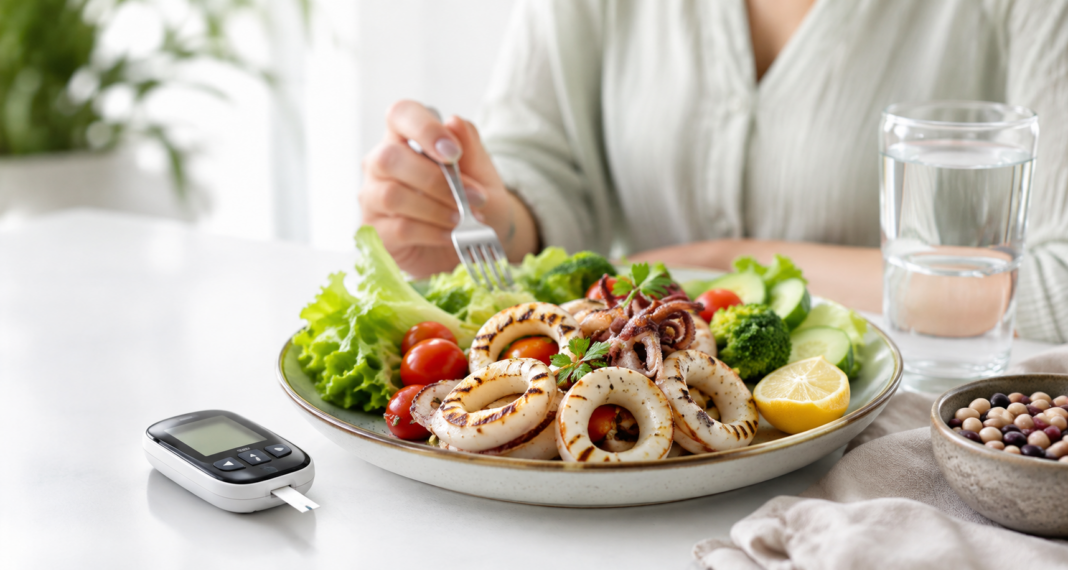
If you are checking the squid glycemic index because you want to know whether squid can raise blood sugar, focus on its carbohydrate content first. Plain squid contains very little carbohydrate. A 100-gram serving of raw squid has about 3.08 grams of carbs and 15.58 grams of protein.
That already tells us something useful. Plain squid does not bring a large amount of carbohydrate into a meal, so it is unlikely to cause the same blood sugar rise as bread, rice, fries, noodles, or sugary foods.
An exact, well-established glycemic index number for squid is harder to give. You may see websites list squid as GI 0, but low carbohydrate content does not automatically prove that squid has been tested and received an official GI score of zero. That difference is worth knowing.
So, the simple answer is this: plain squid has a low expected effect on blood sugar because it contains very few carbs. Fried calamari is a different story because batter, breading, sauces, and side dishes can add much more carbohydrate.
Does squid really have a GI of zero?
You may see squid listed with a glycemic index of zero, but that number should not be treated as a confirmed test result. Glycemic index measures how foods with carbohydrates affect blood sugar. A GI of 55 or less is low, 56 to 69 is medium, and 70 or above is high.
Plain squid has very little carbohydrate. A 100-gram serving contains about 3.08 grams of carbs. Standard GI tests usually need a much larger amount of available carbohydrate, often around 50 grams. Squid does not provide enough carbs in a normal serving to make this type of test very useful.
A clearer answer is that squid is a very low-carb food with a small expected effect on blood sugar. This explains its value in a low-carb meal better than an unconfirmed GI score of zero.
Low carbs tell you more than a GI number
Squid is mainly a protein food rather than a carbohydrate food.
A 100-gram raw serving provides roughly:
- 92 calories
- 15.58 g protein
- 3.08 g carbohydrate
- 1.38 g fat
- 0 g sugar
- 0 g fiber
- 0.36 g saturated fat
- 44 mg sodium
- 233 mg cholesterol
- 44.8 mcg selenium
Look at the difference between protein and carbs. You get around five times as much protein as carbohydrate. That is the main reason plain squid fits easily into a lower-carb meal.
Rice, pasta, bread, potatoes, and flour-based foods work differently because carbohydrate makes up a much larger part of the serving.
Squid and blood sugar in a normal meal
Eating squid does not happen in a laboratory and You usually eat it with other foods. That matters a lot and grilled squid with salad and vegetables may contain relatively little carbohydrate. Squid served with a large bowl of white rice can produce a very different blood sugar response.
Consider this meal:
- grilled squid
- white rice
- sweet chili sauce
- regular soda
Squid is probably not the main blood sugar concern there. Rice, sauce, and soda provide most of the carbohydrate. Now picture grilled squid with vegetables, salad, a smaller portion of beans, and water and Same seafood is Very different meal.
That is one reason people can get confused when they focus too much on the glycemic index of squid itself. Your full plate often matters more.
Fried calamari can affect blood sugar differently
Calamari comes from squid, but the restaurant version often has flour, breadcrumbs, starch, or batter around it. Those extra ingredients add carbohydrates that plain squid does not have. A grilled or steamed squid dish may stay low in carbs, but fried calamari can have a very different nutrition profile.
Sauces and side dishes can add even more carbs. Sweet chili sauce, teriyaki glaze, ketchup, fries, bread, rice, or noodles can turn a simple seafood dish into a much higher-carb meal. In that case, the coating and sides may affect blood sugar far more than the squid itself.
Plain grilled squid is therefore not equal to breaded calamari. People who watch their blood sugar should check the full plate, not just the seafood. Cooking method, coating, sauce, portion size, and side dishes all help determine how the meal may affect glucose.
Calamari does not have one fixed glycemic index
Calamari can have a different blood sugar effect based on how it is prepared. Plain grilled or steamed squid has very few carbs, but flour, batter, breadcrumbs, or sweet sauces can add much more.
A restaurant dish with breaded calamari, fries, or rice may contain far more carbs than plain squid. This makes one fixed calamari glycemic index value unreliable for every recipe. If you watch your blood sugar, check the coating, sauce, portion size, and side dishes instead.
Glycemic load needs context too
Glycemic load considers both GI and the amount of carbohydrate in a normal portion. This can give a better idea of how a food may affect blood sugar. Squid contains very few carbs, but it does not have a well-established GI value. That means an exact squid glycemic load cannot be confirmed with confidence. Plain squid still has a small direct carbohydrate load because a normal serving contains only a few grams of carbs.
Your Health Support in One Place
Use the HealthWavy App to stay more organized with your health, access helpful tools, and get simple support from one easy dashboard.
Open HealthWavy AppCan people with diabetes eat squid?
Squid can fit into a diabetes-friendly meal because it is low in carbs and rich in protein. Grilled or steamed squid with vegetables and a controlled portion of carbs can be a practical choice.
Preparation matters. Breaded calamari, fries, white rice, sweet sauces, and sugary drinks can add a large amount of carbohydrate to the meal. Blood sugar response can also vary based on portion size, medication, activity, and the rest of the food on the plate.
People who use insulin or medicines that can cause low blood sugar should follow their personal treatment plan. A low-carb food is not a reason to change a medication dose without medical advice.
Squid is low in carbs but not always carb-free
Plain squid is naturally low in carbohydrates. Raw squid has about 3.08 grams of carbs per 100 grams, so it should not always be listed as a zero-carb food. Different squid types and nutrition databases may show slightly different values.
Packaged or prepared squid can contain much more carbohydrate. Batter, flour, starch, marinades, and sweet sauces can raise the carb count. Check the nutrition label when you buy a prepared product because it gives the best value for the food you actually plan to eat.
Squid also provides plenty of protein
A 100-gram portion of raw squid provides about 15.58 grams of protein. This makes squid a useful protein choice without the high carb content found in bread, rice, pasta, or potatoes. Plain squid can work well with vegetables, salad, or another low-carb side. Protein does not make squid a special treatment for blood sugar, but its overall nutrition profile makes it easier to include in a balanced, lower-carb meal.
Calories depend on how squid is served
Plain raw squid has about 92 calories per 100 grams. A simple grilled, boiled, or steamed portion can stay fairly low in calories. Batter, oil, breading, rich sauces, and large portions can raise the total quickly.
Restaurant calamari can therefore contain far more calories than plain squid. If you track calories or blood sugar, judge the complete dish rather than the squid alone. You can also use our recipe nutrition calculator to check calories, carbs, protein, and fat in a homemade squid meal.
Squid is higher in cholesterol than you may expect
Raw squid contains about 233 mg of cholesterol per 100 grams, even though it is fairly low in saturated fat. This does not mean squid is unhealthy for everyone, but cholesterol is still worth noting.
Your overall diet matters more than one food. People who have been advised to limit dietary cholesterol should consider portion size and follow advice from their doctor or dietitian.
Selenium and vitamin B12 add extra nutrition
Squid also provides useful nutrients beyond protein. A 100-gram portion contains about 44.8 micrograms of selenium and also provides vitamin B12 and riboflavin. Selenium supports normal body functions, and vitamin B12 helps support healthy nerves and blood cells. These nutrients do not change squid’s glycemic effect, but they add to its overall nutritional value.
Squid is a lower-mercury seafood choice
Squid is generally lower in mercury than large predatory fish. FDA and EPA guidance places squid in the “Best Choices” group for lower-mercury seafood. Preparation still matters because fried calamari can contain far more calories, carbs, sodium, and fat than plain squid.
Simple ways to prepare squid for better blood sugar control
Grilled, steamed, baked, or lightly sautéed squid keeps the meal simple. Lemon, garlic, herbs, and spices can add flavor without much sugar. Vegetables such as broccoli, peppers, spinach, zucchini, tomatoes, and salad also pair well with squid.
Rice or noodles can still fit into the meal, but portion size matters. Sweet chili sauce, teriyaki sauce, and similar products may add extra sugar, so check the label before use.
Does squid raise blood sugar?
Plain squid has very little carbohydrate, so it should have a small direct effect on blood sugar compared with foods such as rice, bread, pasta, or fries.
A squid meal can still raise glucose if it includes batter, sweet sauces, large portions of rice, bread, fries, or sugary drinks. Your blood sugar response reflects the whole meal. This is more useful than assuming squid has a confirmed GI of zero.
Squid compared with common meal foods
Plain squid is much lower in carbs than foods such as white rice, bread, pasta, or potatoes. It provides mostly protein, with only a small amount of carbohydrate. Non-starchy vegetables also tend to be low in carbs and add fiber, vitamins, and minerals. Our high fiber foods list gives more examples of foods you can add to a balanced meal.
A meal with grilled squid and vegetables can therefore have a very different effect on blood sugar than calamari served with fries, bread, sweet sauce, and soda. In most cases, the sides and extras make the biggest difference.
Common Questions About Eating Squid
Plain squid is very low in carbohydrates, so it is expected to have a small direct effect on blood sugar. A confirmed standard glycemic index value for squid is not well established.
A GI value of zero is often listed online, but strong test data does not clearly confirm that number. Squid is better described as a very low-carb food rather than a proven GI 0 food.
Squid can fit into a diabetes-friendly meal because it provides plenty of protein with very few carbs. Grilled, steamed, or baked squid is usually a better choice than breaded calamari with fries or sweet sauces.
Fried calamari can contain more carbs because flour, batter, breadcrumbs, and sauces are often added. Rice, fries, bread, or sugary drinks served with it can raise the total carb load even more.
Raw squid contains about 3.08 grams of carbohydrate per 100 grams. Packaged, seasoned, or breaded squid may contain more, so the nutrition label gives the best number for the product you plan to eat.
Squid glycemic index in simple terms
A confirmed squid glycemic index number is not well established, so it is better not to label squid as GI 0 without solid test data. Plain raw squid is naturally low in carbs, with about 3.08 grams of carbohydrate, 15.58 grams of protein, and 92 calories per 100 grams.
That makes plain squid a low-carb seafood choice with a small direct effect on blood sugar for most meals. The bigger change usually comes from how it is served. Batter, breading, sweet sauces, rice, noodles, fries, and sugary drinks can raise the carb load quickly.
So if you are eating squid with blood sugar in mind, focus less on chasing one GI number and more on the whole plate, portion size, and cooking method. That gives you a much clearer picture of how the meal may affect glucose.
How We Reviewed This Guide
HealthWavy reviewed this article using reliable medical, academic, and official sources. Relevant source links are included where needed.
Found an unclear detail, outdated fact, broken source, or possible error? Leave a comment or email info@healthwavy.com. Need professional help? Visit our Doctor Directory.