


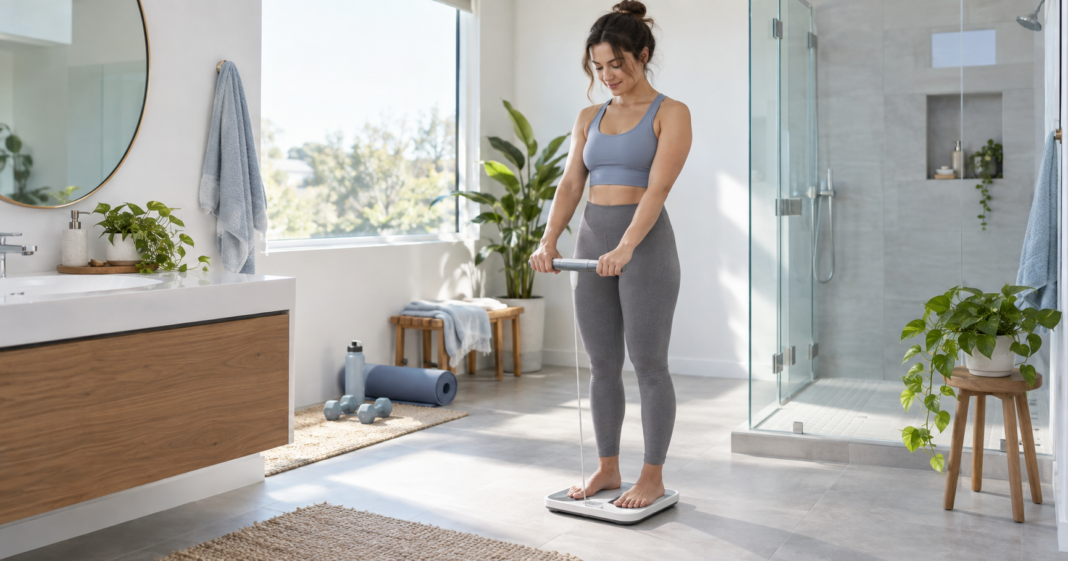
Step on a scale after a month of hard work and it may give you a deeply unhelpful answer: almost nothing has changed. That single number cannot show whether you lost fat, added muscle, retained water, or simply ate a salty dinner the night before. Weight matters, but it rarely tells the whole story.
Hume Health built the Body Pod, now often sold as the hume Pod, for people who want more context. Hand and foot sensors send a low electrical current through several areas of the body. From that signal, the device estimates fat, muscle, water, visceral fat, and other measurements. Hume says the current system reports more than 40 body and health-related metrics, then sends the results to its mobile app.
Useful as that sounds, this is still a home body-composition scale. It does not look inside the body, diagnose a health problem, or replace a clinical test. Its real value comes from repeated measurements taken under similar conditions. Used that way, it can reveal patterns that total weight tends to hide.
A single number can miss real progress
A bathroom scale shows total weight, but it cannot separate fat, muscle, bone, and water. Someone may lose fat and gain muscle with little change on the scale. Another person may lose several pounds quickly, but much of it could come from water or muscle. Body-composition data adds that missing context. It helps show whether your progress involves fat loss, muscle gain, or temporary water changes.
How a Hume Pod scan works
Hume Pod uses bioelectrical impedance analysis (BIA). A small, safe electrical current passes through the body. Fat, muscle, and water affect that signal differently, which allows the device to estimate body composition. Eight hand and foot sensors collect data from the arms, legs, and torso. This provides a broader view than basic foot-only smart scales. Still, every result is an estimate, not a direct measurement or medical diagnosis.
A long dashboard does not make every number equally important
Current Hume material advertises about 45 body-composition and health metrics. Exact names, totals, and screen layouts may differ with the device version or app update. Typical results cover several areas:
- Body weight and body fat percentage
- Fat mass and lean body mass
- Muscle mass and skeletal muscle estimates
- Visceral fat
- Total body water and fluid distribution
- Segmental data for the arms, legs, and trunk
- Bone-related estimates
- Metabolic measures or metabolic age
- Heart-related data available through the scale
- Health scores and longer-term trends
Forty-five values can look impressive on a dashboard, but a person rarely needs to study every field after each scan. A smaller group should match the goal. Someone who wants to reduce fat may watch weight, estimated body-fat percentage, and fat mass. A person focused on strength may care more about muscle trends and regional balance. Water data can help explain an unusual jump that does not fit the broader pattern.
Isolated decimals deserve little attention. A body-fat result of 27.4% on Monday and 27.1% on Tuesday does not prove that meaningful fat loss occurred overnight. A steady change across several weeks carries much more weight than a tiny movement from one morning to the next.
Water can shift your Hume Pod results
A higher body-fat result does not always mean you gained fat. Food, water, salt, alcohol, exercise, and scan time can affect a BIA reading. Each factor may change your weight or move fluid between body tissues. Hume Pod relies on water levels to estimate body composition. A morning scan before breakfast may differ from a scan after dinner. That change can happen even when your actual fat and muscle stay the same.
Use the scale at about the same time each day. Place it on a hard, level floor. Keep your hands and feet in full contact with the sensors. Accurate profile details also help the device produce a fair estimate.
Focus on weekly or monthly trends instead of one unusual result. A sudden change that disappears after a few scans may come from water or scan conditions. A pattern that lasts for several weeks deserves more attention.
Confused by Your Hume Pod Results?
Ask the HealthWavy AI Assistant what a sudden body-fat change may mean, which Hume Pod metrics deserve attention, or how hydration can affect a BIA scan. You can use chat or voice to get clear educational guidance.
Ask the HealthWavy AI AssistantEducational guidance only. It does not replace advice from a healthcare professional.
Fat loss may not change your weight much
Fat loss and weight loss do not always tell the same story. Your weight may stay close to the same level if you lose fat and add muscle. This process is often called body recomposition.
Suppose you lose eight pounds of fat and gain four pounds of muscle. Your scale shows a loss of only four pounds. That number may look small, but your body composition has changed in a positive way.
A lean body mass calculator can add useful context to your Hume Pod results. Compare lean mass, body fat, muscle, and total weight across several weeks. No single result can confirm progress on its own. Fast weight loss also needs a closer look. A sharp drop may include water and muscle, not just fat. Seek advice from a qualified health or fitness professional if your weight and estimated muscle mass continue to fall together.
Segmental data compares different body areas
Hume Pod does more than give one full-body estimate. Its hand and foot sensors collect data from the left arm, right arm, left leg, right leg, and torso. This feature is known as segmental body analysis. Regional results can help you compare both sides of your body. Someone who returns to exercise after an injury may want to watch how each arm or leg responds. A coach or physical therapist can review that data beside strength, balance, pain, and movement tests.
Segmental results still have limits. A difference between two sides does not prove an injury, nerve condition, or muscle disorder. Seek medical care if you notice pain, sudden weakness, swelling, loss of movement, or a major physical difference between both sides.
App records make each scan more useful
Hume Health app stores each scan and shows how your results change over time. This record is more useful than a single weigh-in because it can reveal slow changes in fat, muscle, water, and total weight.
Apple Health and Google Health Connect support can place body data beside sleep and activity records. That combined view may help you spot useful patterns. A chart can show a possible link, but it cannot prove that one change caused another.
Hume says its free app includes basic weigh-ins and body measurements. Hume Plus may add personal advice and weekly health reports. A paid plan may not be necessary if you only need your scan results and long-term history.
Pod or basic smart scale
Both products can sit in the same bathroom, yet they suit different needs. A low-cost smart scale may be enough for someone who wants body weight and a rough whole-body fat trend. Hand sensors, multiple frequencies, and segmental estimates become more relevant when a person cares about muscle gain, fat loss, or regional changes.
| Feature | Hume Pod | Basic smart scale |
|---|---|---|
| Measures body weight | Yes | Yes |
| Estimates body composition with BIA | Yes | Often |
| Uses hand electrodes | Yes | Usually no |
| Uses foot electrodes | Yes | Usually yes |
| Provides segmental analysis | Yes | Often limited or unavailable |
| Uses multiple electrical frequencies | Yes | Depends on the model |
| Estimates arms, legs, and trunk | Yes | Often relies heavily on lower-body signals |
| Tracks trends in an app | Yes | Common |
| Reports more than 40 metrics | Yes | Varies widely |
| Replaces clinical testing | No | No |
Extra data only helps when it supports a clear purpose. Paying for dozens of measurements makes little sense if weight is the only number a person plans to use. A simpler product may offer everything needed at a lower price. In contrast, regular strength training or a body-recomposition goal gives segmental trends a more practical role.
Bone numbers need a clear warning label
Bone mass and bone density can sound interchangeable on a smart-scale screen, but clinical bone assessment is a separate matter. Doctors use bone-mineral-density tests to assess concerns such as osteoporosis and fracture risk. A home BIA scale cannot replace that process.
Anyone advised to have a DEXA scan should not cancel or delay it because a scale displays a reassuring bone-related estimate. Age, fracture history, menopause, medication use, and other medical factors may lead a clinician to recommend proper testing. A consumer estimate cannot confirm or rule out low bone density.
Similar caution applies to other health-style scores in the app. A trend can prompt a useful question, but it should not serve as a diagnosis. Medical symptoms and clinical decisions require appropriate tests and professional advice.
A repeatable routine makes the data easier to trust
Random scans create noisy comparisons. A simple routine keeps avoidable differences to a minimum. Pick a consistent time, use the same location, and keep the scale on a hard, level surface. Make full contact with every sensor and check that the app has selected the correct profile.
Looking at related measurements together also reduces confusion. A slight rise in weight may not be bad news if estimated fat continues to fall and muscle continues to rise. A quick drop in weight may deserve caution if muscle also falls across repeated scans. Context matters more than whether one line moved up or down today.
Personal details inside the profile need to remain correct because body-composition algorithms use them alongside the electrical measurements. An incorrect age, height, sex, or user profile may affect the estimate or attach the result to the wrong person.
One Pod can serve a household
Separate accounts allow several household members to use the same device without combining their histories. Hume’s current information says the Pod supports multiple users, and one product page advertises recognition for as many as 24 people. Each person should use their own profile and confirm that the app has identified them correctly. Separate records matter because the calculation uses personal information as part of the estimate. Shared hardware is convenient; shared or incorrect profiles are not.
Where the Hume Pod earns its place
Hume Pod offers far more detail than a standard bathroom scale. Eight contact sensors, multi-frequency BIA, segmental analysis, and more than 40 metrics help show how fat, muscle, water, and total weight may change over time. Hume also compares its technology with DEXA, but the Pod is still a home device, not a clinical scan.
Its real value does not come from one 60-second result. It comes from consistent scans across several weeks. Those trends can reveal fat loss or muscle gain even when body weight barely moves.
Use Hume Pod to follow your direction, not chase every decimal. Keep your scan routine consistent, view sudden changes with care, and choose clinical tests when medical accuracy matters. A basic scale gives you one number. Hume Pod helps you understand the story behind it.
How We Checked This Hume Health Body Pod Guide
The HealthWavy editorial team researched and checked this article to explain how the Hume Health Body Pod measures weight, body fat, muscle, water, and other body-composition estimates.
Important claims were compared with official product information and relevant medical, academic, or primary sources. Source links appear inside the article where they help readers check a claim or learn more.
Found an unclear statement, outdated detail, broken source, or possible error? Leave a comment below or email us at info@healthwavy.com. Our editorial team will review valid concerns and update the article when needed.
Hume Pod results cannot replace medical tests or personal care. If you need help from a healthcare professional, you can use the HealthWavy Doctor Directory.
Find a Healthcare Professional