

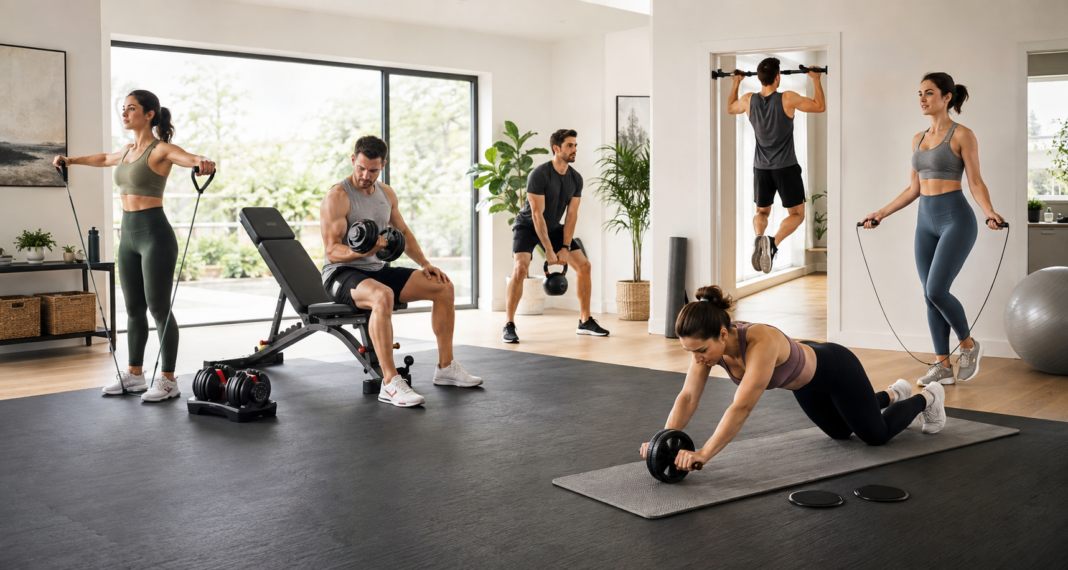
Building a home gym on a budget is easier when you spend money on equipment that can handle more than one type of workout. Adjustable dumbbells, resistance bands, a weight bench, and a pull-up bar give you the best mix of strength, cardio support, and full-body exercise without the cost of large gym machines.
You do not need to buy everything at once. Start with resistance bands or adjustable dumbbells, then add equipment as your workouts improve. The 10 picks below focus on affordable price, exercise variety, small-space use, and long-term value, so you can build a practical home gym without wasting money.
Best Budget Home Gym Equipment at a Glance
Compare price, main use, and space needs before you choose your equipment.
| Equipment | Budget Range | Best Use | Space |
|---|---|---|---|
| Resistance Bands | $10–$40 | Full-body strength | Very Low |
| Adjustable Dumbbells | $40–$100+ | Strength and muscle | Low |
| Adjustable Weight Bench | $60–$105 | Presses and supported exercises | Medium |
| Kettlebell | $30–$65 | Strength and full-body exercises | Low |
| Doorway Pull-Up Bar | $25–$40 | Back and upper body | Very Low |
| Jump Rope | $10–$25 | Cardio | Low |
| Ab Wheel | $17–$30 | Core strength | Very Low |
| Exercise Mat or Floor Tiles | $20–$60 | Floor exercises and protection | Low–Medium |
| Core Sliders | $5–$16 | Core and bodyweight exercises | Almost None |
| Stability Ball | $16–$40 | Core, mobility, and support work | Medium |
Price note: These ranges reflect common U.S. retail prices seen in August 2026. Prices can change due to brand, quality, weight capacity, and sales.
1. Resistance Bands Give You a Full Workout Under $40
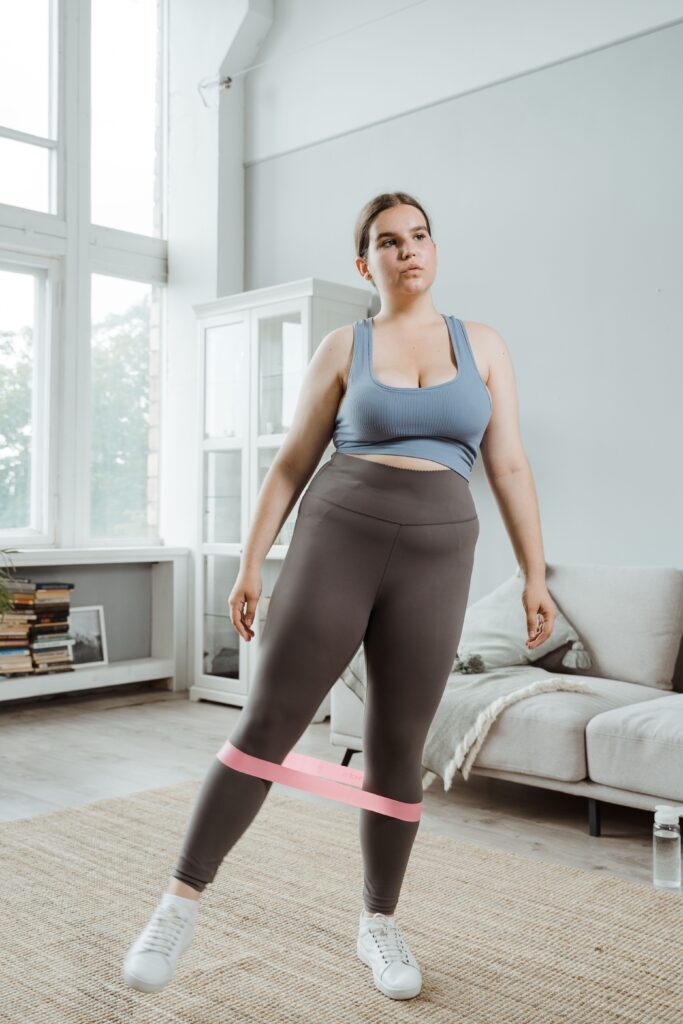
Pick a set with light, medium, and heavy resistance levels. This gives you better control over each exercise. Light bands suit shoulders and warm-ups, while heavier bands work better for legs, chest, and back.
Long loop bands offer more use than small mini bands. You can use them for strength work, assisted pull-ups, mobility, and lower-body exercises. They also take up very little space and fit easily inside a drawer or gym bag. One limit is load control and dumbbell gives you a fixed weight, but band resistance changes as you stretch it. This can make strength progress harder to track.
Best for: Home gyms under $100, small rooms, beginners, and travel.
Good choice: Buy a multi-level set with clear resistance labels and strong material. Avoid bands with weak seams, cracks, or thin handles.
2. Adjustable Dumbbells Are the Best First Weight Purchase
Fixed dumbbells become expensive fast. You may buy a pair of 10-pound dumbbells, then need 15s, 20s, 25s, and heavier weights later. Adjustable dumbbells solve that problem. Basic plate-loaded sets remain one of the cheapest ways to start. Walmart listed a CAP 40-pound adjustable cast-iron set around $56, with other adjustable sets near $40 depending on the model and sale.
Premium dial systems cost far more. BowFlex SelectTech 552 dumbbells, for example, adjust from 5 to 52.5 pounds per dumbbell and replace several fixed dumbbell sizes. That type of system saves space but does not fit every definition of “budget.” A basic spin-lock set often gives better value when the goal is simply to start strength training at home.
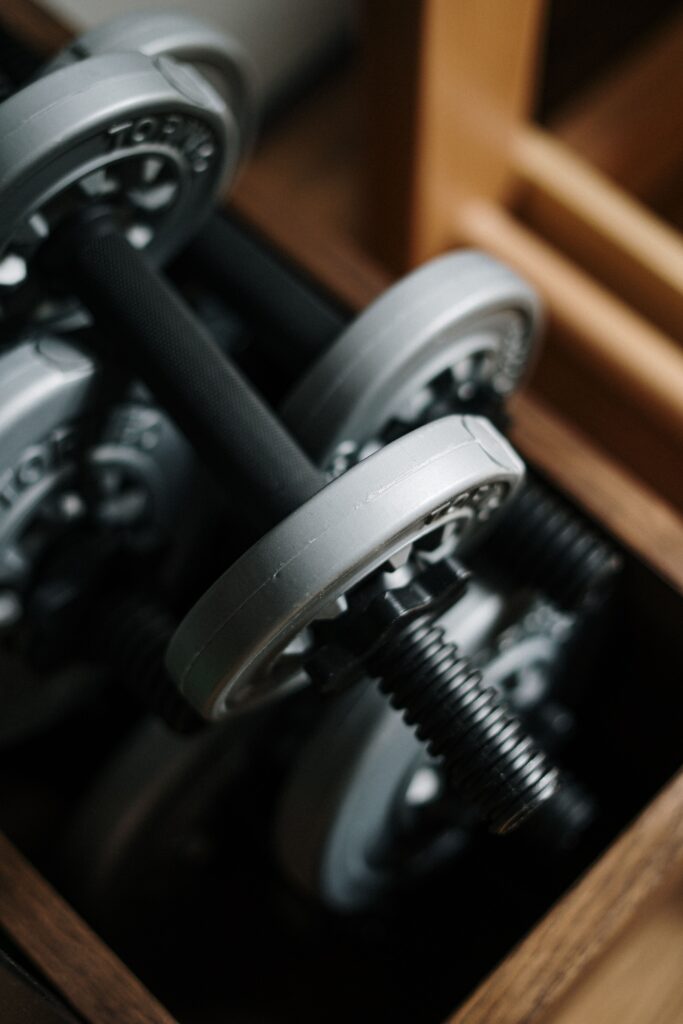
Dumbbells can cover:
- Goblet squats
- Romanian deadlifts
- Floor presses
- Overhead presses
- Rows
- Lunges
- Curls
- Triceps exercises
You can train almost every major muscle group with one adjustable pair.
Best for: anyone who wants strength or muscle without a barbell setup.
Worth spending more on: secure collars, solid handles, and enough weight to support progress.
3. An Adjustable Bench Makes Dumbbells Much More Useful
A bench is not the first item I would buy on a very small budget. It becomes valuable once you already own weights. An adjustable bench lets you use flat, incline, and supported positions. That opens the door to incline presses, chest-supported rows, seated shoulder presses, split squats, step-ups, and other exercises.
Budget benches are much cheaper than full gym stations. Current U.S. examples include adjustable models around $60 to $105. Some listed models claim load ratings from about 600 to 800 pounds, though buyers should always check the manufacturer’s instructions for the exact model.
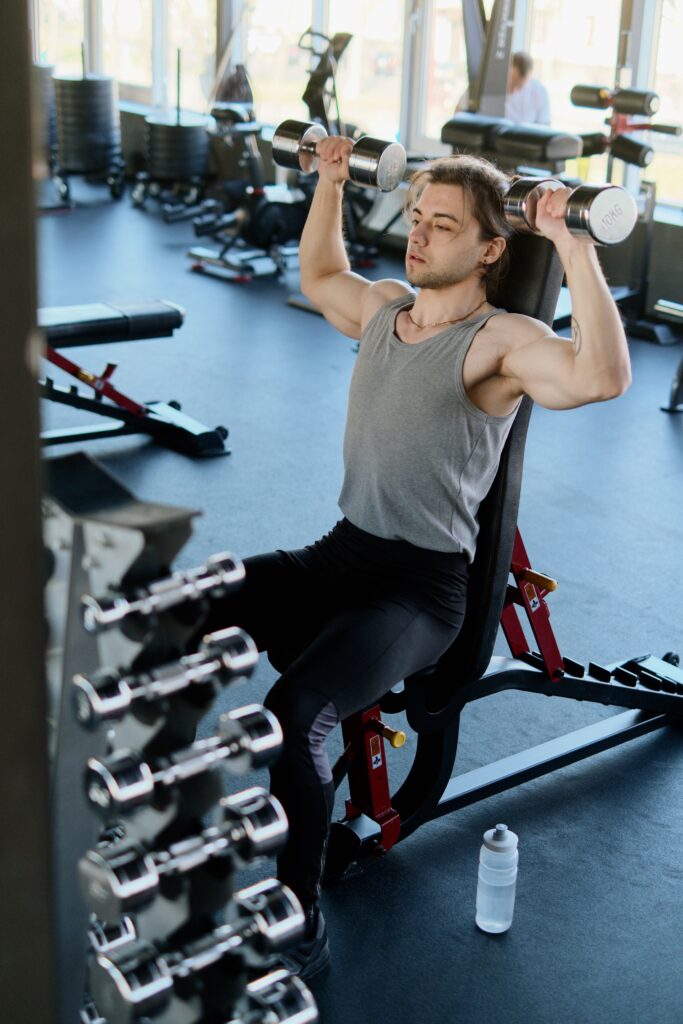
Do not choose a bench only because it has the lowest price. A bench that shifts under load is a poor place to save money. Look at the frame, feet, adjustment system, pad width, and stated weight capacity. Foldable designs make more sense in bedrooms and apartments because they can be moved after a workout.
Best for: dumbbell strength workouts and people who want more exercise variety from the weights they already own.
4. One Kettlebell Can Cover More Than You Expect
You do not need a full kettlebell rack and one carefully chosen kettlebell can support goblet squats, deadlifts, rows, carries, presses, and other full-body movements. People with good technique can also use it for swings.
Current listings show individual kettlebells around $30 at common starter weights, and small multi-weight sets can cost around $60 or more. A kettlebell has a different feel from a dumbbell because the load sits below the handle. That shape works well for carries and certain compound movements. Do not buy a weight simply because it is cheap. A weight that is far too light may stop being useful quickly. One that is too heavy may make good form hard to maintain.
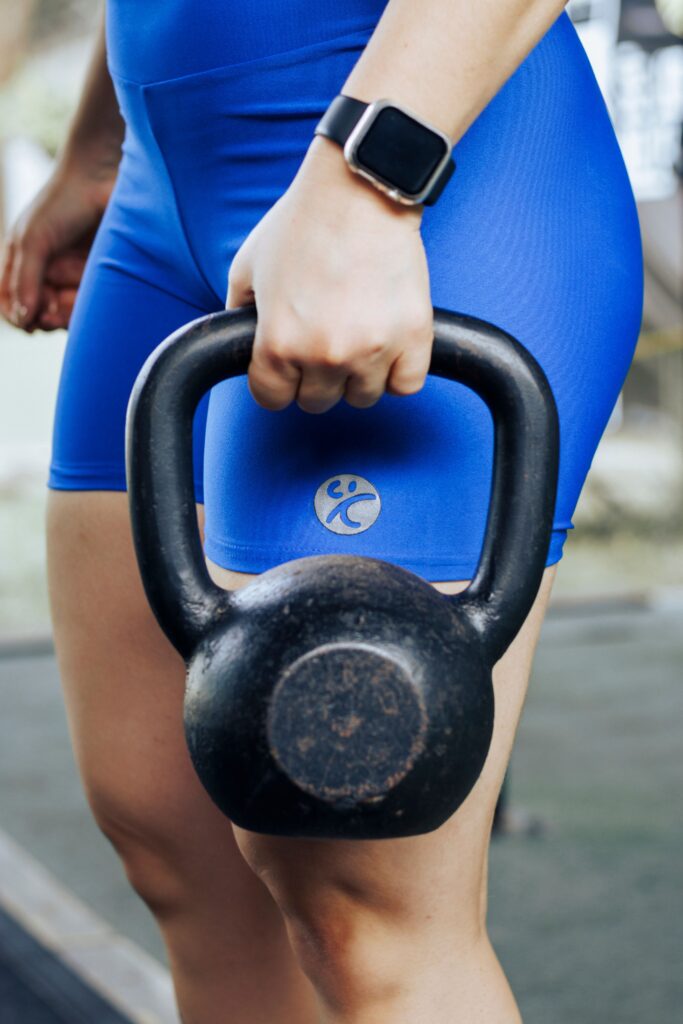
Best for: compact full-body strength workouts.
Smart approach: buy one useful weight first. Add a second only after you know you need it.
5. Doorway Pull-Up Bar Adds Upper-Body Strength for Under $40
A doorway pull-up bar adds an exercise that is hard to replace with basic dumbbells. Most budget models cost about $25 to $40 and need very little permanent space. Pull-ups and chin-ups target the back, arms, shoulders, and grip. You can also use the bar for dead hangs or attach resistance bands to add assisted pull-ups and other exercises. This makes it useful for a small gym that does not have a cable machine.
Check the door frame size, bar fit, weight limit, and support system before you buy one. A model must sit firmly in place and match the type of doorway you have. Never use a damaged frame or a bar that shifts under your weight. Renters should also check where the bar touches the trim because some designs can leave marks or damage soft door frames.
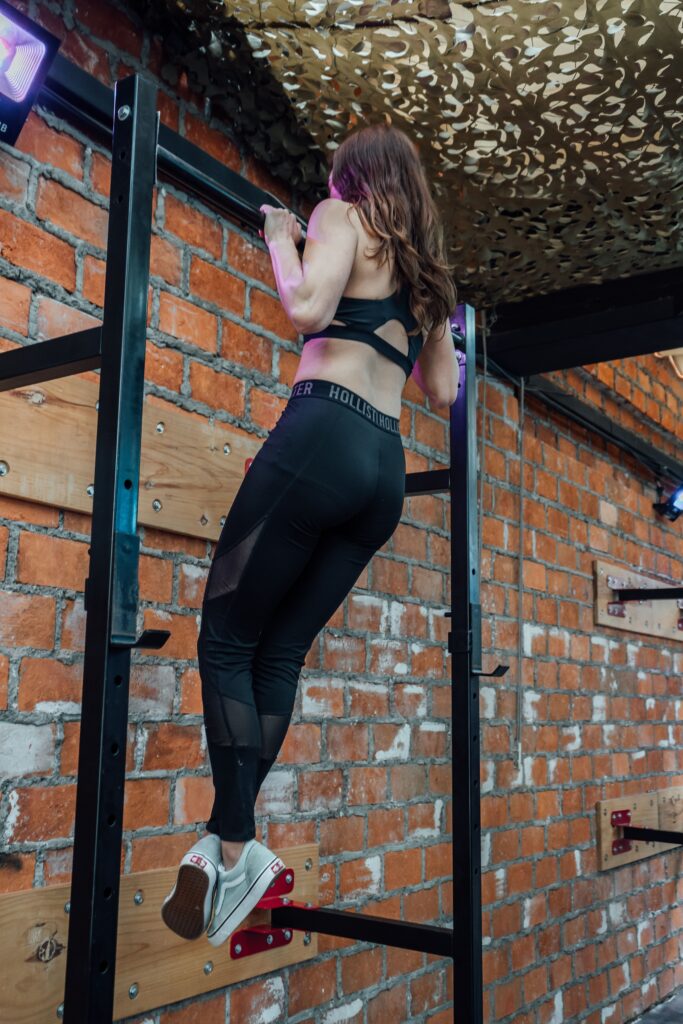
Best for: Back, biceps, grip strength, and compact home gyms.
Good choice: Pick a bar with a clear weight limit, secure contact points, and a design that fits your exact doorway measurements.
6. Jump Rope Gives You Cardio for Less
A jump rope can add cardio to a home gym without the high cost of a treadmill, bike, or rowing machine. Basic ropes often cost about $10 to $25, and one takes almost no room when you store it.
Jump rope can raise your heart rate fast and works well for short cardio sessions between strength exercises. Adjustable ropes suit most people because you can match the length to your height. Weighted ropes cost more and add extra resistance, but beginners usually do not need one.
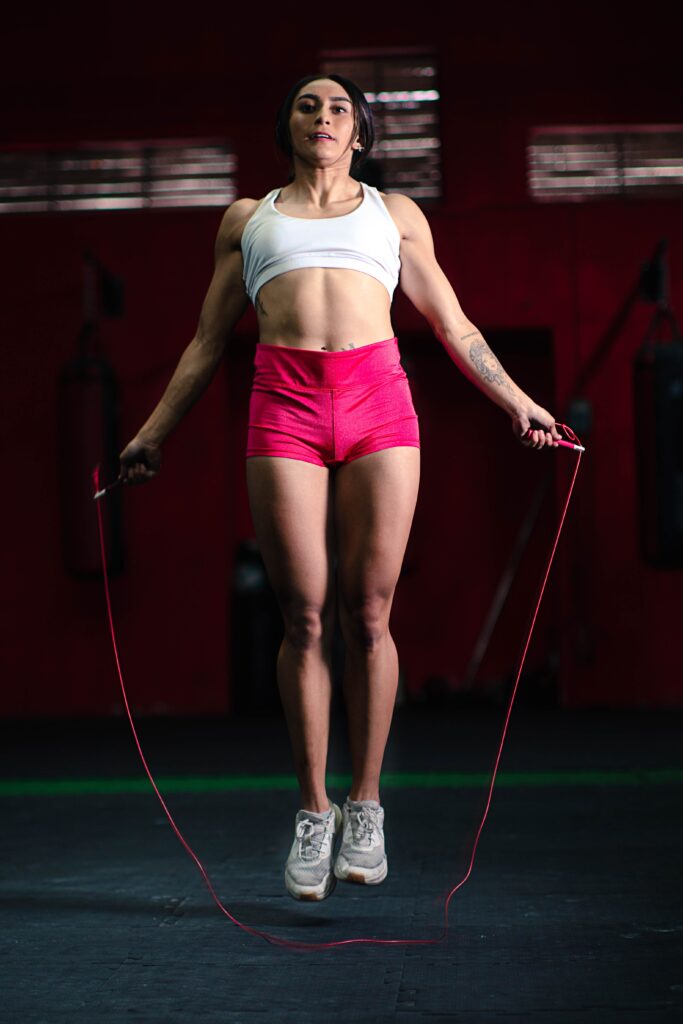
Space matters before you buy. You need enough room above and around your body, plus a floor that can handle repeated impact. People who live in apartments should also consider noise. Jump rope may not suit anyone with joint pain or other limits that make high-impact exercise uncomfortable.
Best for: Low-cost cardio, small home gyms, and people who want short, intense workout sessions.
Good choice: Pick an adjustable rope with comfortable handles and a cable that moves smoothly. A simple model is enough for most home workouts.
A simple model is enough for most home workouts.
7. An Ab Wheel Adds a Tough Core Exercise for About $20
An ab wheel gives you a hard core exercise without the cost or space of a large ab machine. Most basic models sit near the $17 to $30 range, and many include a small knee pad. Each rollout asks your abs, lower back, shoulders, and arms to work together to keep your body stable. A short rollout can feel difficult even if you already perform planks and other bodyweight core exercises.
Control matters more than distance. Start from your knees and use a short range that lets you keep your back in a safe position. Extend farther only after you can return to the start without losing control. Beginners do not need to roll all the way toward the floor. An ab wheel works best as an extra tool rather than the main part of a home gym. Dumbbells, resistance bands, and bodyweight exercises should come first if your budget is very small.
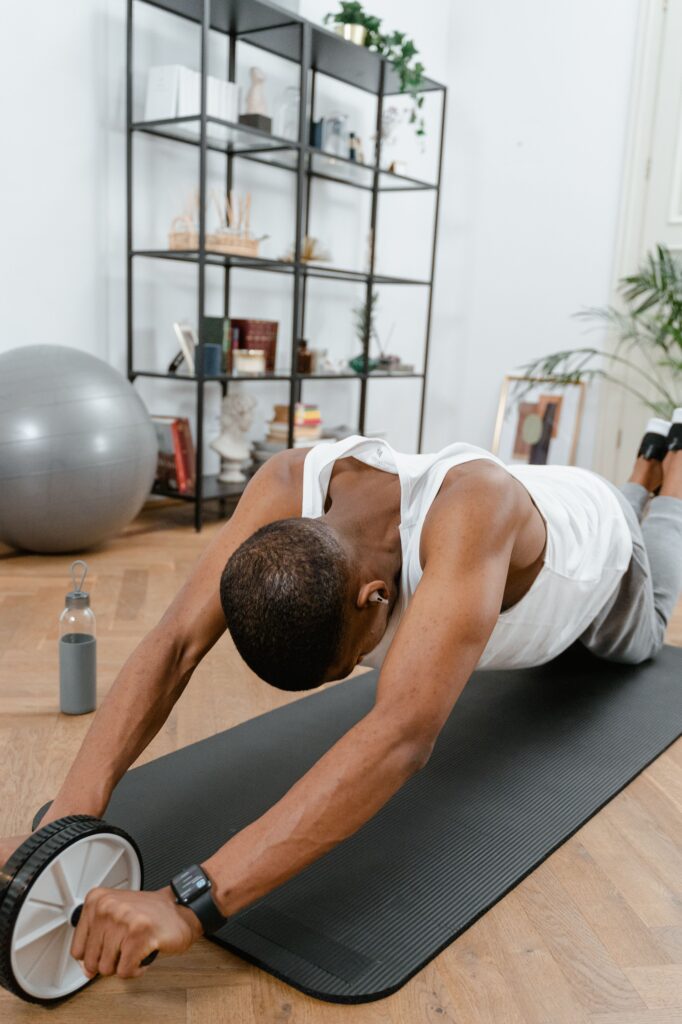
Best for: People with basic core strength who want a harder core exercise without bulky equipment.
Good choice: Look for a stable wheel, firm handles, and enough width to keep the wheel steady during each rep.
8. Exercise Mat or Floor Tiles Protect Your Workout Space
A good exercise mat gives you a cleaner and more comfortable surface for planks, push-ups, sit-ups, mobility work, and floor exercises. Basic mats often cost around $20 to $40, while larger floor tile sets can reach $50 to $60 or more. Choose the surface based on your workouts. A padded exercise mat works well for bodyweight exercises and stretches. Dense gym tiles make more sense under dumbbells, benches, and other equipment because they offer better floor protection.
Thickness also matters and very soft mat may feel comfortable but can feel unstable during strength exercises. Dense material gives your feet and equipment a firmer base. Foam tiles do not make heavy weight drops safe. Heavy dumbbells and barbells may need stronger rubber flooring or extra protection, especially over wood or tile.
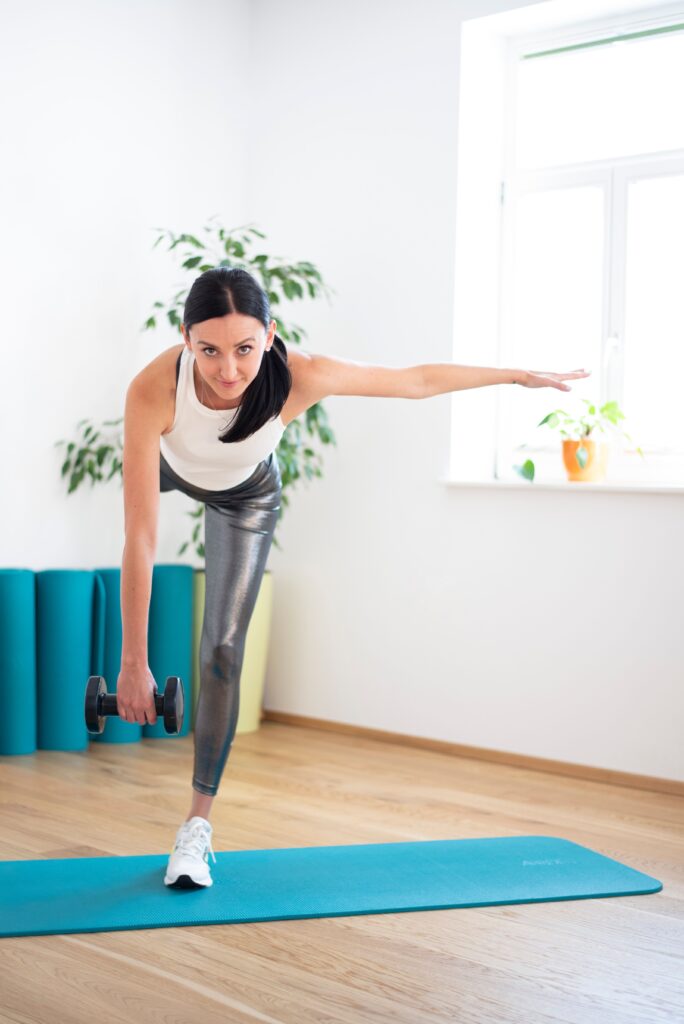
Best for: Hard floors, floor exercises, and home gyms with weights.
Good choice: Pick a non-slip mat for bodyweight work or dense floor tiles if you plan to place weights and equipment on top.
9. Core Sliders Add Extra Challenge for Under $20
Core sliders are a low-cost way to make bodyweight exercises harder without adding large equipment. A pair usually costs about $5 to $16 and takes almost no storage space. Sliders work well with mountain climbers, reverse lunges, hamstring curls, body saws, and several core exercises. Your hands or feet stay on the discs as they move across the floor, which forces your muscles to control each rep.
Floor type matters when you choose a set. Some sliders have two different sides. One side works on carpet, while the other works better on wood, laminate, or tile. Sliders do not replace dumbbells or resistance bands. They make more sense as a cheap extra once you already have basic strength equipment.
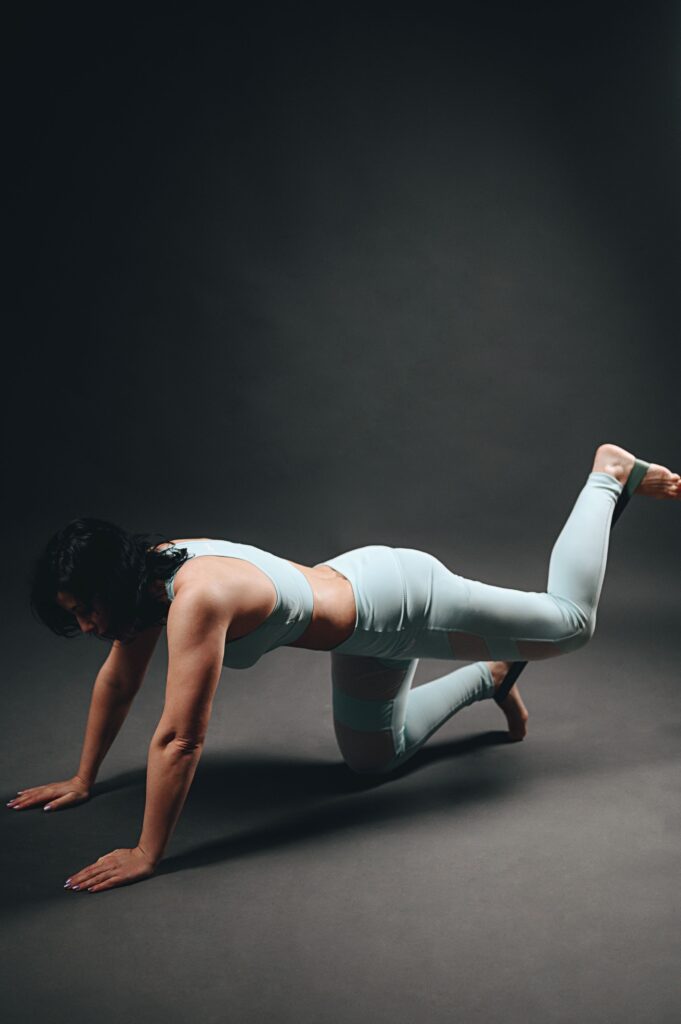
Best for: Core workouts, small apartments, travel, and people with almost no storage space.
Good choice: Look for dual-sided sliders if you plan to use them on different floor surfaces.
10. Stability Ball Works Best When You Have Enough Space
A stability ball can add useful core and lower-body exercises to a home gym for about $16 to $40. It works well for hamstring curls, ball crunches, hip exercises, mobility work, and certain supported movements. Size matters more than extra features. Your height should match the ball size recommended by the manufacturer so you can keep a stable position during exercises. A ball that feels too large or too small can make some movements awkward.
Storage is the main drawback. An inflated stability ball takes far more room than resistance bands, sliders, or a jump rope. This can become annoying in a bedroom or small apartment. A stability ball also should not replace a proper weight bench for heavy dumbbell exercises. A stable bench gives you a firmer surface when you work with heavier loads.
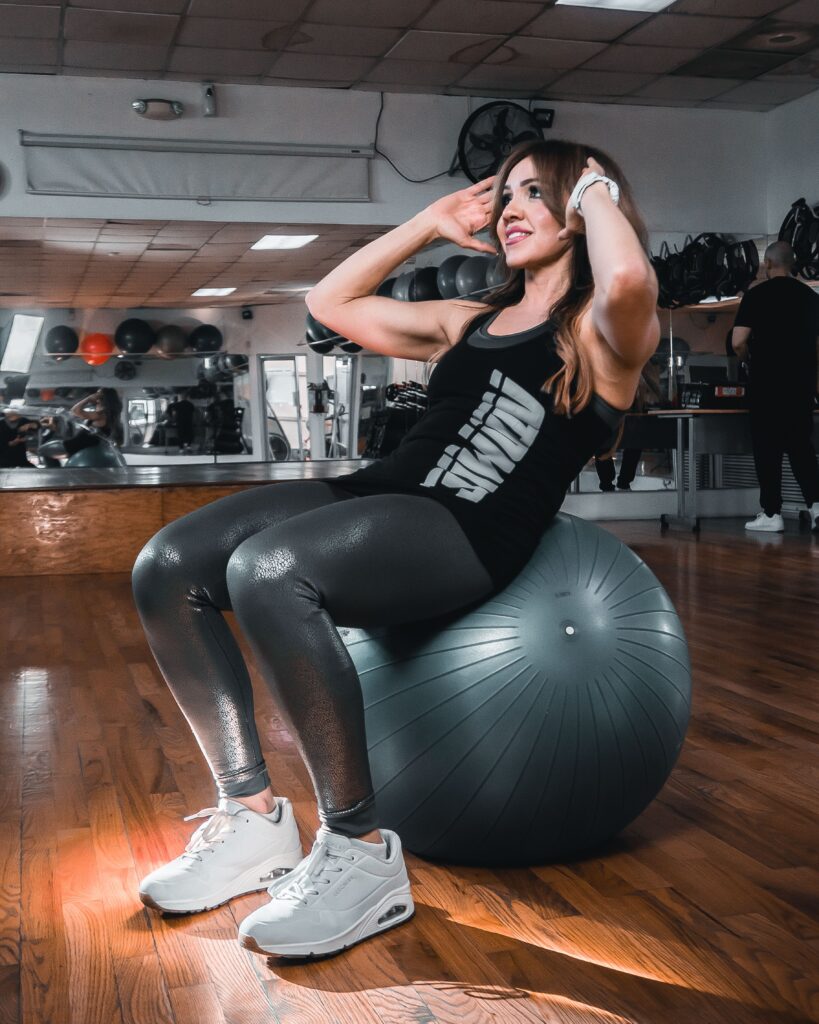
Best for: Core exercises, mobility work, hamstring exercises, and home gyms with spare floor space.
Good choice: Pick the correct size for your height and check the stated weight limit before use.
Keep Your Health Routine in One Place
Your home gym is only one part of your routine. HealthWavy gives you a free private workspace to keep movement, nutrition, daily health records, reminders, and other useful details organized in one place.
Create your free HealthWavy workspaceA Smart Home Gym Setup for About $100
A $100 budget is enough for a basic setup if each item serves a clear purpose. Put most of the money into resistance first, then use cheaper accessories for cardio and core work.
A practical setup can include:
- Adjustable dumbbells: $40–$60
- Resistance bands: $15–$25
- Jump rope: $10–$20
- Core sliders: $5–$15
This mix gives you weights for squats, presses, rows, lunges, and arm exercises. Resistance bands add extra options for your chest, back, shoulders, and legs. A jump rope covers cardio, and sliders add harder bodyweight and core exercises. Skip the weight bench at this budget level. Use floor presses instead of bench presses and save the extra money for heavier dumbbell plates or better resistance bands. Add a bench later once your current setup starts to limit your workouts.
Best way to spend $100: Give the largest share of your budget to adjustable dumbbells. They offer a clear path to heavier resistance as your strength improves.
If you plan to use outdoor home gym equipment, check how heat, rain, and moisture may affect it before you choose a permanent setup.
A $200 Budget Gives You a Stronger Setup
A $200 budget gives you enough room to focus on strength instead of small accessories. Put most of the money into equipment that supports several exercises.
A useful setup can include:
- Adjustable dumbbells: about $50–$70
- Adjustable bench: about $60–$90
- Resistance bands: about $15–$25
- Pull-up bar or jump rope: about $20–$40
This setup covers presses, rows, squats, lunges, curls, shoulder exercises, pull-ups, and band work. Skip extra accessories until you know you need them.
Smart rule: Spend money on equipment that adds several exercises, not on items that serve only one purpose.
Spend Carefully on Equipment That Holds Your Weight
Price should not be the main factor when equipment supports your body or heavy weights.
- Weight bench: Check the stated weight capacity, frame, feet, and adjustment locks.
- Pull-up bar: Make sure it fits your doorway and stays secure under your weight.
- Adjustable dumbbells: Check the collars or locking system before each workout. Loose plates can cause injury or floor damage.
- Resistance bands: Replace any band with cracks, cuts, weak seams, or other visible damage.
You can save money on simple items such as sliders or jump ropes. A weak bench, loose dumbbell plate, or unstable pull-up bar is not worth the lower price.
Skip a Treadmill If Your Budget Is Tight
A treadmill can use most of a small home gym budget without helping with strength exercises. Put your first dollars into dumbbells or resistance bands if you want a balanced setup. Cardio does not have to require a machine. Walking, stairs, a jump rope, or simple cardio exercises can cover that part of your routine at a much lower cost.
Large all-in-one gym systems also need more money and permanent floor space. Start with equipment you know you will use. Add larger machines later if your workouts actually require them.
Better first purchase: Adjustable dumbbells or resistance bands will usually add more exercise options to a small budget gym than a treadmill.
Match Your Equipment to Your Main Goal
Your goal should decide where most of your budget goes. Buying equipment just because it is cheap can leave you with items that do not fit your workouts.
Muscle and strength
Put adjustable dumbbells first. Add a bench once you need incline presses, seated exercises, or better support. A pull-up bar adds useful work for your back and arms.
General fitness
Combine resistance bands, adjustable dumbbells, and a jump rope. This covers strength and cardio without a large setup.
Small apartment
Choose adjustable dumbbells, bands, sliders, and a workout mat. Each item needs little storage space and can support several exercises.
Cardio
A jump rope can give you a low-cost option if high-impact exercise suits you. Walking, stairs, outdoor runs, or a bike can cover cardio without a large machine.
Budget under $100
Start with adjustable dumbbells and resistance bands. Add smaller accessories only if money remains.
Buy equipment based on the exercises you plan to do each week. This keeps your setup useful and helps you avoid purchases that sit unused.
Build a Small Gym You Will Actually Use
A home gym does not need dozens of products to be useful. Start with two or three pieces that match your main goal. Adjustable dumbbells and resistance bands can cover most strength exercises, while a bench or pull-up bar can add more options later.
Add smaller items only when they solve a clear need. A jump rope can cover cardio, a mat can improve floor comfort, and sliders or an ab wheel can add extra core work. Avoid buying a full setup on day one. Use your first equipment for a few weeks and notice what your workouts still need. Put your next dollars toward that gap instead of another cheap accessory.
A simple setup that you use often will always offer better value than a room full of equipment that collects dust. Choose useful gear, build your gym step by step, and spend where it makes the biggest difference.
Not Sure Which Fitness Step Fits You?
Tell the HealthWavy AI Assistant about your goal, routine, or question. It can help you understand your options and give you a simple guide based on what you need, so you have a clearer place to start.
Use the free HealthWavy AI Assistant