

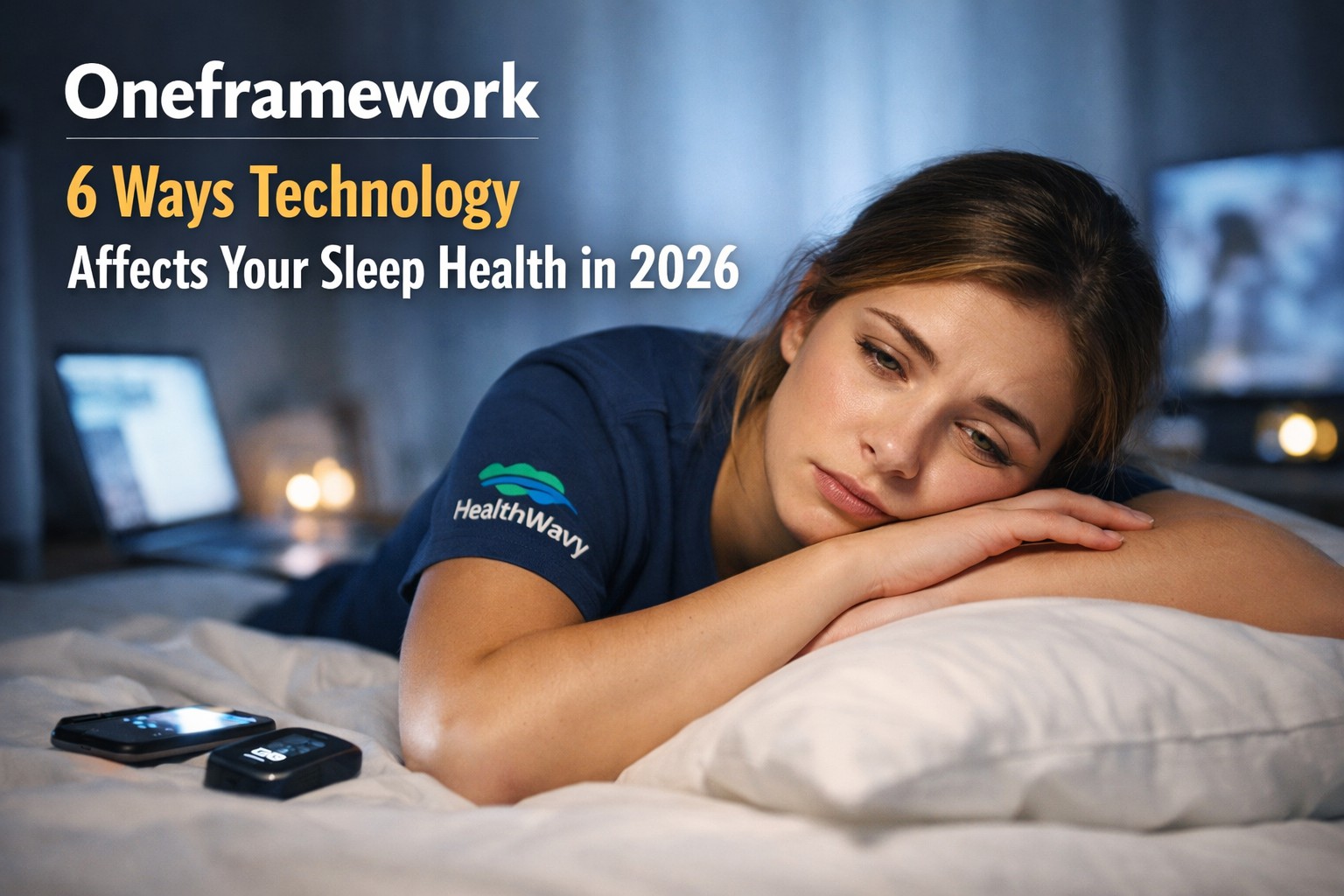
Sleep should feel simple. You lie down, close your eyes, and your body resets. That is how it should work. But in 2026, sleep does not feel that easy for many people. Most of us carry screens all day. We check messages at night. We watch videos in bed. We scroll even when we feel tired. Technology helps us in many ways. It keeps us connected. It saves time. It makes daily tasks easier. But it also changes our sleep habits. Many people do not notice the problem until they feel exhausted. They wake up with brain fog. They feel tired even after eight hours in bed. They struggle to fall asleep and stay asleep.
This Oneframework guide explains a simple truth. Your phone, TV, laptop, and smart devices can affect how your brain sleeps. This does not mean technology is “bad.” It means you must use it with limits. Sleep needs calm and routine. Technology often breaks that routine without you realizing it.
This article explains the 6 main ways technology affects your sleep health in 2026. It also answers Google People Also Ask questions in a clear way. You will learn what happens in your brain, what habits damage your sleep, and what small changes can help you sleep better again.
Why technology affects sleep more in 2026
People spend more time on screens than ever before. Many jobs now require a laptop all day. Social media keeps attention locked for hours. Entertainment is unlimited. Even basic activities like banking, shopping, and learning happen on mobile apps. This creates a problem. Your brain stays active longer. Your sleep schedule shifts. Your body clock gets confused. Even worse, people now use their phones as alarms. That means the phone stays close all night. Notifications, buzzing, and light all push the brain toward alert mode.
Some people use smartwatches to track sleep. That sounds helpful. But it also creates new stress. Many users now worry too much about sleep scores and REM numbers. This is a new kind of sleep anxiety, and experts call it orthosomnia.
Real-Life Sleep Experiment (7 Days)
To test this topic in a real way, I tried a simple 7-day sleep experiment.
I used my phone normally for the first 3 nights. Then I changed only one habit.
I stopped screen use 45 minutes before bed and kept the phone away from my pillow.
The goal was not a perfect sleep score. The goal was to see how my body felt.
I tracked only three things: time to fall asleep, night wake-ups, and morning energy.
What changed after the screen curfew:
- Faster sleep on most nights
- Fewer random wake-ups
- Better morning focus without extra coffee
Note: Everyone’s body is different, but small tech habits can create real sleep changes.
Oneframework 6 ways technology affects your sleep health
1) Screen light delays your sleep hormones
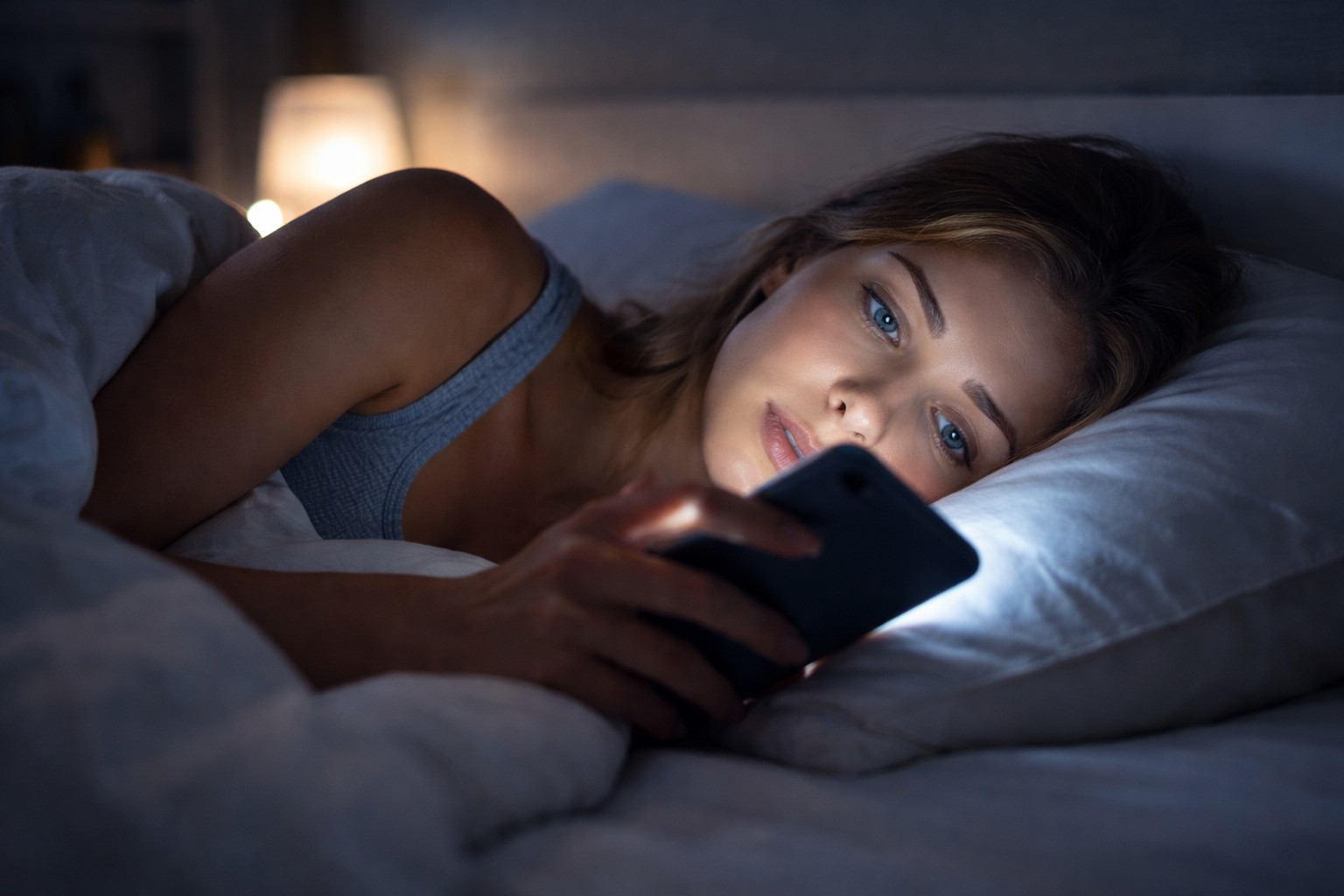
Most people know this part. Screens produce light. This light tells the brain it is still daytime. The brain then slows melatonin release. Melatonin is the natural sleep hormone. Your body produces it at night to help you feel sleepy. Bright light can reduce melatonin. Blue-rich light from screens can delay it even more.
If you spend long hours on screens, eye strain can also become a hidden problem, so try the EyeCare Insight Tool to check simple screen habits that protect your eyes.
That means this simple habit can hurt sleep:
You feel sleepy → you pick up your phone → you scroll → your brain wakes back up.
Some people say, “I use night mode, so I am safe.” Night mode helps a little. But the bigger issue is not only light. It is also mental stimulation. Still, reducing light does matter, especially if you watch screens close to your face.
Signs this is affecting you
- You feel tired but cannot fall asleep
- Your brain feels alert at bedtime
- Your sleep time shifts later each week
Simple fix
Keep screens away for at least 30 minutes before sleep. Many sleep experts recommend turning off electronics before bed.
2) Doomscrolling keeps your brain in “alert mode”
This is one of the biggest sleep problems in 2026. Scrolling does not feel like hard work. But it keeps your brain active. Social apps feed endless content. Each post triggers emotion. Some posts make you laugh. Some create stress. Some create jealousy. Your brain reacts to all of it.
Your brain cannot fully relax when it keeps processing new information. That delays sleep. It also reduces sleep depth. Studies link bedtime phone use to sleep problems and poor sleep quality. Many people say, “I scroll because it relaxes me.” Sometimes it feels relaxing. But your nervous system stays switched on. That makes it harder to drift into deep sleep.
Quick Sleep Check (30 Seconds)
Read these statements and count how many feel true for you this week:
- I scroll in bed even when I feel sleepy.
- I check notifications after I turn the lights off.
- I wake up tired even after “enough” sleep time.
- I watch videos until I fall asleep.
- I worry about my sleep tracker score.
If you picked 2 or more, technology may be affecting your sleep more than you think.
People Also Ask: Does scrolling before bed affect sleep?
Yes. It can delay sleep onset and reduce sleep quality. It also pushes bedtime later than planned.
Simple fix
Use a “hard stop rule.” Pick a time like 10:30 PM and stop scrolling completely. Put your phone out of reach.
3) Notifications break sleep cycles (even if you do not wake fully)
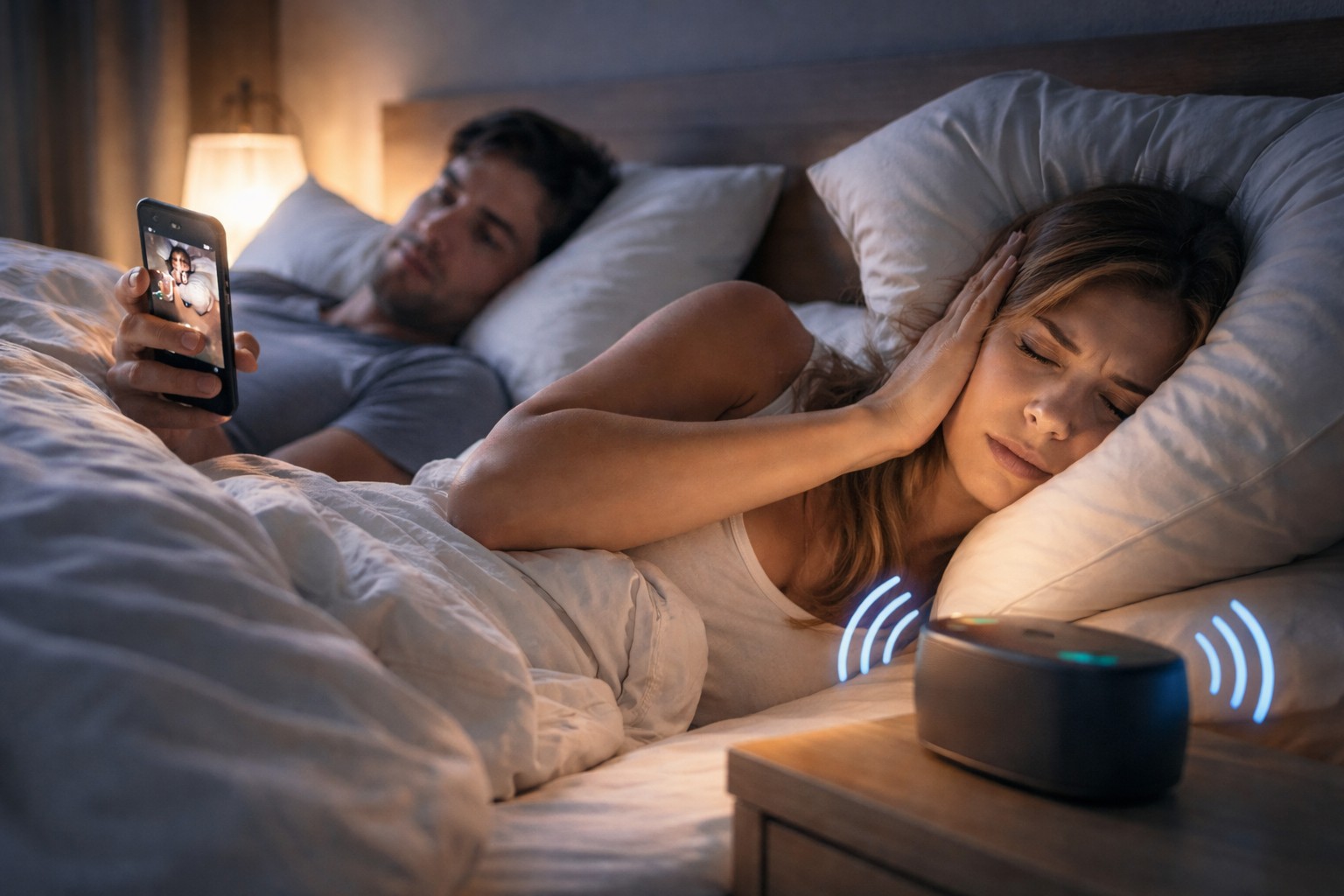
Sleep has cycles. Your brain moves through light sleep, deep sleep, and REM sleep. Notifications can interrupt these cycles. Even if you do not fully wake up, your brain may shift into lighter sleep. Buzzing sounds or screen light can disturb your sleep rhythm.
Many people leave notifications on at night. Group chats. Emails. App alerts. Delivery updates. These small things add up. Sleep research and sleep medicine experts often recommend avoiding tech disruptions, such as alerts, close to bedtime.
Signs notifications hurt your sleep
- You wake up multiple times at night
- You feel tired even after “full sleep hours”
- You remember checking your phone at 2 AM
Simple fix
- Turn on Do Not Disturb
- Turn off all non-emergency notifications
- Place phone on silent and away from bed
4) Stress content causes anxiety and delays sleep
Technology does not only show entertainment. It also shows problems. News headlines. Work emails. Social media fights. Political stress. Bad comments. Even “motivational” content can create pressure. All this changes emotions at bedtime. Stress raises cortisol. Cortisol is your alert hormone. High cortisol makes it hard to sleep. You may lie in bed and replay conversations. You may worry about tomorrow. You may feel mentally tired but still unable to sleep.
This is why bedtime content matters as much as screen time.
People Also Ask: Can technology cause insomnia?
It can contribute to insomnia symptoms. It may delay sleep, reduce sleep duration, and increase bedtime anxiety.
Simple fix
Set content rules:
- No work emails at night
- No breaking news before bed
- No stressful videos at bedtime
Choose calming content instead:
- soft music
- light reading
- gentle podcasts (with screen off)
5) Late-night streaming and gaming shifts your body clock
Video content is designed to keep you watching. Games are designed to keep you engaged. Each episode ends with a cliffhanger. Each match gives dopamine. Dopamine is the reward chemical. It makes you want more. It also keeps you alert.
Late-night gaming affects sleep even more because it involves active decisions. Fast reaction. Competition. Bright visuals. Emotional intensity. Your brain stays in fight mode. That is not the state you need for deep rest. Over time, your sleep schedule shifts later. Your body clock adapts. Then even if you go to bed early, you cannot sleep. AASM-linked research also supports that screen use near bedtime can worsen sleep disturbance and shorten sleep duration.
People Also Ask: Does watching TV before bed hurt sleep?
Yes. It can delay sleep and reduce sleep quality, especially if you watch stimulating shows or keep the TV on.
Simple fix
Create a “screen curfew”:
- Stop streaming and gaming at least 45–60 minutes before bed
- Use that final hour for calm activities
6) Sleep tracking obsession can backfire (Orthosomnia)
This is a newer sleep problem in 2026.
Smartwatches and sleep apps track:
- sleep time
- REM sleep
- deep sleep
- heart rate at night
- sleep score
These tools can help you notice patterns. But they can also cause anxiety. Some people start chasing perfect sleep scores. They panic if the score drops. They stay in bed longer just to “increase sleep.” They check graphs every morning. This obsession has a name: orthosomnia. It describes anxiety around perfect sleep, driven by sleep tracker data.
The problem is simple. Many sleep trackers are not as accurate as real sleep studies. They estimate sleep stages using movement and heart rate. They cannot measure brain waves the way sleep labs do. So the tracker might show poor sleep even when you feel okay. That creates stress. Stress harms sleep. Then the cycle repeats.
Signs you may have orthosomnia
- You worry about sleep scores daily
- You feel “bad sleep” even without symptoms
- You fear sleeping without your tracker
Simple fix
Track trends, not daily scores.
If the tracker makes you anxious, take a break for 2 weeks. Focus on how you feel during the day.
Other ways tech harms sleep (important in 2026)
Even outside the main 6, these habits also matter.
Phone in bed trains your brain to stay awake
Your brain forms habits fast. If you use your bed for scrolling, your brain links bed with activity, not rest.
Keep your bed a sleep-only space:
- sleep
- intimacy
- calm reading (paper book)
Loud audio disrupts sleep quality
Many people sleep with YouTube, TikTok loops, or loud podcasts. Your brain still hears sound. Sleep becomes lighter. Deep sleep reduces.
Persistent tiredness is not always linked to screens alone, and some people also explore medication effects such as those explained in Does Semaglutide Make You Tired? Full Guide to Fatigue, Fixes, and Warnings.
Oneframework sleep-safe tech routine (simple and realistic)
You do not need to quit technology. You need a routine that protects sleep.
Step 1: Build a “wind-down hour”
Choose a fixed hour before sleep.
Example:
10:00 PM to 11:00 PM is screen-free time.
Step 2: Use the 3-device rule
- Phone stays away from bed
- Laptop closes after dinner
- TV off at least 45 minutes before sleep
Step 3: Use tech to help sleep (not break it)
Good tech use includes:
- night shift mode
- alarm clock (separate device)
- sleep music with timer
- relaxing breathing apps
Quick answers (People Also Ask)
How does technology affect sleep health?
Technology can delay sleep, reduce deep sleep, and increase bedtime stress. It also disrupts the body clock through light, content stimulation, and alerts.
How can I stop using my phone before bed?
Set a screen curfew, charge the phone outside the bedroom, and replace scrolling with a calming routine like reading or light stretching.
Does blue light really affect sleep?
Yes, light can suppress melatonin and affect the body clock. Blue-rich light is more likely to delay melatonin release.
Are sleep trackers accurate?
They can be useful for trends, but they do not measure sleep stages like a clinical sleep study. Obsessive use may cause orthosomnia.
Tonight’s Sleep Plan (Simple and Real)
Try this plan tonight. It takes no extra money. It takes only control.
- Turn on Do Not Disturb 1 hour before bed.
- Stop scrolling 45 minutes before sleep.
- Charge your phone away from your pillow.
- Use a calm routine (reading or slow breathing).
- Keep your bedroom dark and cool.
Repeat this 5 nights and you will likely notice a clear sleep improvement.
Last Words on Sleep Habits
Technology shapes modern life in 2026. It helps with work, social life, learning, and entertainment. But sleep still needs calm, darkness, and routine. When screens, alerts, and stress content enter bedtime, sleep health suffers. This Oneframework guide shared the 6 ways technology affects sleep health. Screen light delays melatonin. Scrolling keeps the brain alert. Notifications break sleep cycles. Stress content triggers anxiety. Late-night streaming shifts the body clock. Sleep tracking obsession creates sleep pressure.
You do not need to fear technology. You need control. Small changes can protect your sleep without changing your life. Keep screens away before bed. Silence notifications. Choose calm habits. Let your brain slow down naturally.
If stress and screen overload feel constant, a wellness reset can support better sleep habits, so check The Best Wellness Wochenende Plans for Mind and Body Relief for simple weekend plans.
Sleep is not a luxury. It is a daily need. Protect it like your health depends on it, because it does.
This article shares general sleep and wellness information and does not replace medical advice, diagnosis, or treatment. Always talk to a licensed healthcare provider if you have ongoing sleep problems.