


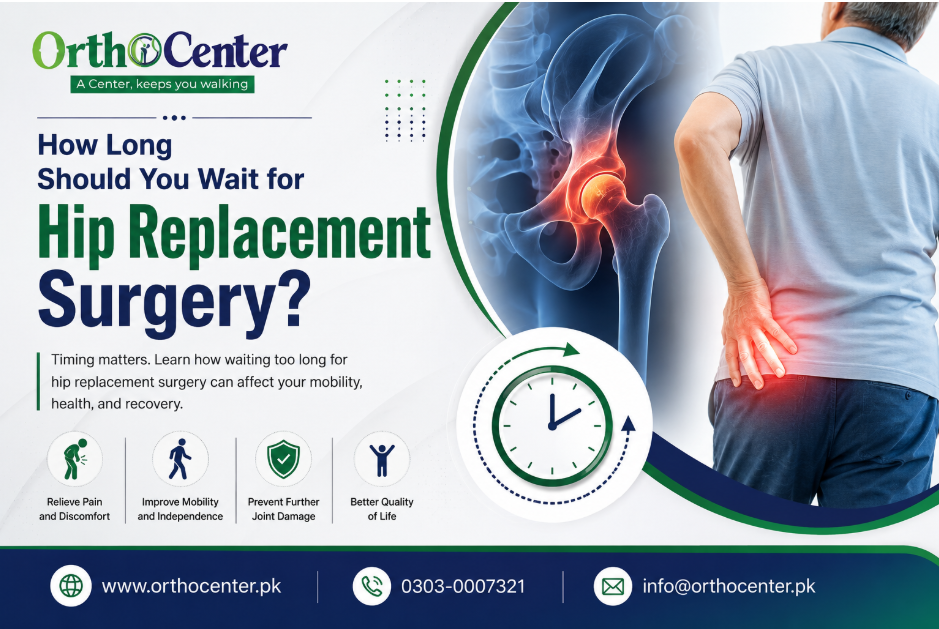
Hip pain could affect one’s life in ways that others can not imagine. Just going for a short walk may prove to be exhausting. Climbing up stairs could be challenging. Even basic things such as dressing up and being able to sleep at night could be tough. Many people attempt to cope with this by means of medications, physical therapy, and cortisone shots to gain time and hope for miraculous recovery. But with passing months turning into years, one can’t help but wonder: how long can anyone wait for hip replacement surgery without doing damage to oneself?
Most patients choose to avoid surgical procedures because they may have fears related to the procedure and its outcome. But delaying the necessary care can lead to additional health hazards that should be known to avoid possible problems. This article answers how long can anyone wait for hip replacement surgery before it is too late?
Why Do Patients Delay Hip Replacement Surgery?
Hip replacement surgery is not a small procedure. A patient is expected to worry about having a hip replacement done. They usually think of alternative treatment options and tend to delay the replacement procedure. The main reason behind delaying hip replacement surgery is that patients usually have many responsibilities and a busy schedule. Moreover, most patients fear the surgical procedure and prolonged recovery time.
Another reason for the delay is that patients are afraid of staying in the hospital for a long time. They think that they will have to go through so much pain. However, in reality, joint replacements have made significant progress. Most patients recover faster after surgery. Therefore, this type of surgery must not be underestimated. More importantly, joint diseases such as hip arthritis continue to develop while a patient is waiting.
So, How Long Can a Patient Safely Wait?
There is no set period measured in months or years. For many people, the time until hip replacement is more dependent on the current condition of the hip and the patient’s overall quality of life than on any set period. In one case, a patient might be able to endure waiting several months due to tolerable pain, good mobility, and effective conservative therapies.
In another case, a patient might require hip replacement sooner if pain is not moving easily, sleep is being disturbed, mobility is poor, or there is substantial damage to the hip. The expertise of an orthopedic surgeon can help determine proper timing through the examination of X-rays, symptoms, physical functionality, and medical history.
The Hidden Risks: What Happens When Surgery Is Delayed Too Long?
Orthopedic surgeons often warn that delaying too long can transform a simple joint replacement into an extremely complicated process. A neglected joint degenerates further, impacting not only the cartilage but other joint parts as well.
1. Advanced Muscle Weakness and Atrophy
With less activity due to pain, gluteal, quad, and core muscles start becoming weaker and shrinking. Healthy muscle tone is important for joint stabilization. Having advanced muscular atrophy prior to the surgery will result in a prolonged, painful, and very difficult rehabilitation period.
2. Compensation Pressure in Back, Knees, and Opposite Hip Joint
The human body is a complex mechanism with all parts being connected to each other. If one joint fails, then the patient changes their gait to limp. Such a compensation will put excessive stress on the lower back, pelvis, knee joints, and opposite hip joint. People who neglect their surgery sometimes end up having additional problems such as arthritis, sciatica, or back pain due to years of limping.
3. Bone Quality Loss and Structural Abnormalities
The bone loss can cause flattening of the joint socket, appearance of bone cysts, and shortening of the leg. If the bone loss is severe, then the orthopedic surgeon will have to use more complex procedures like specialized implants, bone grafts, and surgeries.
4. Higher Chance of Falls and Injuries
A painful and inflexible hip makes balance and reaction slower. Falls become especially dangerous for people in old age because of an increased chance of developing injuries in the wrist, pelvis, or thigh. A fall injury can make planned joint surgery an emergency procedure.
5. Reduced Cardiovascular and Psychological Health
Lack of physical activity affects the whole body. A sedentary life causes obesity, high blood pressure, worse diabetic control, and reduced cardiovascular fitness. Besides, a person suffering from constant physical problems experiences chronic tiredness, loneliness, and depression.
The Risks of Waiting Versus the Risks of Surgery
Patients may be concerned about the dangers involved with an operation. In the case of hip replacement surgery, the dangers might include such things as infection, blood clots, dislocation, bleeding, nerve damage, leg length discrepancy, or issues with the prosthesis. However, there are also dangers associated with waiting. The following comparison will explain why time is so important:
| Waiting may offer | Prolonged waiting may bring |
| More time to prepare physically and mentally | Increasing pain and stiffness |
| Time to try non-surgical treatment | Reduced mobility |
| Time to manage other health conditions | Muscle weakness and reduced fitness |
| More flexibility around work or family needs | Greater dependence on others |
| Avoiding surgery while symptoms remain manageable | Loss of activities and quality of life |
Signs That It Is Time to Stop Waiting
Each person has their own pain threshold and health history. But there are certain criteria used by orthopedists to prove that conservative treatment is no longer an option and hip replacement surgery cannot be avoided:
- Hip pain happens on a daily basis or is becoming difficult to manage.
- Pain wakes up the patient during the night.
- Activities like walking, climbing stairs, or standing become increasingly challenging.
- The patient has started avoiding activities once enjoyed.
- Pain medications no longer seem to help much.
- Other non-surgical treatments, such as physical therapy, are no longer effective.
- A cane or some sort of support becomes necessary.
- Hip stiffness makes ordinary tasks difficult.
- Work or social activities are being reduced because of hip pain.
- The patient feels that life is being organized around the painful hip.
Reclaiming a Pain-Free Life
Waiting is logical until non-surgical treatment makes patients’ lives happy and pain-free. There is no standard cut-off point for deciding how long you can wait for hip replacement surgery. One could possibly put off surgery in cases where there is not much suffering, and the treatment is still working well. However, pain, reduced mobility, insomnia, muscle weakness, and increasing lack of independence are some red flags indicating that waiting might not be the best thing to do anymore.
Many of the patients believe that man-made joints deteriorate easily and that surgery should be performed only at an advanced age in order to increase the longevity of the joint. Modern advances in biomedical engineering have made the reality totally different nowadays. The new and advanced bearing surfaces, ceramics, and highly cross-linked plastics are now used in order to ensure 20-30 years of life of the joints.
A consultation with an orthopedic expert will provide the necessary information on the joint itself, the risks of further delaying the surgery, and will assist with making the choice between waiting and going through surgery.