
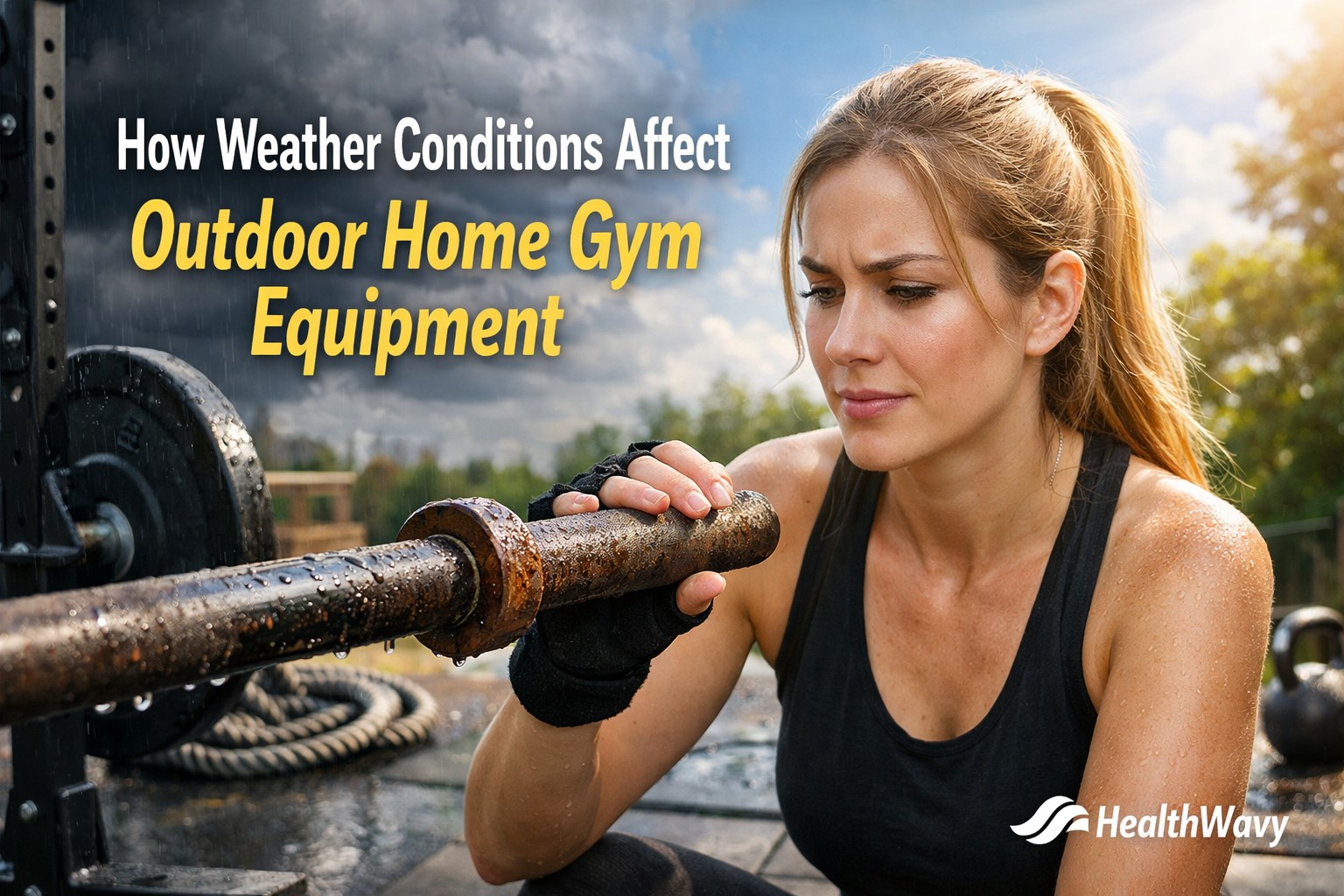
The first time a barbell feels hotter than your skin, you realize something simple: the weather trains harder than you do.
An outdoor gym looks solid. Steel feels permanent. Plates look indestructible. A rack under open sky gives a sense of freedom. No walls. No crowd. Just you and the weight.
Weather works in the background every hour of every day. Sun stretches metal. Night air settles into seams. Moisture hides inside tubing. Wind shifts what seems fixed. Nothing dramatic happens at first. Damage builds quietly, then shows up at the worst possible moment.
This is not about comfort. It is about structure, material fatigue, and safety.
The real weak spot: moisture trapped inside steel

Most people look for surface rust. The real threat hides where you cannot see.
Rainwater enters hollow frames through small openings. Adjustment holes, bolt gaps, and end caps allow moisture inside. Tubular steel rarely drains well unless the design includes proper outlets.
Water sits inside the frame. Rust forms from the inside out. Years pass before visible signs appear. When failure happens, it feels sudden. It is not sudden. It is slow internal thinning.
In humid cities such as Miami, Florida, and Karachi, Pakistan, salt in the air speeds corrosion. Salt acts like fuel for rust. Sweat adds more salt to the mix. Night condensation keeps the surface damp even when it does not rain.
Rust often begins inside barbell sleeves, bolt threads, pulley housings, bench frame joints, and plate storage pegs. These areas trap moisture and remain damp longer than exposed surfaces.
The U.S. Consumer Product Safety Commission recorded equipment recalls in 2017 linked to cable failures. Corrosion often plays a role in those breakdowns. Metal does not need to look destroyed to lose strength.
Surface rust can be cleaned. Internal corrosion weakens load capacity without warning.
The National Oceanic and Atmospheric Administration (NOAA) reports that coastal humidity levels often remain above 70% for long periods, which accelerates metal corrosion.
Heat stress is more than discomfort
Steel racks in places like Phoenix, Arizona, can sit under 40°C (104°F) air temperature in summer. Surface temperature climbs even higher under direct sun. Touching metal becomes risky.
Heat does three quiet things:
- Expands metal
- Weakens protective coatings
- Dries out rubber and foam
Expansion sounds minor. Daily expansion and cooling loosen bolts over time. Threads shift microscopically. Welds absorb stress. Cheap steel feels it first.
Rubber handles and pads suffer faster aging. Foam loses moisture. Vinyl cracks. Resistance bands lose elasticity. Bands that should last several years can weaken in a single intense summer season. Many owners replace them without realizing heat caused early failure.
Hot surfaces also cause reflex reactions. A quick burn can make someone drop a weight mid-lift. That split second matters.
Cold weather creates brittle parts
Heat stretches. Cold tightens.
In cities such as Chicago, Illinois, winter temperatures fall below freezing. Equipment left outdoors faces repeated freeze-thaw cycles. Water enters small cracks. Water freezes and expands. Cracks widen. Structure weakens.
Steel becomes more brittle in low temperatures. Plastic components crack under force. Cables stiffen. Lubricants thicken. Moving parts resist motion. Extra force applied to a stiff system increases snapping risk.
Water enters small cracks during wet weather. Cold air freezes that moisture and expands it. Each freeze cycle widens the crack and weakens the structure.
Damage grows layer by layer.
Sunlight slowly breaks materials down
Ultraviolet radiation harms more than skin. Direct sunlight fades paint and weakens protective coatings. Once paint thins, bare steel exposes itself to moisture.
Plastic foot caps and adjustment knobs lose strength under UV exposure. Rubber grips dry out. Cheap vinyl splits. When padding cracks, foam underneath absorbs water. Moisture invites mold growth.
Warning labels fade. Safety instructions disappear. Users lose visual reminders about weight limits and proper setup.
UV damage rarely looks urgent. It accumulates across seasons.
Wind does more than knock things over
Wind receives little attention in home gym setups. It should not.
Strong wind shifts free-standing racks and adjustable benches, especially on grass or uneven ground. In 2020, record storms across several U.S. states toppled outdoor furniture and light structures. Gym equipment placed without anchoring can tilt gradually from repeated gusts.
Dust and sand carried in wind enter pulley systems. Sand acts like grinding powder inside bearings. Cables wear down faster. Friction increases. Movement becomes rough.
Abrasion damage feels small at first. Over time, it shortens equipment life.
Rain is not harmless once it dries
Rainwater does not vanish after the surface dries. It finds seams and gaps.
Rainwater enters adjustment holes, sealed bearings, padding seams, and treadmill motor housings. Moisture trapped inside these parts increases corrosion risk.
Outdoor treadmills face special risk. Motor housings are not designed for constant humidity exposure. Even a covered patio allows sideways rain during storms.
Moisture under bench pads supports mold growth. Mold irritates lungs and skin. A damp surface increases slip risk. Health concerns move beyond metal strength.
How small damage turns into real injury
Weather rarely causes instant collapse. It reduces safety margins until failure occurs under load.

Common failure paths look like this:
- Rusted bolt loosens → rack shifts during squat → bar path changes
- Brittle resistance band snaps → recoil strikes face or eyes
- Frayed cable gives way → weight stack drops unexpectedly
- Moldy grip causes slip → wrist strain
- Overheated metal burns skin → sudden weight drop
Each example begins months earlier with minor exposure.
Outdoor gyms feel strong. Weather removes strength quietly.
Signs Your Outdoor Gym Equipment Is No Longer Safe
Outdoor gym equipment becomes unsafe when structural parts lose strength. Heavy rust near welds or load points signals serious weakness. Exposed cable wires show internal damage and risk sudden failure. A frame that shifts under light pressure lacks stability. Cracks in metal joints reduce load capacity. Loose anchors in concrete allow unwanted movement during lifts.
Avoid heavy lifts if any of these signs appear. Structural weakness increases injury risk.
Weather Impact Depends on Where You Live
Climate plays a direct role in equipment damage. Coastal regions face rapid corrosion due to salt and high humidity. Desert areas deal with strong sun that dries rubber and fades protective coatings. Cold climates experience metal stress and small fractures after freeze cycles. Tropical zones often struggle with mold growth and constant moisture exposure.
Your local weather conditions should shape how you protect and inspect outdoor gym equipment.
Weather Risk Comparison for Outdoor Gym Equipment
Climate conditions change how fast outdoor gym equipment wears down.
| Climate Type | Primary Risk | Most Vulnerable Parts | Inspection Priority |
|---|---|---|---|
| Coastal | Salt corrosion | Bolts, sleeves | Monthly |
| Desert | UV damage | Pads, grips | Every 2 months |
| Cold | Freeze cracks | Joints, cables | After winter |
| Tropical | Mold growth | Padding | Monthly |
Practical Signs That Require Immediate Attention
Outdoor gym equipment shows early warning signs before failure occurs. Regular inspection helps protect both structure and user safety.
Inspect bolts and welded joints closely. Rust dust around hardware suggests corrosion inside the metal. Peeling paint exposes steel to moisture. Cracks in seat covers or grips reduce material strength. Resistance cables should move smoothly. Rough or uneven motion signals internal wear. Unusual noise often points to loose parts. A rack that shifts under light pressure lacks proper stability.
Run your hand along cables to check for sharp spots. Test frame balance with gentle pressure at each corner. Secure loose bolts without delay.
How Often Should You Inspect Outdoor Gym Equipment?
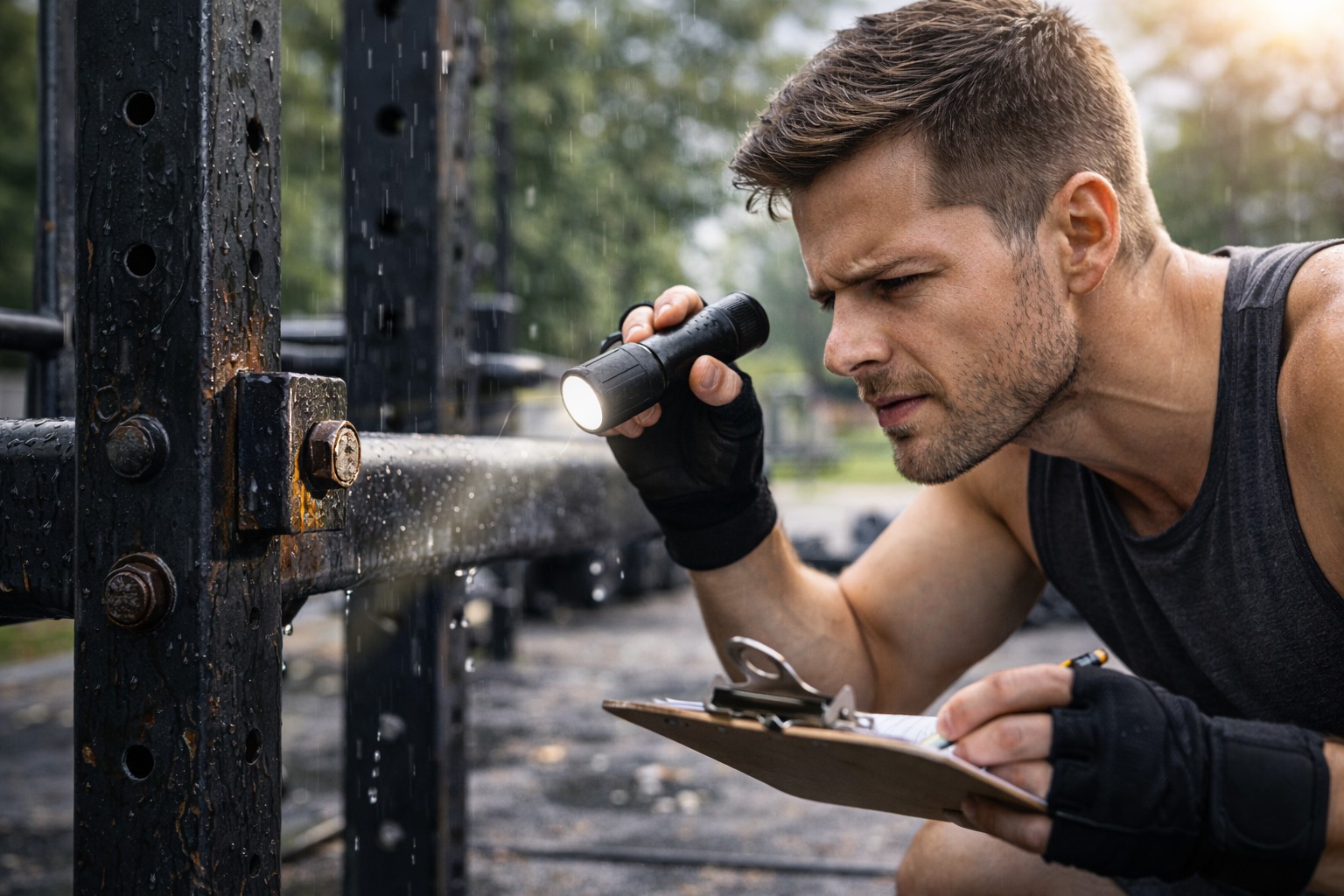
Outdoor home gym equipment requires more frequent inspection than indoor setups. Weather exposure increases structural stress.
Use this basic inspection rhythm:
Monthly
- Check bolts and anchors
- Inspect cables for fraying
- Look for rust near joints
Every 3 Months
- Apply rust inhibitor
- Lubricate moving parts
- Tighten structural bolts
After Heavy Rain or Storm
- Dry exposed metal
- Check frame stability
- Inspect padding for moisture
Regular inspection prevents structural failure.
Outdoor setups can work, but only under certain conditions
Outdoor training has advantages. Fresh air improves focus. Space feels open. Heat exposure can even increase training intensity if managed well.
Outdoor equipment performs best when:
- Steel has quality powder coating
- Hardware uses stainless bolts
- Covers are thick and water resistant
- Floor surface is level concrete
- Drainage prevents standing water
Choosing weather-resistant equipment is essential. A detailed equipment evaluation such as this Home Gym Meteorology Shop Evaluate Fitnara guide explains what materials and design features hold up better in outdoor environments.
Higher-grade hardware costs more upfront. It reduces long-term replacement cost.
Manufacturers often state indoor use only in manuals. Ignoring that detail transfers full responsibility to the owner.
A real example from a humid city
A homeowner in Houston, Texas, installed a squat rack under an open pergola in 2019. Humidity and frequent rain affected the rack within two years.
In many outdoor gym setups, early warning signs appear within the first year. Most owners ignore small rust spots and loose bolts until larger repairs become necessary.
Observed problems included rust around bolt heads, fading paint, loose anchor points, and mold on the bench surface.
Protective coating and proper covers during the first year would have reduced most of that damage. Replacement cost exceeded the price of prevention.
Most outdoor gym failures do not happen suddenly. Owners ignore minor rust, loose bolts, or stiff cables. These small issues combine over time and reduce structural safety.